This post was originally published on this site
The United Nations climate summit is the highest-level global climate summit, organized annually under the U.N. Framework Convention on Climate Change (UNFCCC) over the last three decades. I was privileged to represent His All-Holiness Ecumenical Patriarch Bartholomew as part of an ecumenical team organized by the World Council of Churches.
COP31 was held this year in Antalya from 9–20, 2026, hosted by Türkiye and chaired by Australia. Formally called the Conference of the Parties (COP), the most renowned of these meetings in years past have resulted in such trailblazing achievements as the Kyoto Protocol in 1997 (signed by 192 countries, including the United States) and the Paris Agreement in 2015 (signed by 194 countries, including the United States, which nevertheless remains to date the sole country to withdraw from these agreements during the Trump administration in 2025).
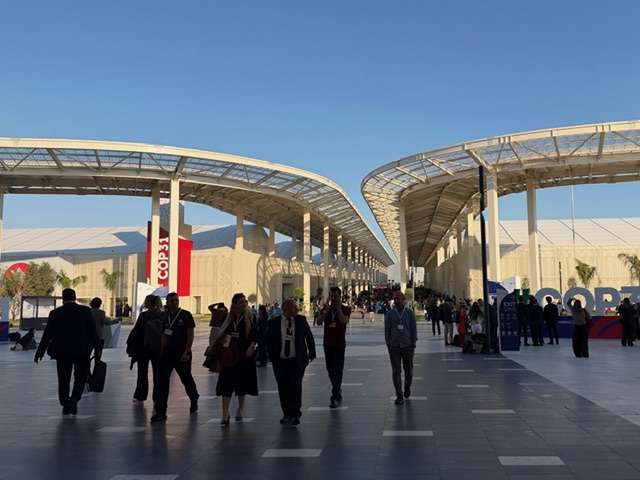
The largest delegation came from the host nation, Türkiye, although many protest groups also seemed to hail from there. The smallest representation came from North Korea. There was even attendance by Afghanistan’s Taliban. The most conspicuous absence was any official representation of President Donald Trump’s United States. Over 90,000 people (including official nations or parties, non-party stakeholders, observers, and media) flooded Türkiye’s Expo Center (originally constructed in 1999 and renovated in preparation for this year’s COP) on “thematic days” dedicated to discussions related to food, agriculture, and health; energy and transport; cities and waste; children, youth, and education; finance and trade; science, industry, and technology; seas, nature, and land; human and social development; negotiation and implementation.
There were countless exhibits and booths sponsored by nations across the globe (from Britain to Finland, from Malaysia to Malawi, and from war-torn regions to nature-ravaged forest areas) and NGOs (from Greenpeace to a legion of climate clubs and finance hubs). There were also numerous panels and conversations, some of broader and others of focused interest: on the inseparable connections between climate and justice, migration, and war, on the impact of climate on economy, cities, and youth, as well as on a new initiative Global Ethical Stocktake launched at COP30.
Amid all this furor, elsewhere in Antalya, a modest Vespers Service for the Preservation of Creation, originally composed by Monk Gerasimos of Little St. Anne Skete on Mount Athos just prior to his death in 1991 (Fr. Gerasimos was canonized by the Ecumenical Patriarchate in 2023), was held at the Church of St. Alypios, a small community revived by Metropolitan Sotirios of Korea (1929–2022) and bringing together parishioners from Russia and Ukraine, as well as a small number of local converts. The sermon was delivered by Metropolitan Job of Pisidia before a local and ecumenical congregation.
The forecast is doubtlessly grim. “You cannot build peace on a burning planet,” the UN outgoing Secretary-General, António Guterres, warned in a final speech. Despite the fact that we have never had more ample scientific knowledge, more efficient technological capacity, and more methodical policy framework, it is difficult not to feel a sharp twinge of frustration, even cynicism, at the—forgive the pun—glacial speed of progress, which often feels more like regression as we continue to watch the failure of global leaders and nations to contain, much less reverse, the destructive impact they have collectively wrought on our planet. It has become painfully apparent that the world will inevitably and, one fears, irreversibly overshoot the headline target set by the momentous Paris Agreement, which aimed to halt global average temperatures at “well below 2 degrees Celsius above pre-industrial levels.”
The ostentatious commercialization of the meeting—with nations shamelessly advertising their paltry “achievements” (though I was admittedly deeply impressed with the strides made by China in this area, even while abhorring the CPC’s human rights record!) and organizations either presenting awards or advertising products—and appearance of career politicians resisting change were offset only by the reassuring presence of seasoned politicians such as Al Gore and the inspiring protests by young people led by the likes of activist Greta Thunberg.
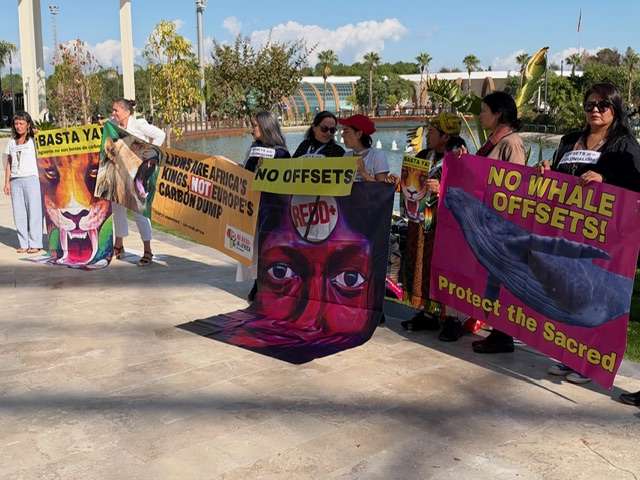
What was particularly striking, however, was the contrast between the heavily guarded events inside the venue and the lively protest marches just outside. The latter—“People’s COP,” as the marches were called—served as a daily reminder and expression of the public’s frustration with the status quo. In doing so, the composition of the protests also epitomized the growing recognition worldwide of the need for growing equality and inclusion for women, the indigenous, and other minorities. Indeed, the participants even featured a protest over animal rights in the African continent.
It was especially eye-opening and inspiring to have the privilege to attend the daily gatherings of the Disability Caucus that is striving to convince governments to include persons with disabilities in their discussions and negotiations around climate change. After all, in any environmental crisis, it is often individuals with disabilities who are most adversely affected because they cannot escape a natural disaster, because they are not visible to emergency workers, or because they cannot gain access to aid materials.
Against this backdrop, as I wandered the seemingly-endless exhibition pavilions, plenary halls, and meeting rooms, I could not help but wonder about the role and impact of religion and more precisely the church on this issue. The Orthodox Church has been outspoken on ecological matters—specifically through the leadership of the Ecumenical Patriarch, and especially with regard to climate justice—for longer than the United Nations has been organizing these formidable meetings.
And yet, faith leaders do not have a seat in the decision-making process of the COP. Indeed, while side events and press conferences are open to all accredited participants, many of the meetings, most of the consultations, and all of the high-level debates and decisions, are entirely off limits to the majority of participants, attendees, and visitors, including the faithful.
> Read: At COP31, faith communities stress finance is not charity
I must say, however, that one of the most moving experiences during my days in Antalya was a striking exhibition of paintings by local schoolchildren, which was spearheaded by their teacher, Sevda Kesim, herself an artist. We know that the model of earth as endless resource is destructive for our planet; perhaps even the model of earth as sacred or mother is insufficient to deter our wastefulness; if we are to treat our planet with the respect and sensitivity that it deserves, then it may be helpful to perceive in the earth the face of our children.


In the end, the lesson I came away with is that I “should not be afraid of the small flock” (Luke 12.32). What will ultimately prevail over the powerful and privileged few is the overwhelming majority that will no longer remain silent or indifferent before the greed and corruption that threatens the very survival of our world. This means that it is not only appropriate, but indeed paramount that we look ourselves in the mirror: that we never lose sight of the consequences of our own individual attitudes and actions, of our voice and our vote; that we continue to reach out to our sisters and brothers both on the spiritual and the systemic levels; and that we persist in our prayer for and promotion of the sacredness of all creation.
That is clearly where the real solutions lie. That is surely where our service is called and needed. And that is ultimately where our hope will be fulfilled “on earth as in heaven” (Matthew 6.10).
The post Spiritual crisis drives climate crisis: Reflections from COP31 | Op-Ed appeared first on Orthodox Observer.