This post was originally published on this site
A unique theatrical experience was enjoyed by those who attended Stathakion Center in Astoria on the eve of the Greek National Holiday. The distinguished actor Takis Chrysikakos traveled from Greece to present to the Hellenic diaspora an adaptation he has personally described as “the absolute highlight of his 50-year career.”
The performance is a theatrical narration and adaptation of Nikos Kazantzakis’s autobiographical masterpiece, Report to Greco. Written late in the author’s life and published posthumously, this iconic work has been translated into numerous languages.
Kazantzakis recounts his life, taking stock of his journey and spiritual evolution in the form of a military-style “report,” as the title suggests. This report is addressed to another great Cretan, the painter Doménikos Theotokópoulos (1541–1614), globally renowned as El Greco. Kazantzakis views Theotokópoulos—celebrated for the intense spirituality of his art—as a spiritual forebear and companion, delivering to him a wide-ranging, comprehensive narrative that is neither strictly chronological nor exhaustive.
Takis Chrysikakos, who demonstrates a profound “elective affinity” with Kazantzakis’s oeuvre, crafted—with the assistance of director Emmanouela Alexiou—a stage adaptation of excerpts from the book. Set against a sparse yet evocative and subtly backlit stage, he portrays the author in his twilight years, reflecting on the key figures and intellectual luminaries who shaped his life, while grappling with the profound existential questions that permeate his entire body of work.
Kazantzakis presents an imaginary dialogue with Greco, recalling a time when, as a young man, he asked his spiritual grandfather about the meaning of life and his ultimate mission. “Reach where you can, my child,” was Greco’s initial answer according to Kazantzakis—a response that failed to satisfy the ambitious youth, who then received a life mission far more suited to his worldview: “Reach, my child, where you cannot!”
It is worth noting that just two days prior, His Eminence Archbishop Elpidophoros of America, speaking in the very same hall at Stathakion, opened his address with this exact excerpt. Connecting it both to the spirit of October 28th and to Orthodox tradition, the Archbishop explained how this single sentence “encapsulates an entire philosophy of life: man is not merely called to exhaust his human capabilities, but to dare to surpass what is deemed impossible.”
The narrative opens with the author’s childhood in Crete, growing up between two starkly contrasting parents whom Kazantzakis felt were constantly at war within him—a friction he continually strove to reconcile. It should be recalled that Crete was still under Ottoman rule during his youth; thus, the longing for freedom, his father’s complex relationship with the oppressors, and the haunting reality of war deeply scarred his formative years. These memories are followed by his evolving reflections on love and womanhood.
Later, the quest for art and the role of the writer moved to the center of his philosophical inquiry. Kazantzakis retraces his encounters with spiritual traditions and towering intellectual figures of the past, having been profoundly influenced by Homer, Marx, and most intensely, Nietzsche.
His acquaintance with Zorba—who, in the words of his friend, teaches the “pen-pusher” how to truly live and challenges his entire life path—serves as another pivotal axis in Kazantzakis’s life. Meanwhile, the search for the divine and the meaning of existence accompanies the entire work, summarized in the quintessential phrase: “God’s path is an uphill climb.”
With intense passion yet without a trace of exaggeration, Takis Chrysikakos masterfully differentiated every nuance of the narrative. He navigated the multifaceted interpretative demands of a piece that only superficially appears to be a monologue of an elderly author. In reality, Chrysikakos was called upon to embody Kazantzakis as a child and as a young man, as well as Kazantzakis in dynamic interaction with his parents, his friends, Zorba, and in philosophical dialogue—or debate—with the legendary figures of history; depicting, in effect, a different Kazantzakis at every turn.Kazantzakis’s prose—as evidenced in the poignant scene describing his childhood trauma over the loss of a neighbor who held him as an infant—is forged from the raw elements of nature and life. Chrysikakos delivered these scenes with such conviction and dramatic intensity that the audience felt tangibly connected to the soil, water, sweat, and blood.
Chrysikakos’s performance was spellbinding, deeply moving the Diaspora audience. One could readily argue that, if presented with English surtitles, the production could easily captivate broader American audiences, who are already familiar with Kazantzakis’s legacy and appreciate text-centered, actor-driven narrative theater.
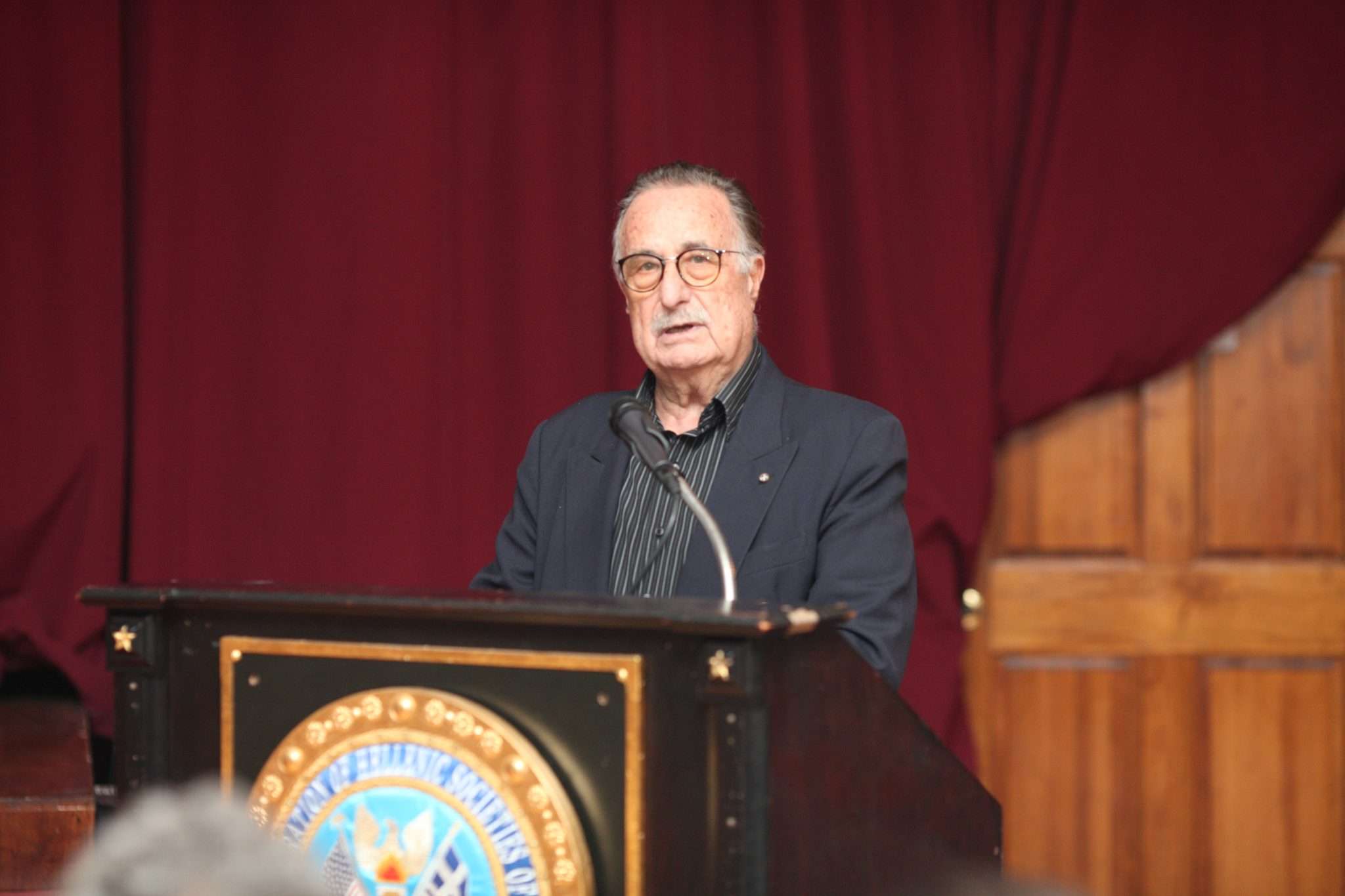
Mr. Emmanuel Velivasakis, one of the main organizers of the event, emphasized in his brief opening remarks the imperative for initiatives that bridge the Diaspora with contemporary Greek culture.
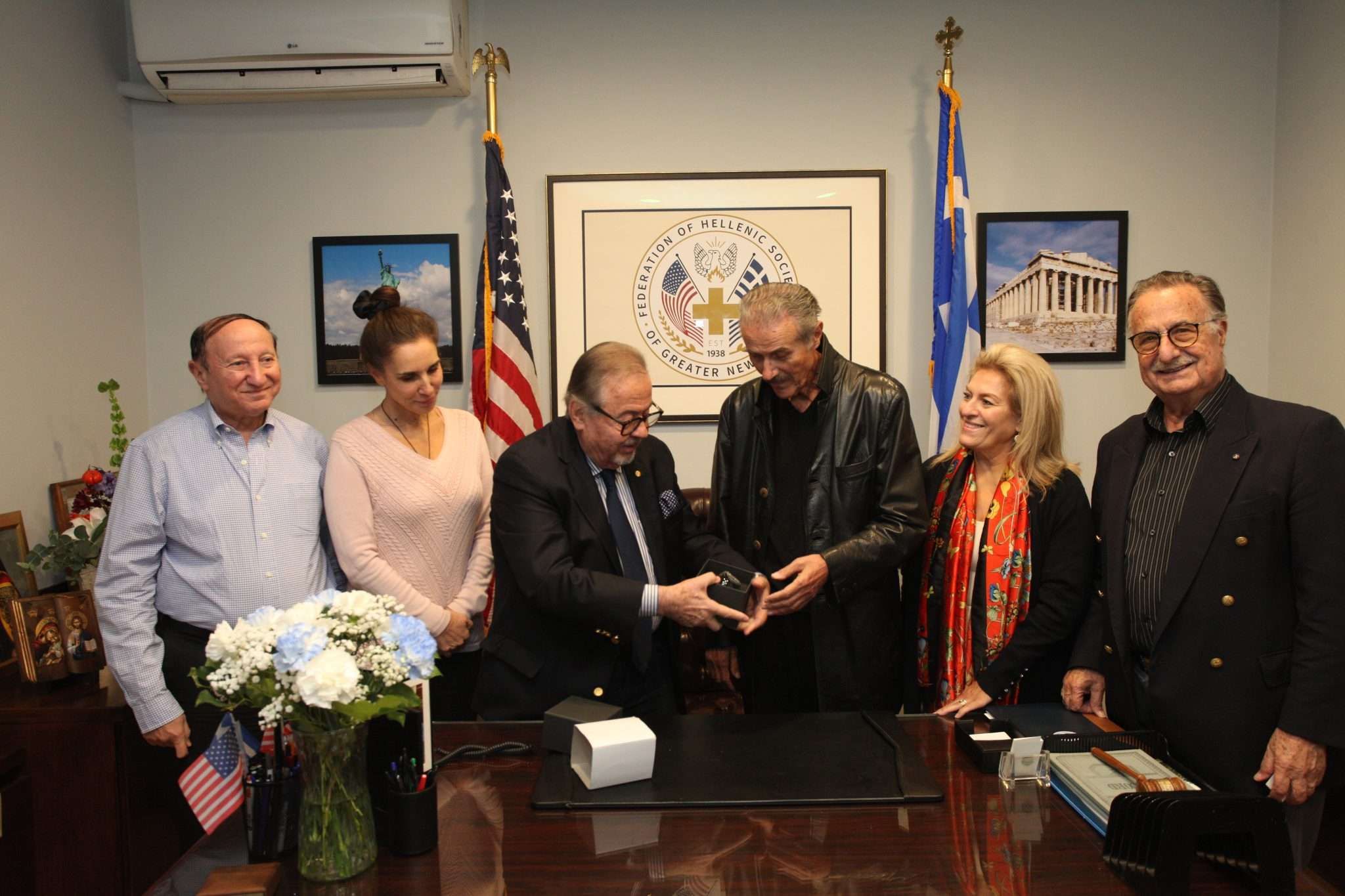
Following the conclusion of the performance, Takis Chrysikakos engaged and took photographs with the audience, sharing his impressions of visiting New York City for the first time, and accepted a commemorative gift presented by the President of the Federation of Hellenic Societies of Greater New York, Christos Vournias.
The post Actor Takis Chrysikakos brings Kazantzakis to life in Astoria appeared first on Orthodox Observer.