This post was originally published on this site
Several months ago, I wrote on this site about the vision for the 2026 Clergy-Laity Congress and our hope that this year’s gathering would be different. Now, having returned from Cleveland earlier this summer, I believe we can say with confidence that something important happened there. More than 2,000 faithful from across the Greek Orthodox Archdiocese of America came together under the theme “Rise & Build,”inspired by Nehemiah’s words. They came together to pray, to learn, to listen, to deliberate, to reconnect with old friends, to make new ones, and, most importantly, to strengthen the Church they love.
The success of this Congress was not simply measured by attendance or by the number of sessions offered. Its success was found in a renewed understanding of what the Clergy-Laity Congress can actually be. Certainly, the Congress has a responsibility to conduct the business of our Archdiocese. Budgets must be reviewed, resolutions must be considered, reports must be presented, and decisions must be made. That administrative responsibility is important and should never be diminished. But the Church is so much more than its business.
The Clergy-Laity Congress should be a gathering of the πλήρωμα τῆς Ἐκκλησίας, the fullness of the Church.
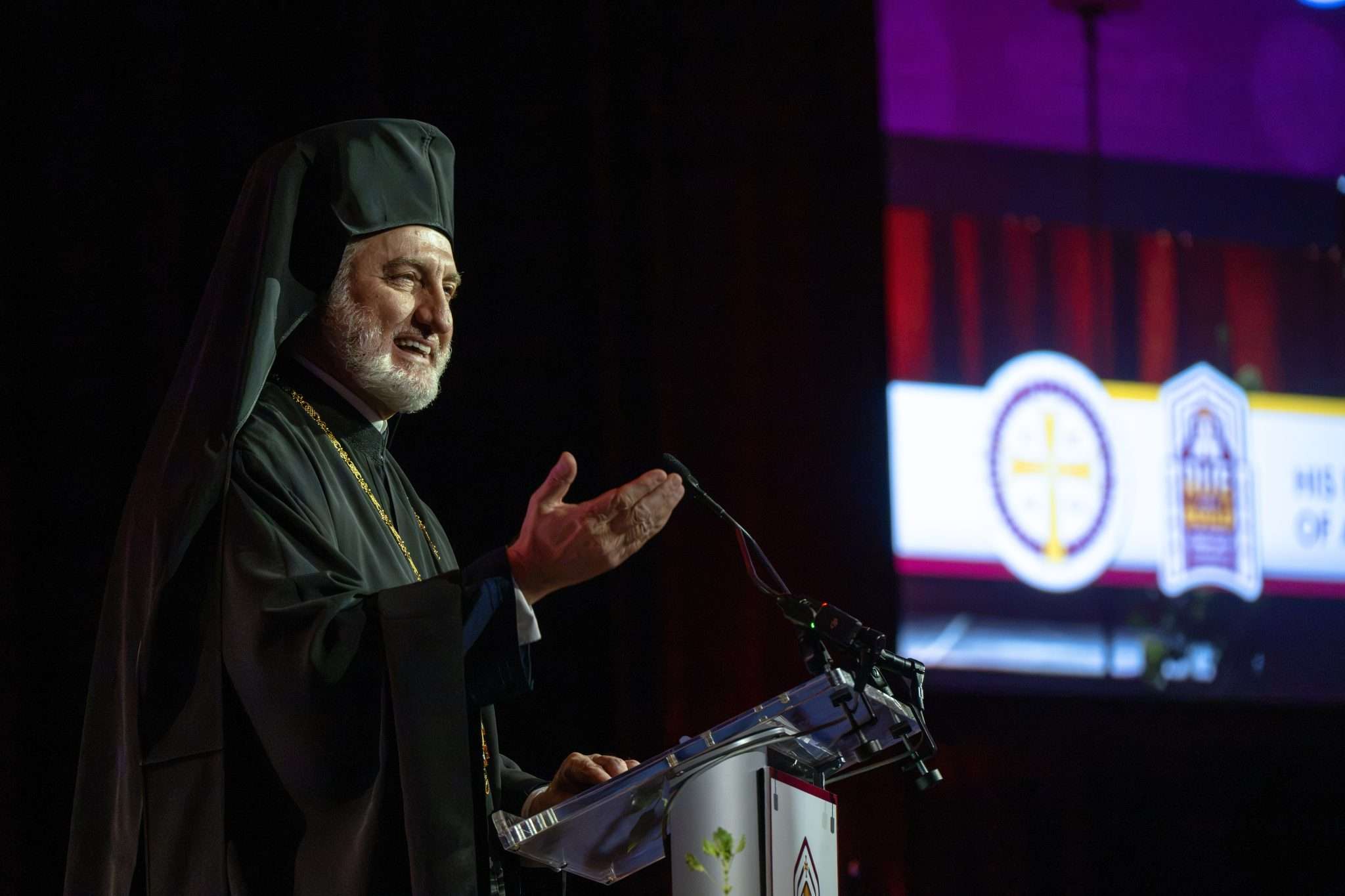
That means creating a place where the clergy and laity who make up our parishes can come together not only to govern the national Church, but to learn how to better serve the local Church. It means recognizing that the people sitting in those seats are not simply delegates with votes. They are Sunday School teachers, parish council members, youth workers, musicians, stewardship leaders, educators, parents, young adults, ministry leaders, priests, presvyteres, and volunteers who go home and make the life of our parishes possible.
Cleveland showed us the tremendous potential that exists when we bring those people together.
Oun National Ministries were not simply invited to present their work or display their resources. They were given a central role in educating and equipping the people of our parishes. The Ministry Pavilion brought Archdiocesan departments, institutions, partners, and organizations together with the people they serve. But even more importantly, the Congress offered specialized educational opportunities, including dedicated tracks for Sunday School teachers and church musicians. These were not simply opportunities to hear about what someone else is doing. They were opportunities to learn, to develop skills, to exchange ideas, and to take something practical home.
That is an important distinction.
Our goal should not simply be to tell our parishes what the Archdiocese is doing. Our goal should be to help our parishes do more.
A Sunday School teacher should be able to return home with a new idea that can make a difference in the classroom. A church musician should return with something new to bring to the worshipping life of the community. A youth worker should discover a resource or a relationship that can help engage young people. A parish leader should encounter another parish that has found a solution to a challenge they are facing. A priest should be able to return home renewed by the fellowship and experience of his brother clergy.
When that happens, the Clergy-Laity Congress becomes more than an event. It becomes an investment in every parish represented.
This is what I believe Cleveland demonstrated so clearly: the Congress of the future must be both a place where we strengthen our administrative unity and a place where we strengthen the people who make up our parishes. We need both. We need the serious work of governance, and we need the practical work of ministry. We need to make decisions together, but we also need to learn together. We need to deliberate together, but we also need to grow together.
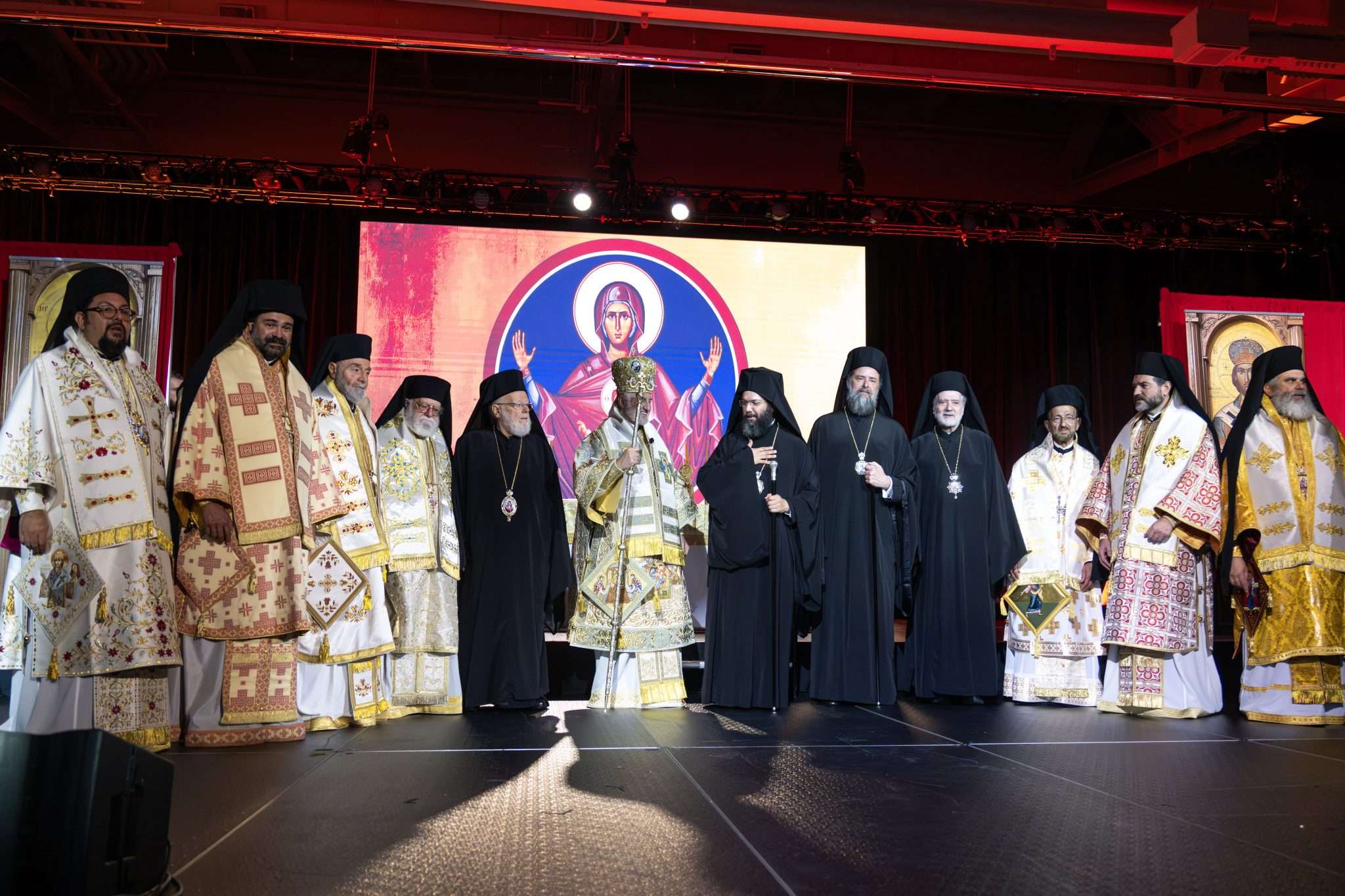
The new plenary model was part of that same vision. By moving the reports of Archdiocesan departments, ministries, institutions, and organizations into digital formats, we created an opportunity for those ministries to tell their stories more fully, using video and other resources, while allowing the Plenary Session to concentrate on the business that actually required the attention of the Congress. Participants could review reports and presentations before, during, and after the Congress, rather than trying to absorb them in a few minutes from a podium.
The same philosophy guided the new approach to the financial process. Before coming to Cleveland, clergy and lay leaders had opportunities to review financial information through online presentations and participate in question-and-answer sessions. Full financial statements, proposed budgets, and other materials were made available for review. Then, at the Congress, the Finance Committee presented its report and the delegates had the opportunity for discussion and deliberation before voting.
This is what greater transparency should look like. It is not simply about putting documents online. It is about giving people the opportunity to understand, ask questions, participate, and ultimately take responsibility for the decisions of their Church.
The CARA Survey was an important part of this process as well. Thousands of faithful throughout our Archdiocese took the time to tell us what they see, what they need, and what they believe should be our priorities. Those voices helped inform the direction of the proposed national budget. The result is a stronger connection between what our people are telling us in our parishes and the priorities we establish at the national level.
That is conciliar life.
We listen to one another. We learn from one another. We disagree at times, but we remain together. We deliberate. We pray. And then we move forward together.
Not everyone saw what happened in Cleveland that way. In the days surrounding the Congress, some commentary suggested that little of substance took place. It is difficult, however, to understand how one could reach that conclusion without actually being there. The Congress was not simply something to observe from a distance. It was something to experience.
More than 2,000 people traveled to Cleveland. Hundreds of volunteers gave their time. Clergy and lay leaders spent hours in workshops and discussions. Ministries shared their resources. Parish leaders exchanged ideas. Delegates participated in the formal work of the Archdiocese. Priests prayed together. Families gathered. Old friendships were renewed and new relationships were formed.
It is easy to criticize something from the outside. It is much harder to give of your time, to sit in a room with people who may have different opinions, to listen to one another, to find common ground, and to do the sometimes difficult work of building up the Church.
It is easy to throw stones from the outside; it is much more challenging to pick one up and help build. That is what the people who came to Cleveland chose to do.
And perhaps that is the greatest lesson of this year’s Congress. The real measure of its success will not ultimately be found in what happened during those three days in Cleveland. It will be found in what happens afterward.
When a parish council uses something it learned in a workshop, the Congress continues.
When a Sunday School teacher starts teaching from the new curriculum, the Congress continues.
When a youth ministry launches a new initiative because of an idea shared in Cleveland, the Congress continues.
When a priest calls another priest for advice because of a relationship formed at the Congress, the Congress continues.
When a parish becomes stronger, more welcoming, more engaged, and more capable of sharing the Gospel because someone came home from Cleveland with a new tool or a renewed sense of purpose, then the Congress has accomplished what it was intended to accomplish.
That is why I believe the 2026 Clergy-Laity Congress was not simply one of our most successful Congresses. It provided a model for what our Congresses can become moving forward.
We should continue to conduct the important business of our national Church. We should continue to strengthen our administrative unity, improve our transparency, exercise responsible stewardship, and make decisions together. But we should also recognize the extraordinary opportunity we have when thousands of faithful people gather in one place.
Those days are precious.
We have to use them to educate. To equip. To inspire. To connect. To build relationships. To share resources. To strengthen ministries. To give our people practical tools they can take home and use immediately in the life of their parish.
Because the Clergy-Laity Congress is not simply a meeting of representatives.
It is the gathering of the Church, it is the πλήρωμα τῆς Ἐκκλησίας coming together.
And when the fullness of the Church gathers, we should leave better equipped to serve the Church we love.
Cleveland reminded us that we are capable of doing this. It showed us that our clergy and laity want to learn. They want to participate. They want to serve. They want their parishes to thrive. And they want an Archdiocese that supports them in that work.
So now, the question is not whether we can do it again.
The question is how much further we can take it.
The work of Cleveland does not end with the closing of the Congress. It begins when everyone goes home.
The tools are in our hands. The relationships have been formed. The ideas have been shared. The challenge has been placed before us.
Now we have to build.
Together.
Rise & Build.
This article is published as part of the America at 250: Orthodoxy in a New Homeland media initiative co-organized by the Orthodox Observer and the Department of Inter-Orthodox, Ecumenical, and Interfaith Relations of the Greek Orthodox Archdiocese of America to honor the contributions and experience of Orthodox Christianity in America and celebrate 250th anniversary of America’s founding.
The post Carrying the Clergy-Laity Congress forward appeared first on Orthodox Observer.