This post was originally published on this site
Having just returned from a moving Clergy-Laity Congress, where the theme of Rise & Build was reinforced throughout our time together, I would like to share my own personal Rise and Build story. I do so in gratitude to God, and to the countless friends—both clergy and laity—whose prayers, kindness, and support have sustained me.
There is nothing in life that quite prepares a person to hear the words, “You have a brain tumor.” But in the nineteen months since I first heard those words, I have come to see my tumor as a blessing.
Following my initial diagnosis in December of 2024, I did not know what the future would hold. Within days, I learned that the tumor was most likely a glioblastoma, news that no one wants and no family is ever ready to receive. I had excellent doctors, a loving family, caring friends, and parish communities that immediately formed an invaluable support network. But even with all of that, I do not mind admitting that I was scared.
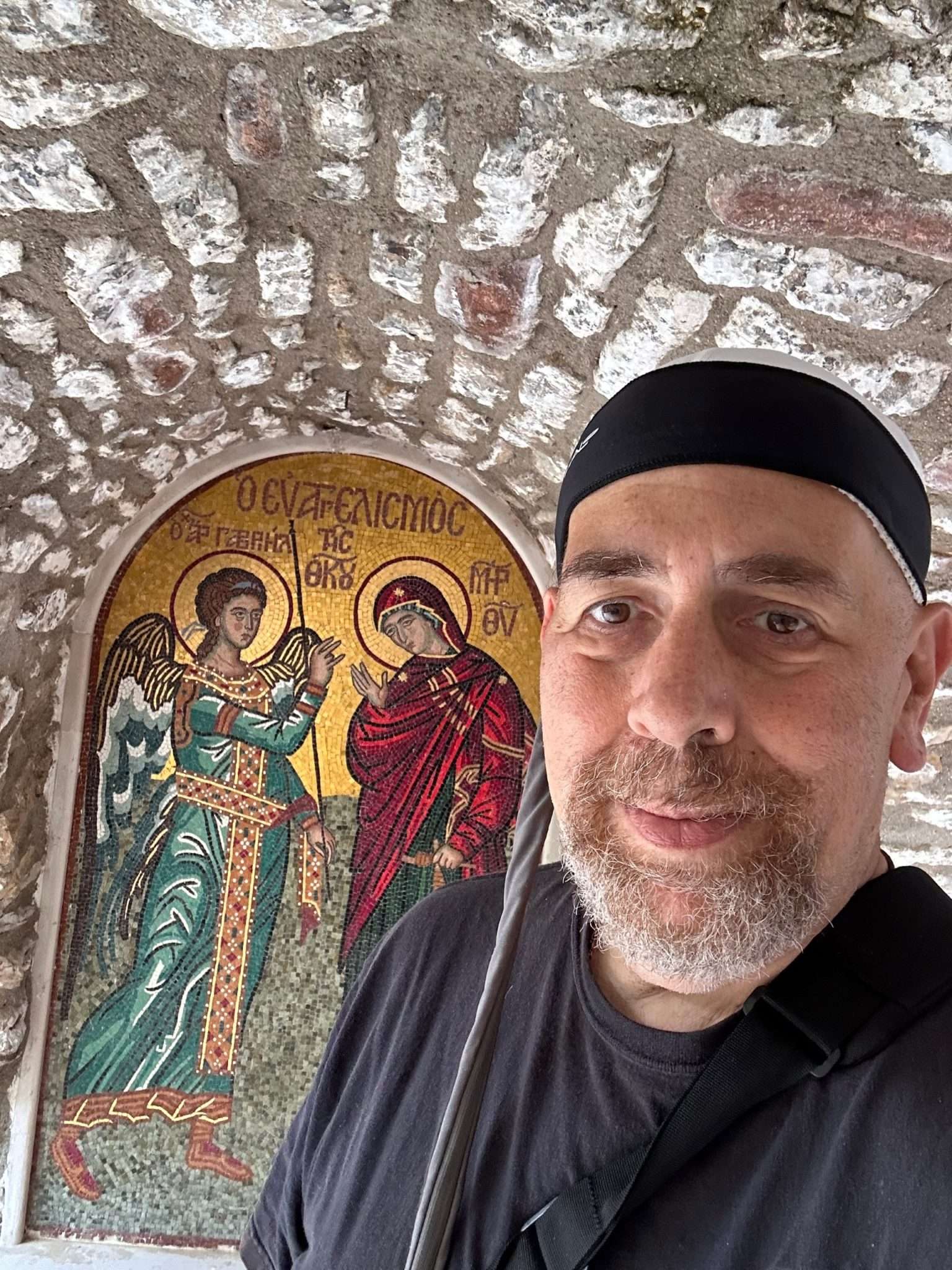
Cancer is cruel. It brings fear, disruption, pain, uncertainty, and an endless series of appointments, tests, and critical decisions. I would not wish it on anyone. But I can say, honestly and without exaggeration, that God has used this cross to give me something I might not have found any other way: a deeper faith, a clearer understanding of what matters, and a more immediate awareness of His grace.
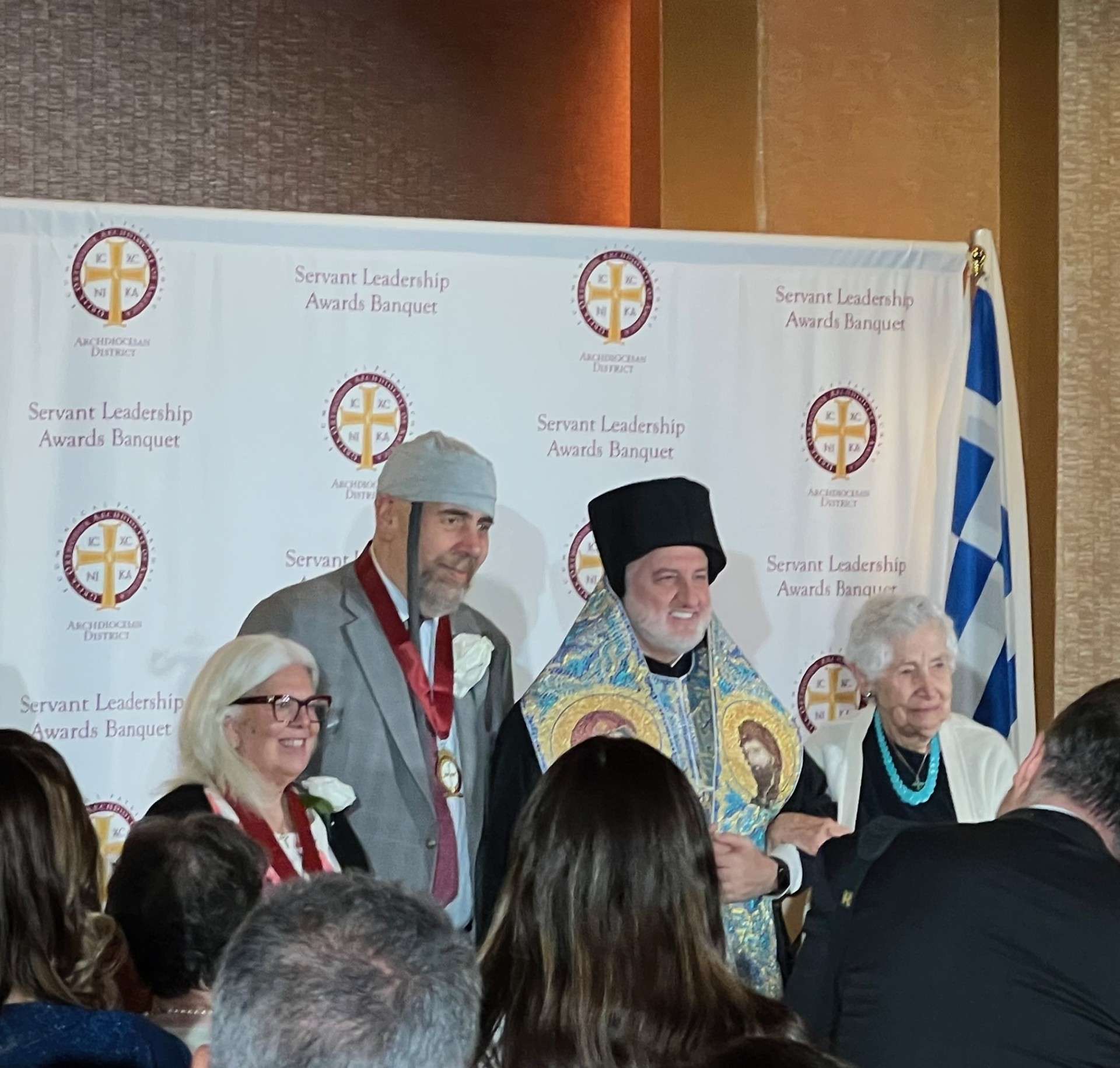
Before my diagnosis, I already felt close to my Orthodox faith. I attended church regularly and was actively engaged in ministries at my parish and within the Archdiocesan District and the Archdiocese. I was blessed to have been installed as an Archon in 2009 and to have had the opportunity to participate in amazing ministries such as Midnight Run and Project Mexico. But I also now see that there were parts of my spiritual life that were too easy to neglect. Confession, fasting, reading, and prayer were all things I knew were important, but often treated as if they were optional. Then suddenly, everything changed.
When cancer intrudes upon your life, the unimportant things fall away quickly. In their place, the Gospel, the prayers of the Church, and Paraklesis services become more like oxygen. I set up an icon corner in my home. I began praying more often and more honestly. I leaned on the intercessions of the Theotokos and the saints.
I spoke with my spiritual father, who gave me advice that saved me: tell God exactly what is in your heart. At first, that felt almost selfish. Could I really pray for more time? Could I tell God that I wanted to know my grandchildren? Could I admit that, while I know He has wonderful plans for all of us in His Kingdom, I was not ready to leave this earth?
The answer, of course, was yes. Not because God is a genie granting wishes, but because He is a loving Father. He does not need polished speeches from us. He wants our hearts. Fear, gratitude, confusion, hope, even doubt — all of it can be brought before Him. St. John Chrysostom told us this years ago, but I had neglected to listen.
It hit me even harder as we approached Pascha. For years, I have loved reading the Gospel at the Agape service in Latin, but my illness allowed me to see how much I could learn from those words. Thomas said he would not believe unless he saw the wounds of Christ and placed his hand in His side. He doubted, but Christ did not reject him for it. He came to Thomas in mercy and gave him what he needed in order to believe more deeply.
With cancer, Christ has done for me what He did for Thomas. I never said, “Unless I see, I will not believe.” But apparently, I did need to see. I needed to feel God’s presence not as an idea but as a reality. The last year and a half has allowed me to live the reality that prayer matters. I have lived the reality that the words “Lord, I believe; help my unbelief” are not a contradiction but a deeply honest prayer. And I have lived the reality that faith is medicine.
So much of my health, I am convinced, has been strengthened by belief. I do not say that instead of medicine. I thank God constantly for my doctors, nurses, surgeons, researchers, and every person who has helped care for me. Their skill is a blessing. Their work is holy. I follow their guidance, take the treatments seriously, ask questions, monitor research, and do my part.
But I also know that healing is larger than medicine. Health is not only what appears on a scan. It is the ability to wake up with hope. It is the desire to serve. It is the strength to laugh. It is the ability to be grateful. It is the discipline to keep praying when you are afraid. It is the peace that comes when you realize that your life belongs to God, and that it always did. It is the humility to receive help, and the courage to rise and build again.
The prayers of others have been central to that healing. I cannot overstate this. So many people — family, friends, clergy and people I have never even met — have prayed for me. Some have sent notes at exactly the moment I needed encouragement. Some have simply said, “We are praying for you,” and those words have meant more than they could possibly know.
To all who have prayed for me: thank you. I have felt your prayers. They have helped carry me through surgery, treatment, fear, fatigue and the long stretches of waiting that every cancer patient knows too well. They have given me hope. Hope is not denial. Hope does not pretend that everything is easy. Hope is what allows us to say, even while carrying a cross, “Glory to God for all things.”
This is the message I feel compelled to share.
If you are already a person of faith, deepen it. Do not wait for a crisis. Pray now. Serve now. Forgive now. Thank God now. Tell Him what is actually in your heart. And if you are struggling to believe, or if you are frightened, do not be ashamed. Bring that to Christ too.
My tumor has confirmed for me many things I only thought I knew earlier. It has taught me that love is healing; prayer is powerful; the Church is essential; faith is not a theory; and Christ, in His mercy, comes through all obstacles to meet His frightened disciples.
I do not know exactly what lies ahead. None of us does. But I know this: nineteen months ago, I was told that a diagnosis like mine often comes with a life expectancy of 12 to 18 months. Yet I am still here. I am still feeling strong. I am still praying. I am still grateful. And by the grace of God, I am still being healed.
The post An Unexpected Blessing: A Personal Rise & Build Story appeared first on Orthodox Observer.