This post was originally published on this site
After full days of workshops, panels, liturgical services, and ministry presentations, clergy and lay delegates gathered on Thursday, July 2, 2026, for the Plenary Session of the 48th Biennial Clergy-Laity Congress in Cleveland, Ohio, to conduct the official legislative, administrative, and financial business of the Church.
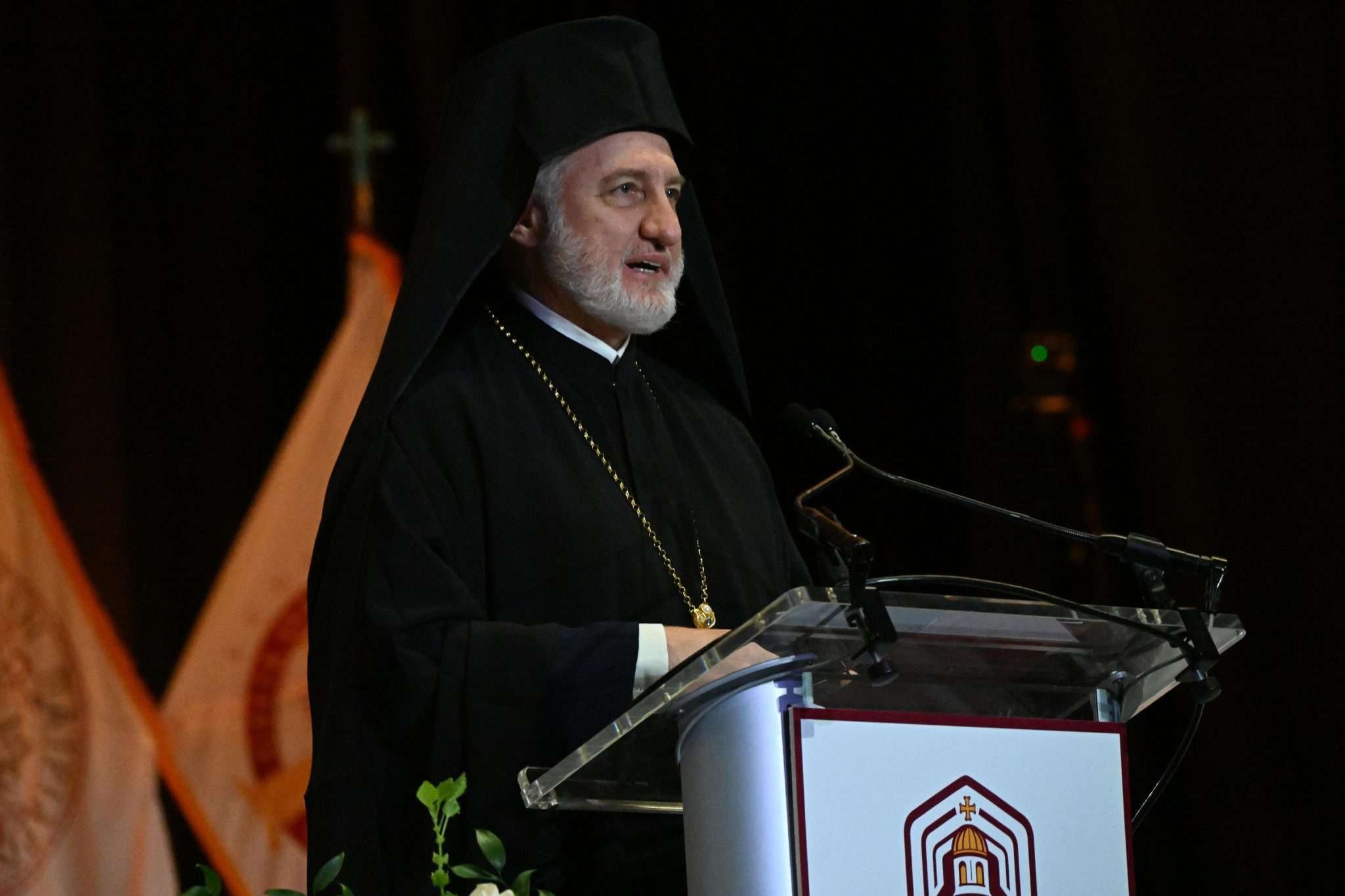
The session opened with a prayer led by His Eminence Archbishop Elpidophoros of America, and was called to order by Archdiocesan Council Secretary Nick Karacostas.
Addressing the delegates virtually, John Catsimatidis, Vice Chairman of the Archdiocesan Council, thanked the clergy and laity for their work throughout the week and for all they have accomplished for the benefit of Hellenism and the Church in America. He commended Archbishop Elpidophoros for assembling an accomplished team that has helped move the Church forward and urged all present to continue working to strengthen the place of faith in American life and throughout the world.
In his opening remarks to the Plenary Session, Archbishop Elpidophoros called upon the delegates to embrace their shared responsibility for the governance and future of the Archdiocese. Reflecting on the Congress theme, “Rise and Build,” drawn from the Book of Nehemiah, His Eminence emphasized that strengthening the Church requires more than vision alone.
“Nehemiah reminds us that rebuilding requires more than vision,” Archbishop Elpidophoros said. “It requires planning. It requires stewardship. It requires accountability. And above all, it requires that the people of God labor together with one heart and one purpose.”
The Archbishop noted that the reports presented to the delegates were more than procedural items; they were expressions of the Church’s commitment to stewardship, transparency, and accountability. He highlighted the expanded pre-Congress financial presentations and online question-and-answer sessions, which allowed clergy and lay leaders to review materials, ask questions, and participate in meaningful dialogue before arriving in Cleveland.
“Transparency is not merely about sharing information,” His Eminence said. “It is about building trust, encouraging participation, and ensuring that every faithful steward understands how we are caring for the resources entrusted to us.”
A central theme of the Plenary Session was the connection between the Church’s governance, its budget process, and the needs expressed by clergy and faithful across the Archdiocese. Archbishop Elpidophoros pointed to the CARA Survey as a key factor in shaping the proposed budget, noting that thousands of faithful had shared their hopes, concerns, and priorities for the future of the Church.
“The proposed budget before you reflects those priorities by directing greater attention and resources toward parish health, ministry development, clergy support, youth and young adult ministries, evangelism, communications, and the strengthening of the local Church,” Archbishop Elpidophoros said. “In other words, this budget is not simply a financial document. It is a response to your voice and a reflection of our collective discernment.”
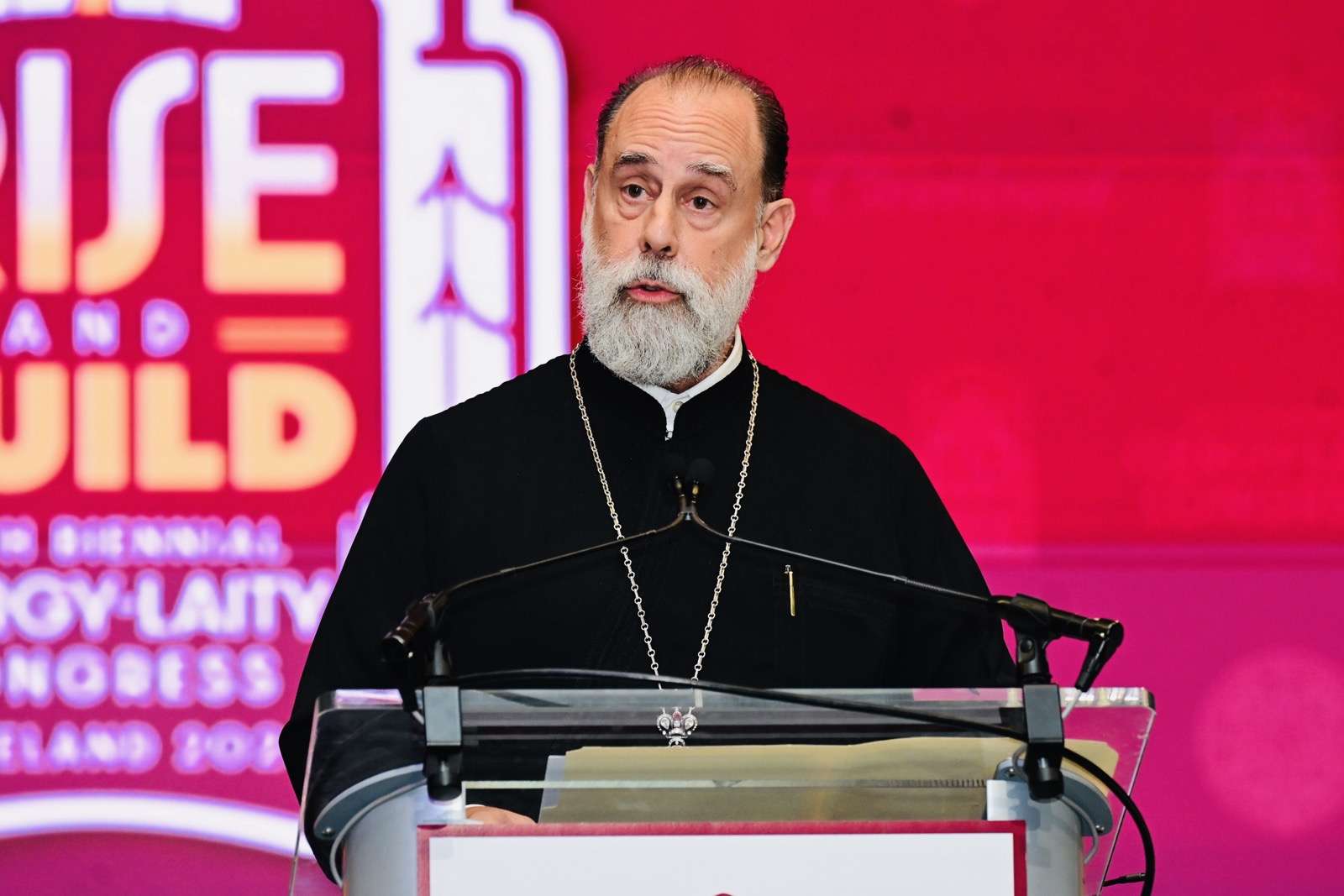
His Grace Bishop Nektarios of Diokleia presented the Chancellor’s Report, highlighting major accomplishments of the National Chancellery since the 2024 Clergy-Laity Congress. He reported on the successful digitization of all clergy files, the ongoing digitization of parish records, the oversight of ordinations and incardinations, support for the Palestinian and Slavic Vicariates, progress toward a fully-digital National Registry, and the administration of six scholarship programs that have distributed more than $1 million in financial assistance.
The report also noted continued collaboration with the Office of National Ministries, the expansion of Youth Safety initiatives, support for Ionian Village and youth scholarship programs, outreach ministries, and ongoing engagement with Hellenic College Holy Cross and seminarians.
Bishop Nektarios further reported that since the last Congress, 38 men have been ordained to the Holy Diaconate and 20 to the Priesthood, while two new mission parishes were chartered. He also outlined efforts to strengthen clergy wellness, improve insurance and risk-management programs through the establishment of a captive insurance company, and explore a National Parish Insurance Initiative intended to reduce costs and enhance long-term stability for parishes.
Concluding his report, Bishop Nektarios emphasized the importance of collaboration among the Archdiocese, the Metropolises, the clergy, and the faithful in advancing the Church’s mission, and encouraged all delegates to embrace the Congress theme, “Rise and Build.”
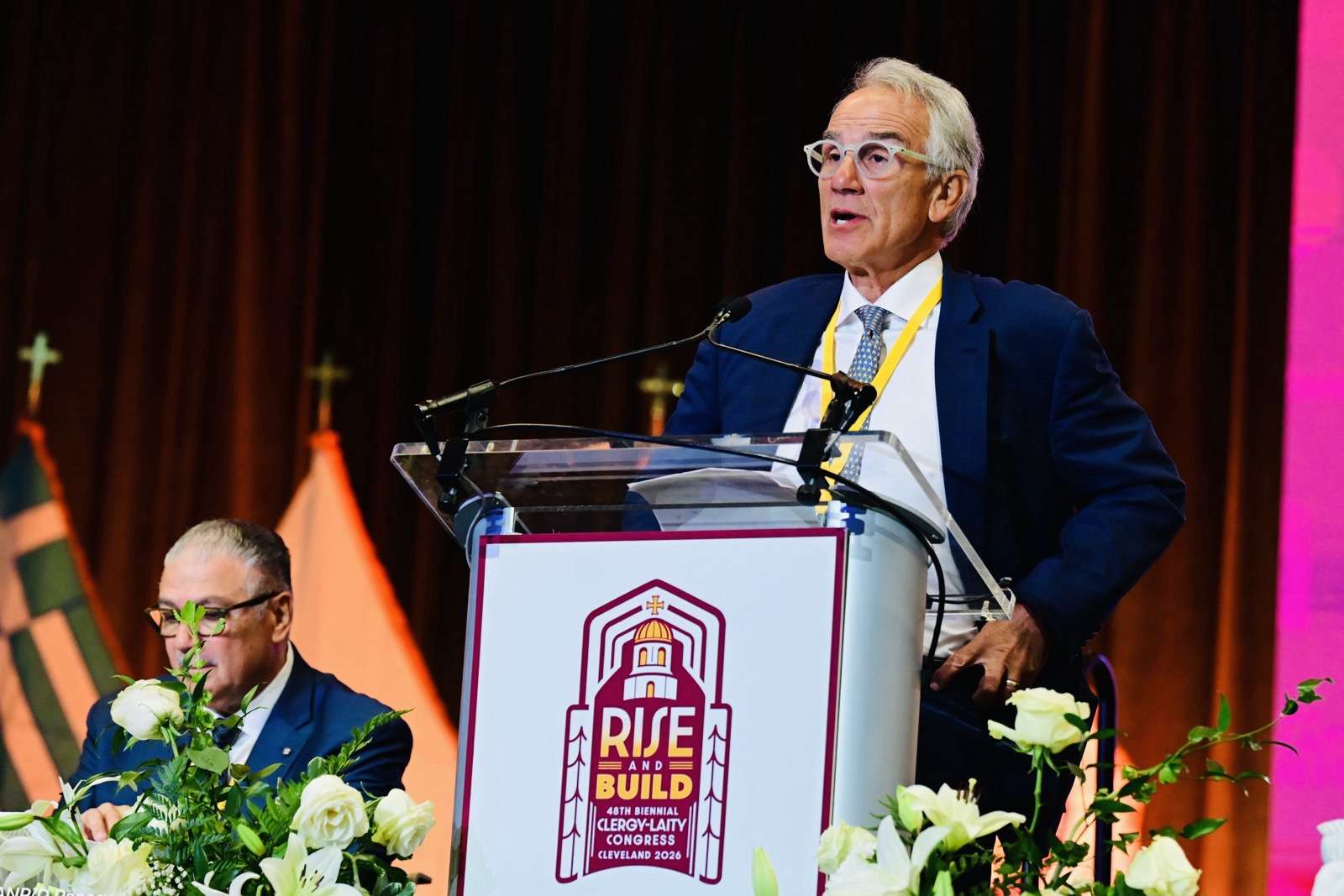
Theodore Theofilos, Chair of the Administration Committee, reviewed the need for an amendment to the By-Laws of the Archdiocese to create a streamlined process for developing and maintaining the list of candidates for the hierarchy. Theofilos stated that the Committee has provided the proposed language for the amendment to the Holy Eparchial Synod, after which the Executive Committee will review the matter and proceed with the proper process for adoption.
Elaine Allen, Treasurer of the Archdiocese, offered a detailed report on the financial status of the Archdiocese and described the significant improvements in financial administration since the financial crisis of 2017. She said the Archdiocese remains financially stable, with liquidity, unrestricted net assets, and investment portfolios all significantly improved.
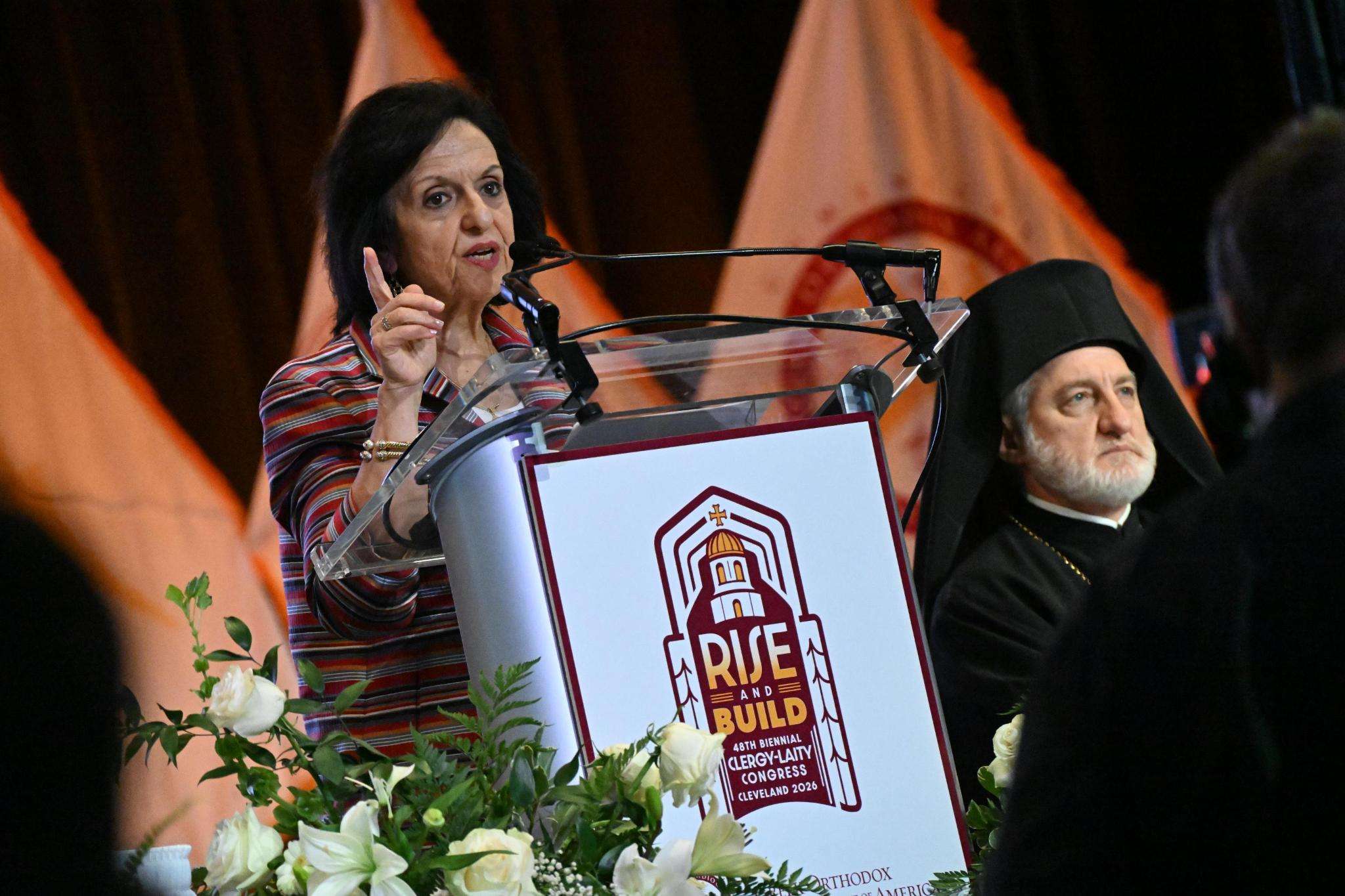
Allen reported that the Archdiocese has experienced eight consecutive years in which revenues exceeded expenses, a development she described as unprecedented in the recent financial history of the Archdiocese. She noted that liquidity and available resources stood at $9.8 million at the end of 2025, while net assets without donor restrictions stood at $14.1 million and donor-restricted net assets stood at $29.5 million. These resources, she explained, allow the Archdiocese to support ministries and affiliated institutions, establish the captive insurance company, move to a self-funded medical insurance plan for clergy, and reserve funds for future legal settlements and unanticipated needs.
She noted that the Archdiocese had moved from an accumulated operating deficit in 2017 to positive unrestricted resources by the end of 2025, while total assets increased substantially over the same period.
Allen also reported that the Archdiocese continues to meet major obligations to Hellenic College Holy Cross and the clergy pension plan. In 2025, the Archdiocese provided $3.1 million to Hellenic College Holy Cross based on the school’s cash-flow needs, and the clergy pension plan received $10.9 million in total funding, including approximately $2 million from the Archdiocese.
Turning to risk management, Allen explained that the captive insurance company established at the end of 2023 has been funded with $2.7 million to date and is being used to help manage legal exposure and insurance challenges. She said the longer-term objective is to use the captive structure to help reduce insurance costs for Metropolises and parishes.
“Ultimately, what we want to do is use that captive insurance company to lower the costs for metropolises and parishes and take the profits from the insurance companies and reinvest them into our parishes and Archdiocese,” Allen said.
Allen also described the establishment of a retirement plan available to parishes for clergy, lay employees, and school teachers. The plan allows employees to save on a tax-deferred basis, permits parishes to provide matching contributions if they choose, and has administrative costs covered by the Archdiocese for the first three years. Allen urged parish leaders to consider participating in the plan, adding, “I truly believe we have a moral obligation to do so.”
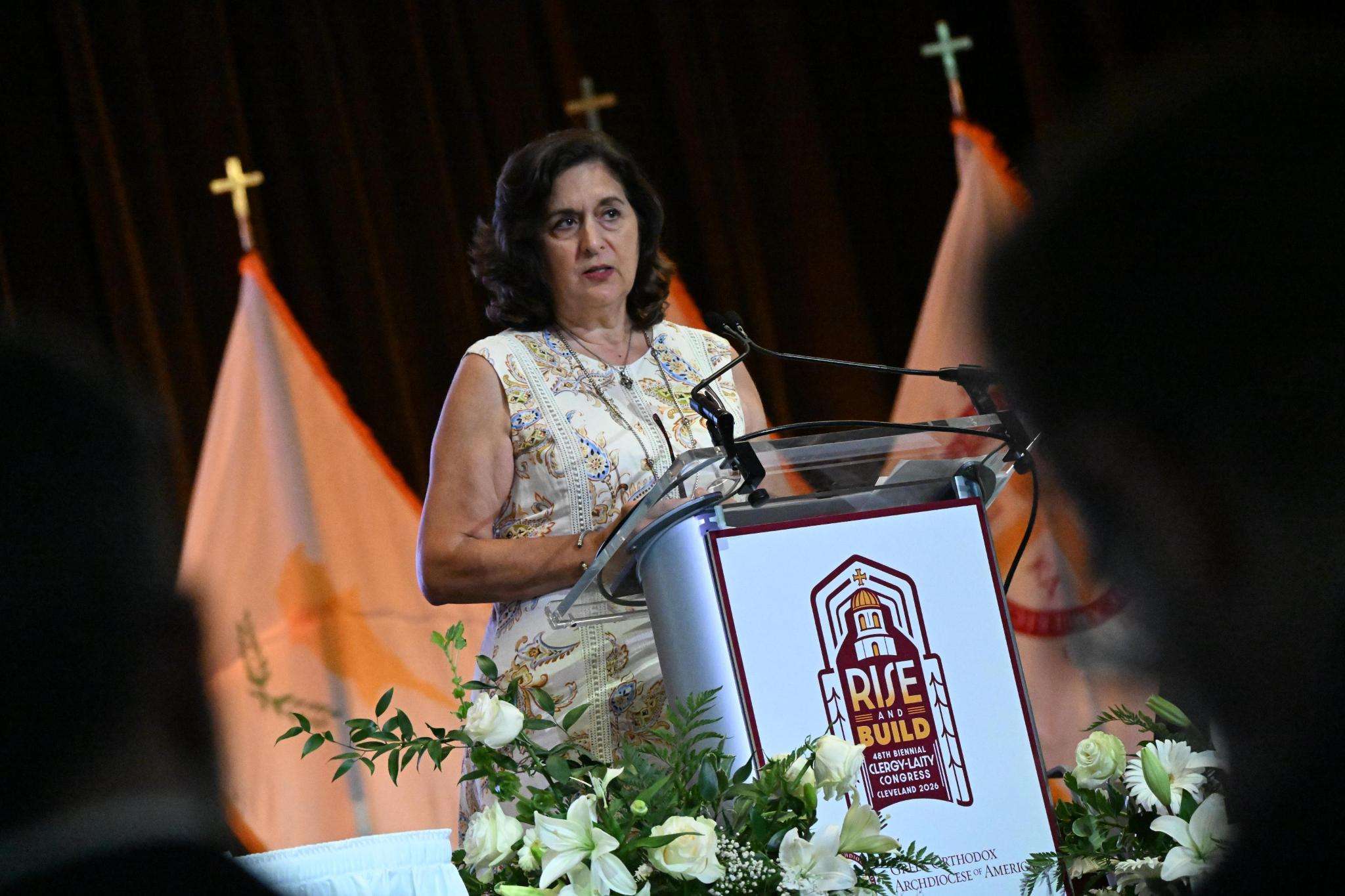
Anastasia Economos, Chair of the Audit Committee, reported that the Archdiocese’s independent auditor, BDO, issued an unmodified audit report, commonly referred to as a clean opinion. She also reported that BDO identified no internal control weaknesses. Economos noted that the audit reports were completed in a timely manner, underscoring the Archdiocese’s continued commitment to transparency, and said the Audit Committee is assisting the Metropolises and the Archdiocesan District in completing their audits or reviews.
Lazaros “Lou” Kircos, Chair of the Finance Committee, presented a detailed report on the financial progress of the Archdiocese and the status of the clergy pension plan. He recalled the severity of the financial situation in 2017 and described the transformation that has taken place since then.
“Eight years of living within budget, eight years of on-time audits, six years with no audit committee comments,” Kircos said. He noted that after the 2017 audit, the Archdiocese received a large number of auditor comments and recommendations, all of which were addressed.
Kircos reported that the pension funding program, changed in 2021 because the prior model was not working and was unfairly applied across parishes, is now significantly ahead of its projected funding schedule. The pension fund surpassed $100 million in assets in January 2026 and stood at $108.9 million at the end of May 2026, or 70.3% funded.
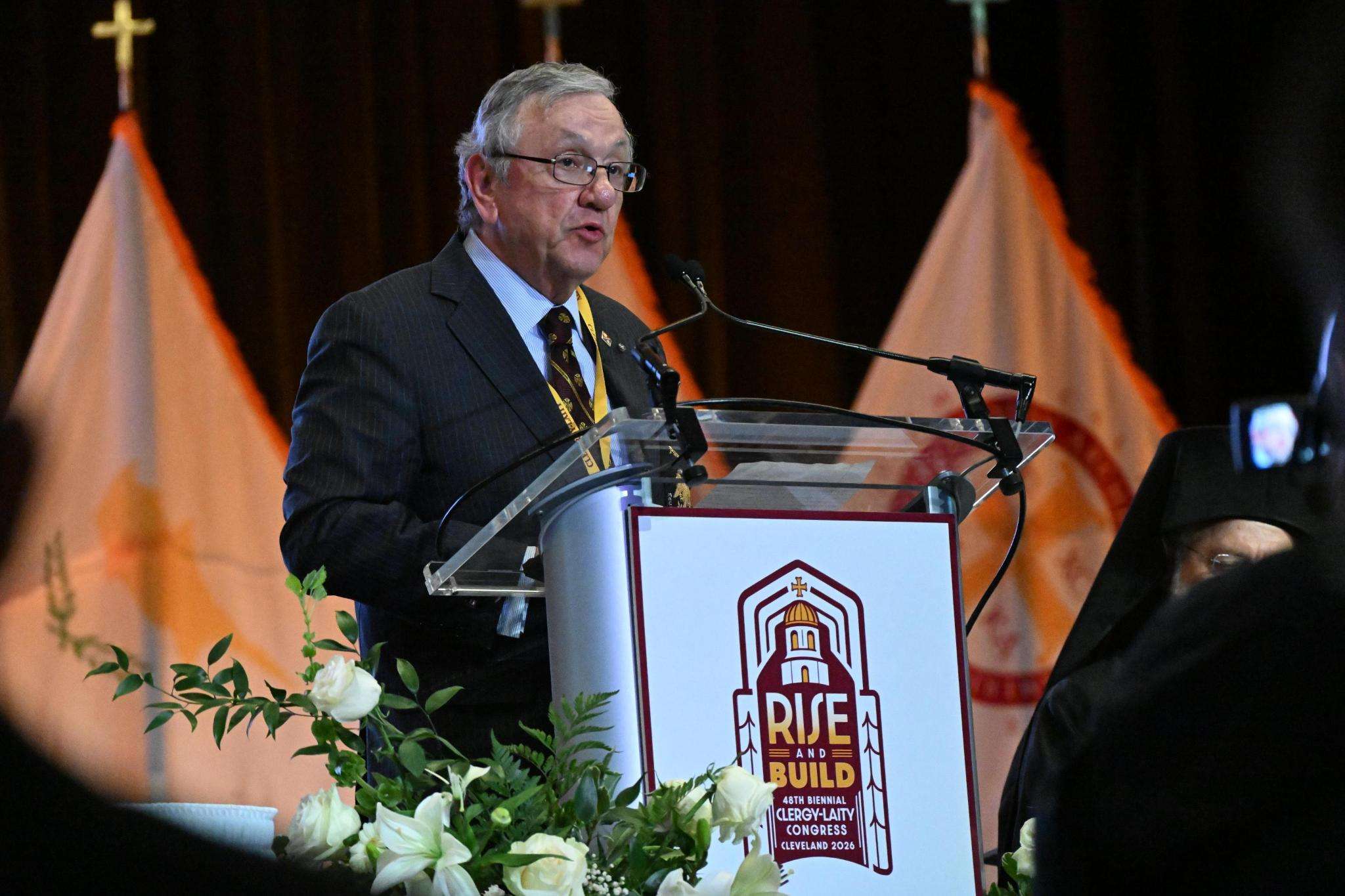
“In January of this year, a major milestone was crossed, with the pension fund assets breaking the $100 million mark,” Kircos said. He added that the 70.3% funded status represents “the target for 2037,” placing the plan 10 years ahead of the established target.
Kircos emphasized that the plan was designed with a long-term perspective, allowing for market fluctuations without abandoning the funding discipline that has made the progress possible.
In light of the fund’s improved status, Kircos moved that the Clergy-Laity Congress adopt the Finance Committee’s recommendation that annual increases in benefits funding decrease from 2.3% to 2.0% per year for 2027 and 2028. The motion passed overwhelmingly.
Kircos also reviewed the process used to prepare the proposed 2027 and 2028 Archdiocesan budgets. He noted that the budget process was significantly reformed after 2018, when spending cuts and a zero-based budgeting system were introduced to challenge the validity and necessity of all expenses. The proposed budgets continue that discipline, with revenues based on realistic expectations, expenses built from zero, known events incorporated, and contingency lines included for unanticipated expenditures.
The proposed budgets also reflect a major restructuring of national ministries into a new “Parish and Priest Ministries Support” category, realigned according to the priorities identified through the CARA Survey. Overall funding for this area is recommended to increase by 21.6% from the 2026 budget level, with support directed toward clergy family wellness, faith formation, generosity, digital and innovation work, youth and camping, young adult leadership, worship, safety and security, parish leadership, youth safety, and other ministry needs.
Kircos moved that: The Clergy Laity Congress adopts the GOA budgets for 2027 and 2028 as presented. Following discussion and failed motions, the motion as originally proposed passed overwhelmingly.
Fr. Michael Lambakis, Interim President of Hellenic College Holy Cross, offered a positive report on the school’s financial outlook and its effort to reduce reliance on annual operating support from the Archdiocese. He said the school’s progress has been driven by stronger enrollment, disciplined financial management, successful fundraising, and strategic long-term planning.
“We believe the institution is making measurable progress toward that goal,” Fr. Lambakis said, referring to the shared objective of placing Hellenic College Holy Cross on a stronger financial foundation.
He reported that the school’s enrollment continues to exceed expectations, with strong deposits for both Hellenic College and Holy Cross. He also noted that the institution brought in $23.6 million in total revenue, $9.1 million more than the approved budget and $6.3 million more than the same point last year, while expenses remained under control.
Fr. Lambakis encouraged delegates to become advocates for the school, particularly through recurring support that can increase unrestricted revenue.
Archbishop Elpidophoros framed the work of the Plenary Session as an expression of conciliar governance, grounded in prayer, mutual respect, and common responsibility. “We listen. We pray. We deliberate. And then, together, we make decisions for the good of the Church,” Archbishop Elpidophoros said. “Remember that we are not gathered as opposing sides, but as fellow laborers in the vineyard of Christ, united by our love for His Church and our desire to see it flourish for generations to come.”
The post Clergy-Laity Congress approves 2027–2028 Archdiocesan budgets appeared first on Orthodox Observer.