This post was originally published on this site
Inside St. Nicholas Greek Orthodox Church and National Shrine, voices and instruments lifted to commemorate the miraculous life and afterlife of Saint Iakovos of Evia in four stunning movements.
Composed jointly by Savvas Karantzias and its conductor Costas Tsourakis, dedicated to His Eminence Archbishop Elpidophoros of America, the oratorio presents the “life and spiritual witness of St. Iakovos.”
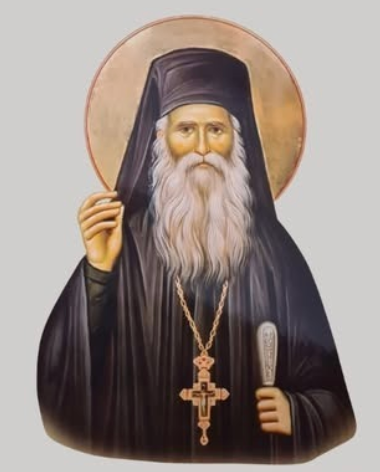
Watch: Archbishop Elpidophoros’s spiritual encounter with St. Iakovos of Evia
Music drawn from an array of instruments, narration from the sayings attributed to Saint Iakovos of Evia read by Master Chanter of the National Shrine Dimitrios Katsiklis, and the bass-baritone chanting of Damon Nestor Ploumis were supported by the Archdiocesan Cathedral Choir and Youth Choir. Sacred texts, notably the Cherubic Hymn in the second movement, resonated within the illumined white Pentalic marble of St. Nicholas, creating a contemplative present of ambiance and prayer.
The piece, “A Contemporary Saint: Saint Iakovos of Evia,” composed in four movements, unfolds a spiritual portrait of the life of Saint: the innocence of his early years (Movement I: Early Years), the mystery of his monastic life (Movement II: The Monk), his compassion as a healer (Movement III: The Healer), and finally, the hope of eternal life in Christ, sonically depicted in its finale (Movement V: Gloria).
The libretto of each movement are attributed to the sayings of Saint Iakovos, which throughout are sung alongside liturgical texts of the Orthodox Church. The first movement explores the early years of the Saint’s life: “Like a little autumn bird, two years old, you walked upon the earth, thirsting for heaven.”
The next movement, “The Monk,” recounts the Saint’s monasticism. Saint Iakovos lived in extreme asceticism: “eating little, praying always, and working hard.” At the age of 32, Saint Iakovos became a monk at the Monastery of St. David in Evia. There, he became known to converse with the saints such as St. Paraskevi, St. John the Russian, and St. David of Evia, the patron saint of the monastery. Here, the sayings of the Saint follow selections from the Secret Prayer of the Cherubic Hymn, Psalm 50, and the commemoration of the Great Entrance: “No one bound by carnal desires and pleasures is worthy to approach, draw near, or minister to You, O King of Glory.”
The third movement, “The Healer,” has sayings from Saint Iakovos of the immortality of the soul, and the strength received through Holy Mysteries: “Thus, receiving the immaculate mystery daily, I felt such strength within me that I was like a lion.”
The fourth and final movement, “Gloria,” draws from the Apolytikion of Saint Iakovos as well as sayings: “Do not be afraid, do not be troubled, whatever may happen, whatever destruction may come; but care for the soul, an immortal thing.”
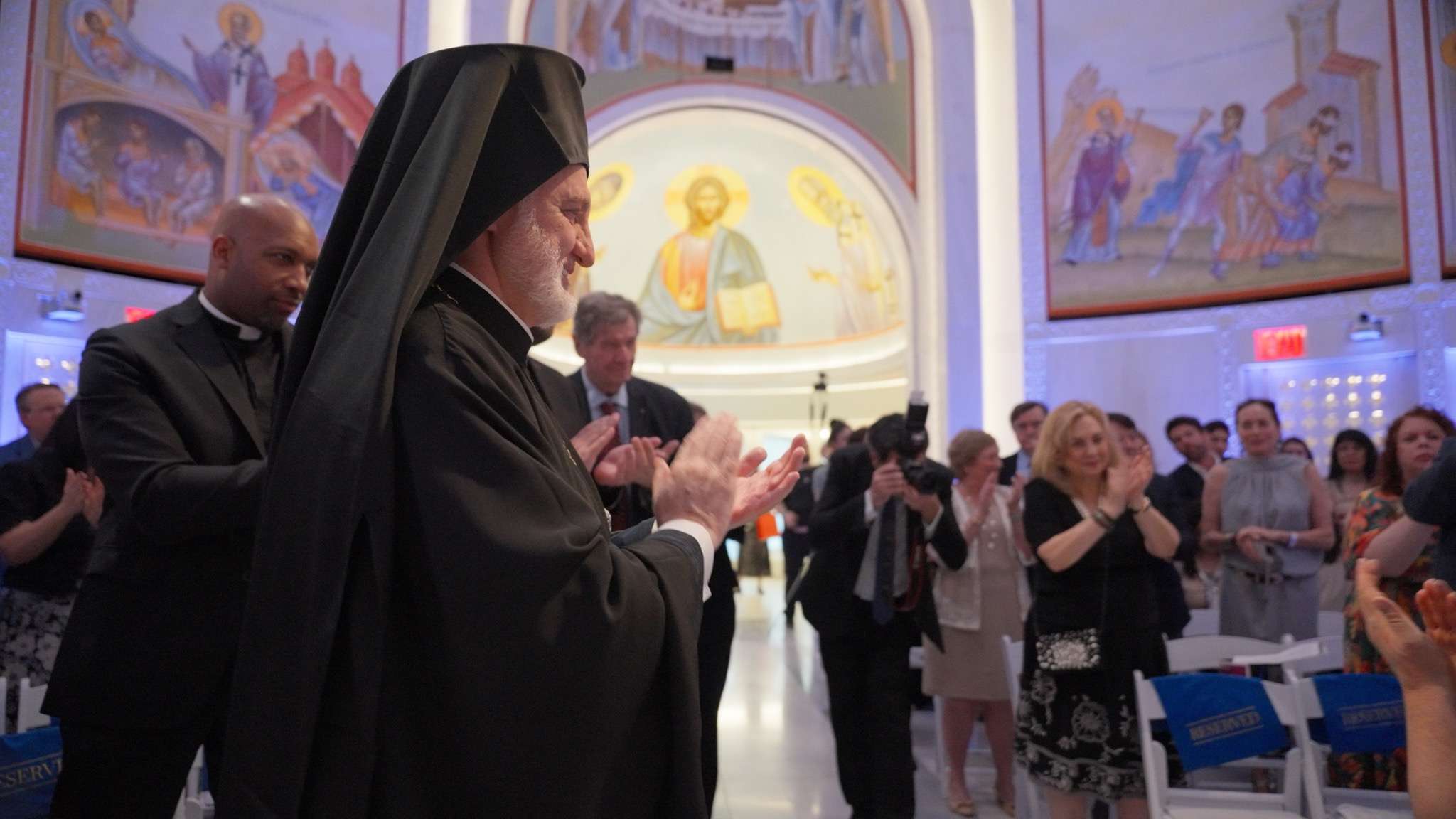
“I thank Professor Karantzias for his amazing tribute to such an amazing Saint of our Church. I know that this composition will inspire untold thousands to seek Saint Iakovos—to learn from his humility and faith—and to follow his example of pure and unalloyed love for everyone and everything in God’s creation,” Archbishop Elpidophoros said. “I also express the gratitude of all for the wonderful performers under Maestro Tsourakis, and our hosts here at the Saint National Shrine for their gracious hospitality. May the blessing of Saint Iakovos of Evia be with us all, and by his holy intercessions, may we attain the same measure of grace and sanctity with which he lived his life on earth, and he now basks in the radiance of our Triune God in Heaven. Amen!”
> Read Archbishop Elpidophoros’s full remarks
It was at the Sacred Monastery of St. Iakovos of David where the Archbishop gave the inspiration from which the piece is drawn. His Eminence Archbishop Elpidophoros had a spiritual encounter with Saint Iakovos, whose image first appeared to the Archbishop at the beginning of his synodical service at the Phanar, though only later recognizing him in a photograph. The Archbishop’s encounter with Saint Iakovos led His Eminence to learn about the Saint’s life, and help advance the process of canonization.
The final signature of the Archbishop while acting as the Metropolitan of Bursa was on the Act of Canonization of Saint Iakovos. His Eminence shares that this was a blessing from the Saint, expressing conviction that Saint Iakovos would accompany him throughout his life. The testimony of the Archbishop became the “spiritual seed” for the creation of the piece, honoring Saint Iakovos as a living presence of “prayer, humility, healing, and hope.”
The post Archbishop Elpidophoros attends world premier of ‘A Contemporary Saint: Saint Iakovos of Evia’ appeared first on Orthodox Observer.