This post was originally published on this site
On May 15, Pope Leo XIV signed a document that grew out of a Vatican conversation on artificial intelligence and ethics that had been developing for nearly a decade. He presented it to the world ten days later, on a Monday in late May, as “Magnifica Humanitas”—“Magnificent Humanity”—subtitled “On Safeguarding the Human Person in the Time of Artificial Intelligence.”
The choice of date was deliberate: 135 years earlier, his namesake Leo XIII released “Rerum Novarum.”
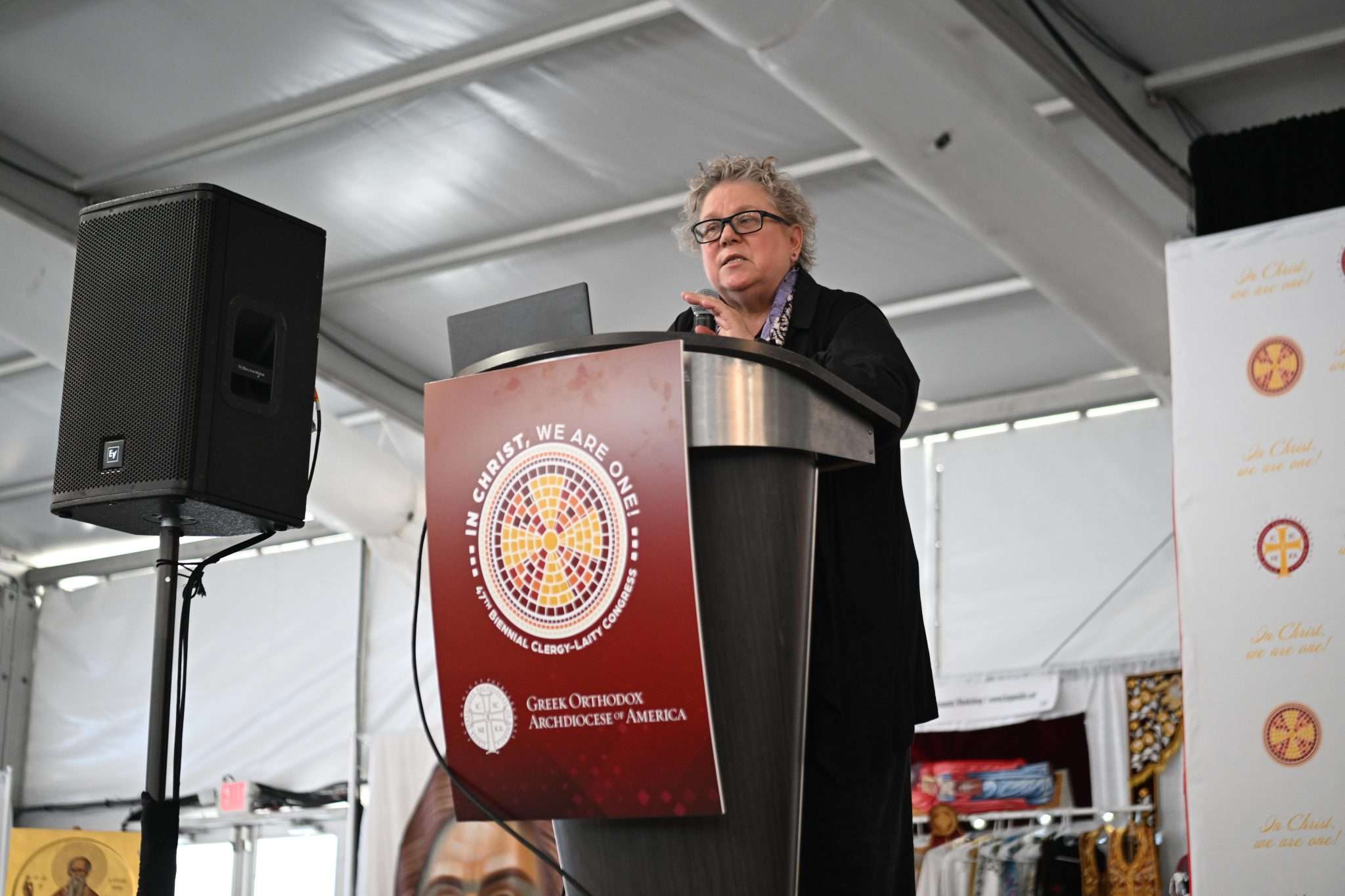
“Pope Leo XIV chose his regnal name in deliberate continuity with Pope Leo XIII, whose 1891 encyclical “Rerum Novarum” founded modern Catholic social teaching in response to the Industrial Revolution; the new encyclical situates AI within that same tradition of social doctrine alongside Laudato Si’ and Fratelli Tutti,” said Northwestern University professor Dr. Gayle Woloschak to the Orthodox Observer.
“Rerum Novarum” (“Of New Things”) was, as Harvard professor Jill Lepore wrote in The New Yorker, “an indictment of the profound economic inequality wrought by the Industrial Revolution.”
“Many things are new. Many things are old. Leo XIII indicted robber barons; Leo XIV indicted tech moguls,” Lepore continued.
Speaking as he unveiled the text, Pope Leo XIV said he felt entrusted “to look upon another huge transformation with eyes of faith, with lucidity of reason, with openness to mystery and with cries of the poor and the earth resounding in my heart.” In his reference to ‘transformation,’ Pope Leo points to artificial intelligence (AI).
The encyclical opens on what Pope Leo calls the “res novae”—the “new things”—of our moment, and he acknowledges the subject is far from settled or even fully knowable. In recent years, he writes, it has become “increasingly evident how rapidly and profoundly digitalization, artificial intelligence and robotics are transforming our world.”
Technology, he is careful to say, is not in itself the enemy of humanity; it has been “a profoundly human reality” since the beginning, and it has the power “to heal, connect, educate and protect our common home.” But it can also “divide, exclude and generate new forms of injustice.”
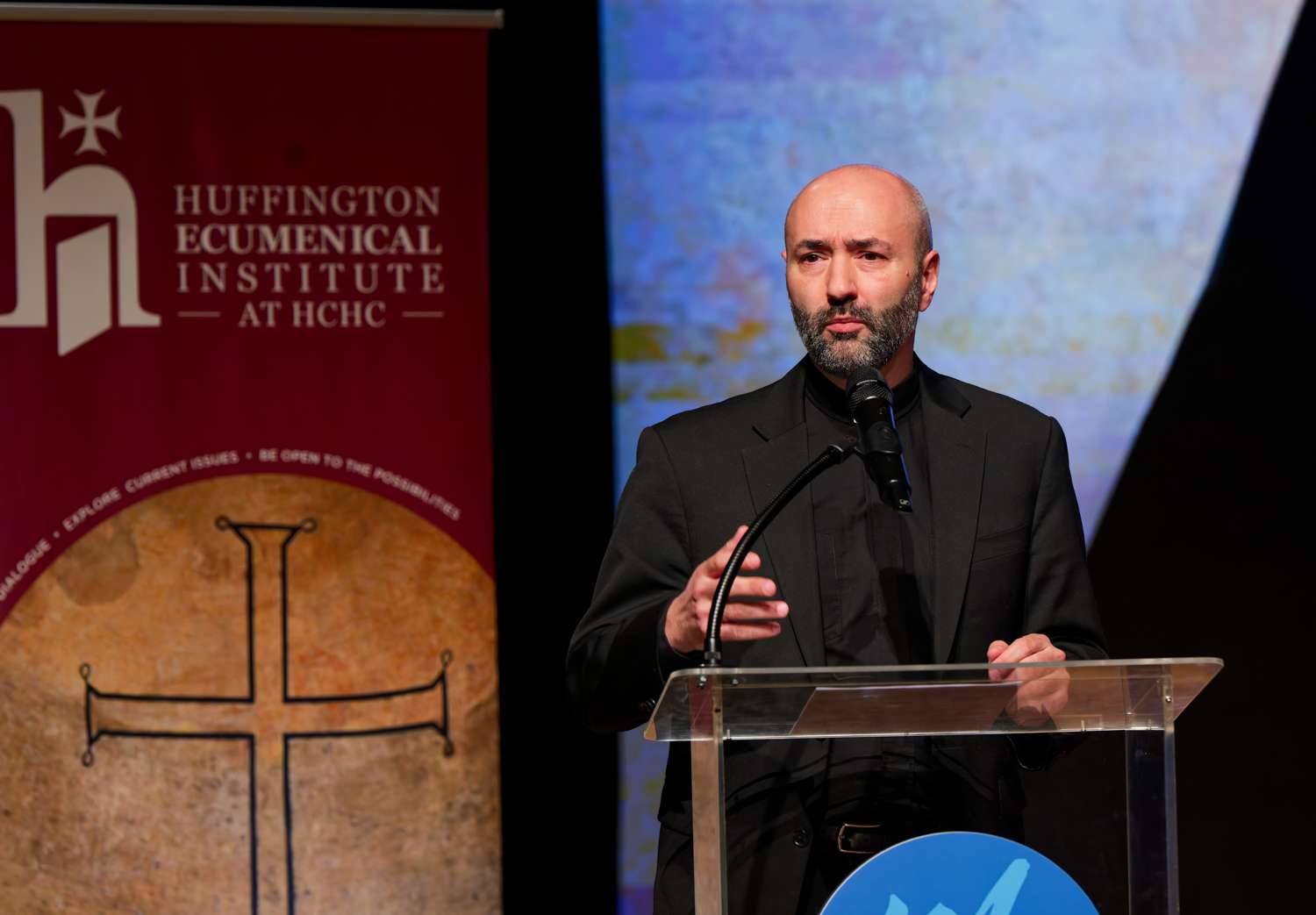
“Much more could be said about this rich and multidimensional encyclical,” said Rev. Dr. Nicolas Kazarian, Director of the Department of Inter-Orthodox, Ecumenical & Interfaith Relations for the Greek Orthodox Archdiocese of America. “Yet one final observation deserves emphasis: the document’s intended audience clearly extends far beyond the Roman Catholic Church.”
“Its ecumenical dimension is explicit and compelling. The challenges posed by artificial intelligence—and the ethical questions it raises—cannot be addressed in isolation,” said Fr. Nicolas.
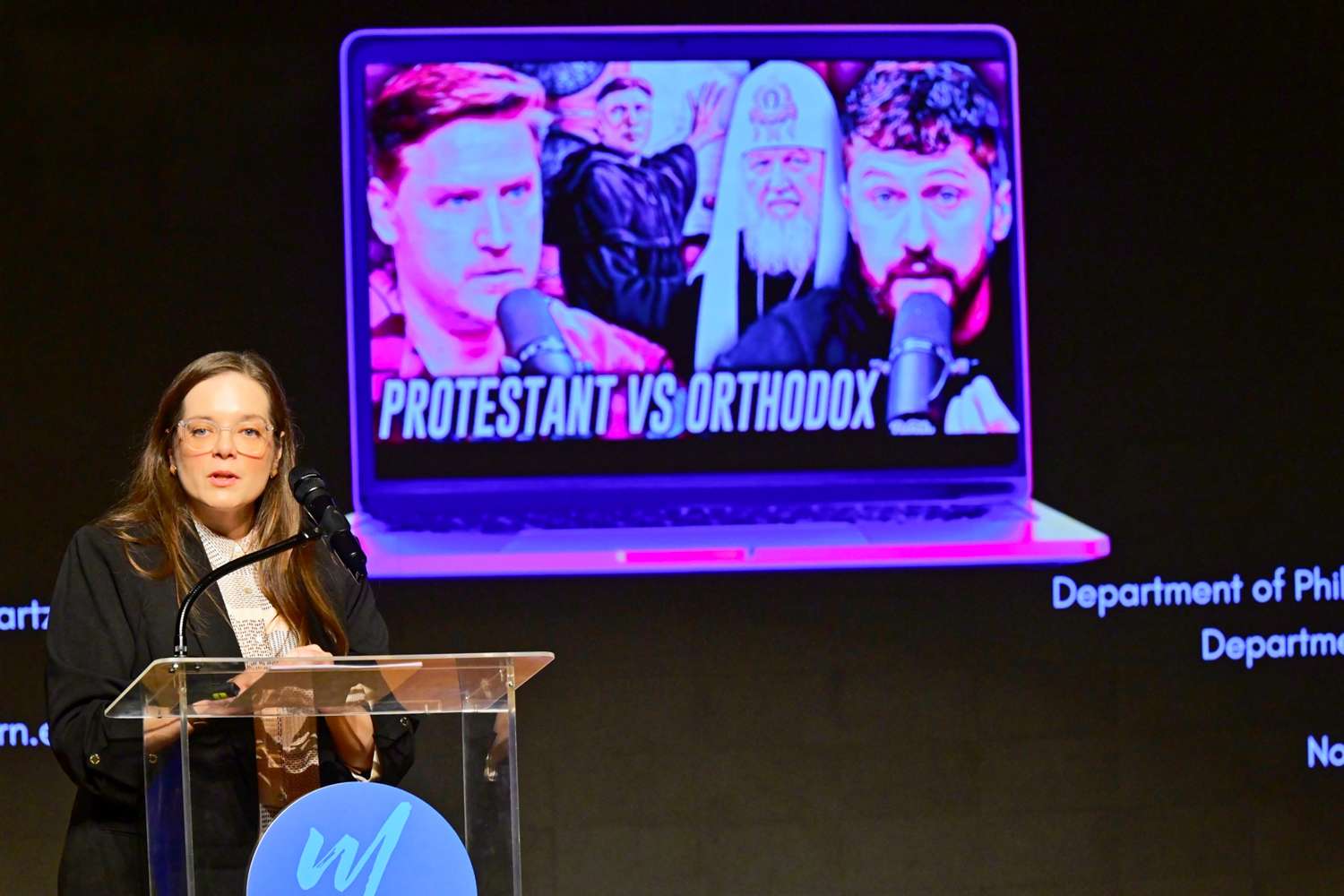
Commenting for the Orthodox Observer, Northeastern University’s Dr. Sarah Riccardi-Swartz observes that central to the Pope’s encyclical is the idea that “the use of AI is never a purely technical matter: when it enters processes that affect people’s lives, it touches on rights, opportunities, status and freedom. AI is not morally neutral, and its use will have wide-ranging impact on our generation and future generations, particularly on conceptions of truth, hope, and social and ethical responsibilities.”
What truly unsettles Pope Leo is society’s nearly-fatalistic attitude toward artificial intelligence. He describes a world in which a few people race to build the future, a few more reflect on what they are building, and “most people are watching and waiting, observing from afar and merely hoping for the best.” That resignation is the real target.
Dan Rober, an associate professor of Catholic Studies at Sacred Heart University, told Vox the pope’s worry is precisely that “we don’t just submit to inevitability on questions of AI, but ask critical questions and push back in ways that are necessary before it’s too late.”
To frame the choice, Pope Leo utilizes two scenes from Scripture.
The first is the Tower of Babel from Genesis—a city and a tower built “with its top in the heavens,” conceived without reference to God, “supported by a uniformity that eliminated diversity.” Babel, in his reading, “reveals the limits of any effort that, however grandiose, arises from self-affirmation, sacrifices human dignity for efficiency and aspires to reach heaven without God’s blessing.”
The second is the rebuilding of Jerusalem under Nehemiah, in which the ruined walls rise “not through the initiative of one man, but through the shared responsibility of all.”
From these two images comes the encyclical’s governing thesis. “The primary choice,” Leo writes, “is not between a ‘yes’ or ‘no’ to technology, but rather between constructing Babel or rebuilding Jerusalem.”
The Tower stands as an illustration of the perils of uniformity and standardization — fitting for an age in which technology has become a kind of universal language. Nehemiah supplies the antidote: shared selfless labor in which “all are given their own section of the wall: scientists and researchers, entrepreneurs and workers, educators and legislators, civil society, popular movements and faith communities.”
So how do two ancient biblical images bear on the promise and peril of a technology that for the greater public emerged just a few years ago? Pope Leo begins with a distinction he insists upon at length: that whatever these systems are, they are not like us.
“So-called artificial intelligences do not undergo experiences, do not possess a body, do not feel joy or pain, do not mature through relationships and do not know from within what love, work, friendship or responsibility mean,” Pope Leo writes.
In that gap, Pope Leo locates a specifically human danger—not that someone may mistake a chatbot for a person, but that surrounded by frictionless simulations, a person might “gradually lose the very desire to form genuine human connections.”
“When words are simulated,” he writes, “they do not build genuine relationships, but only their appearance.”
Pope Leo “identifies the threat of AI as a form of dehumanization, and then he asserts, with passion and clear eyes, what is actually worth saving about being human,” writes Gal Beckerman, author and staff writer for The Atlantic: “For an algorithm, an error is a flaw to be corrected; for a person, however, an error can be a catalyst for profound change,” Pope Leo warns.
Pope Leo borrows from Pope Francis the idea of a “technocratic paradigm” expressed in “Laudato Si’” the tendency “to let the logic of efficiency, control and profit alone shape personal, social and economic decisions,” and he observes the levers of this paradigm no longer sit with states.
The principal drivers of development are now “private, often transnational, parties” whose resources “surpass those of many Governments,” Pope Leo writes. When such power is “concentrated in the hands of a few,” he continues, “it tends to become opaque and evade public oversight.”
Pope Leo’s remedy: AI must be “disarmed.” His proposition is to break this connection between technical power and the right to govern, so AI cannot become a vehicle of economic, political, or military domination by a select few.
Next, Pope Leo examines the supply chain, casting a light into the human cost hidden beneath every seamless answer. Nothing in the world of AI, he insists, “is immaterial or magical.” A vast and largely invisible workforce — disproportionately young women, often working “for minimal wages”—labels data and moderates disturbing content, while children in some regions crush the rock from which rare-earth elements are extracted.
“The bodies of these people are scarred, injured and worn down so that computational flow may continue uninterruptedly,” Pope Leo writes. He names this a new form of slavery, and names another, subtler form of extraction as well. “Even today,” he writes, “colonialism assumes new forms. It no longer dominates only bodies, but appropriates data, transforming personal lives into exploitable information.”
Health records, genetic maps, epidemiological profiles—these, Pope Leo argues, have become “the new ‘rare earths’ of power,” and whoever controls the health data of whole peoples can decide, before others, “to whom medicines, investments and protections will be allocated.” It is a portrait of a so-called throwaway culture extended into the digital economy, one that treats persons, at best, as cogs in the service of a larger machine.
“While the document draws deeply from the longstanding teachings of the Magisterium, it is equally evident that something new is taking shape,” Fr. Nicolas Kazarian said to the Orthodox Observer. “Although artificial intelligence and its many ramifications constitute a recurring thread throughout the text, Pope Leo seizes the opportunity to revisit critical moments in the development of the Church’s Social Doctrine.”
“Notably,” Fr. Nicolas continued, “he expresses a profound and disarming honesty in addressing past failures—especially in relation to slavery: ‘It is impossible not to feel deep sorrow when contemplating the immense suffering and humiliation endured by so many in stark contrast to their immeasurable dignity as persons infinitely loved by the Lord. For this, in the name of the Church, I sincerely ask for pardon.’”
“This penitential posture opens the way for a moral discernment of contemporary forms of domination,” Fr. Nicolas said, “including those emerging through artificial intelligence as new instruments of power, conflict, and even warfare.”
Indeed, Pope Leo’s gravest observations are on the matter of war. We cannot be comfortable that an algorithm gets to autonomously choose a target, he warns. “Moral judgment cannot be reduced to calculation,” he writes, “for it involves conscience, personal responsibility and the recognition of the other as a person. Therefore, it is not permissible to entrust lethal or otherwise irreversible decisions to artificial systems. No algorithm can make war morally acceptable.”
His fear is that automation will make killing faster and more impersonal, lowering “the threshold for resorting to violence” until we are simply accustomed to the idea that violence is inevitable and “needs only to be optimized.” Conflict is already permeated by automated systems that distance decision-making “from the human body and from human responsibility.” Threaded through all of this is what Leo calls a “culture of power” that grows “by normalizing war, pursuing ever-greater military power, taking advantage of the crisis of multilateralism and fueling a false realism that insists that there is no alternative.”
The danger reaches democracy itself. Paolo Carozza, the Notre Dame law professor who co-chairs the Meta Oversight Board, told TechCrunch AI-driven deepfakes have “corroded our capacity to recognize what’s true and what’s not true,” with consequences he called fundamental for democratic politics and for what he termed cognitive freedom.
The alternative Pope Leo proposes is the one Pope Paul VI named decades ago: a “civilization of love.” It asks us to treat the digital world “as a new continent to be evangelized,” to defend “places and times where physical presence remains crucial,” and to ensure that “the ‘rejected stones’ — the poor, the sick, the migrants and the least among us” become the cornerstone of whatever we build.
Christopher Olah, a co-founder of the AI company Anthropic, stood beside Pope Leo at the presentation. Some critics have referred to this appearance as “popewashing.”
“Imagine if Leo XIII had invited John D. Rockefeller to hear him speak on the dignity of labor,” wrote Matthew Walther, editor of The Lamp, a Catholic literary journal.
Others saw it as a sign that, under Pope Leo, the Vatican seeks a seat at the high-tech table. Olah, who describes himself as a scientist studying what happens inside the AI models, told the audience he and his colleagues:
“I will be honest: we keep finding things that are mysterious, even unsettling. We find structures that mirror results from human neuroscience. We find evidence of introspection. We find internal states that functionally mirror joy, satisfaction, fear, grief, and unease. I don’t know what that means, but I think it warrants ongoing discernment.”
Olah continued: “If this technology is coming, it must go well—for our common home, and for the children to come.”
“Particularly significant for Orthodox engagement is the encyclical’s linking of AI to transhumanism—the desire to be “more than human” through technological self-perfection,” Dr. Gayle Woloschak told the Observer. “Whether the contemporary drive for AI is in fact closely connected to transhumanism is debatable, but Pope Leo’s theological response is striking and worth marking: being ‘more than human’ for Christians is not a technological project but a vocation of grace and Christian humanism, a call to be drawn beyond ourselves into the fullest possible personhood.”
Some critics argue the encyclical says too little about the promise of this transformational technology.
“As for the specific advantages that AI might yield, however, Leo is largely silent. His expressions of alarm are detailed and expansive; his expressions of hope, perfunctory and brief,” Francis X. Rocca wrote for The Atlantic. The Wall Street Journal complained Pope Leo recites “the most pessimistic prophecies” while dismissing the benefits, his faith in “a beneficent state” misplaced.
Others wonder if the Pope’s encyclical can alter AI’s current course.
As Simon Mundy pointed out in the Financial Times, even executives who fear the risks of acceleration are compelled to keep racing for fear of falling behind, and the same game theory binds governments; the pope’s appeal cannot easily change that logic. The Guardian pointed to that logic in connection with President Trump’s decision to postpone an executive order that would have required safety reviews of new AI models.
But The Guardian’s editorial praised the Pope’s message, arguing that it highlights the hubris and lack of accountability of some prominent Silicon Valley entrepreneurs that “represent a threat to the common good” and that only state regulation can keep AI’s real benefits in service of everyone. Writing in The Spectator, Michael Gove drew a sharp historical line: those who steer the major AI labs now wield “a power approaching that of the Oppenheimers and Fermis of the past,” yet they operate “not as agents of democracies but ambitious entrepreneurs locked in a race for personal mastery.”
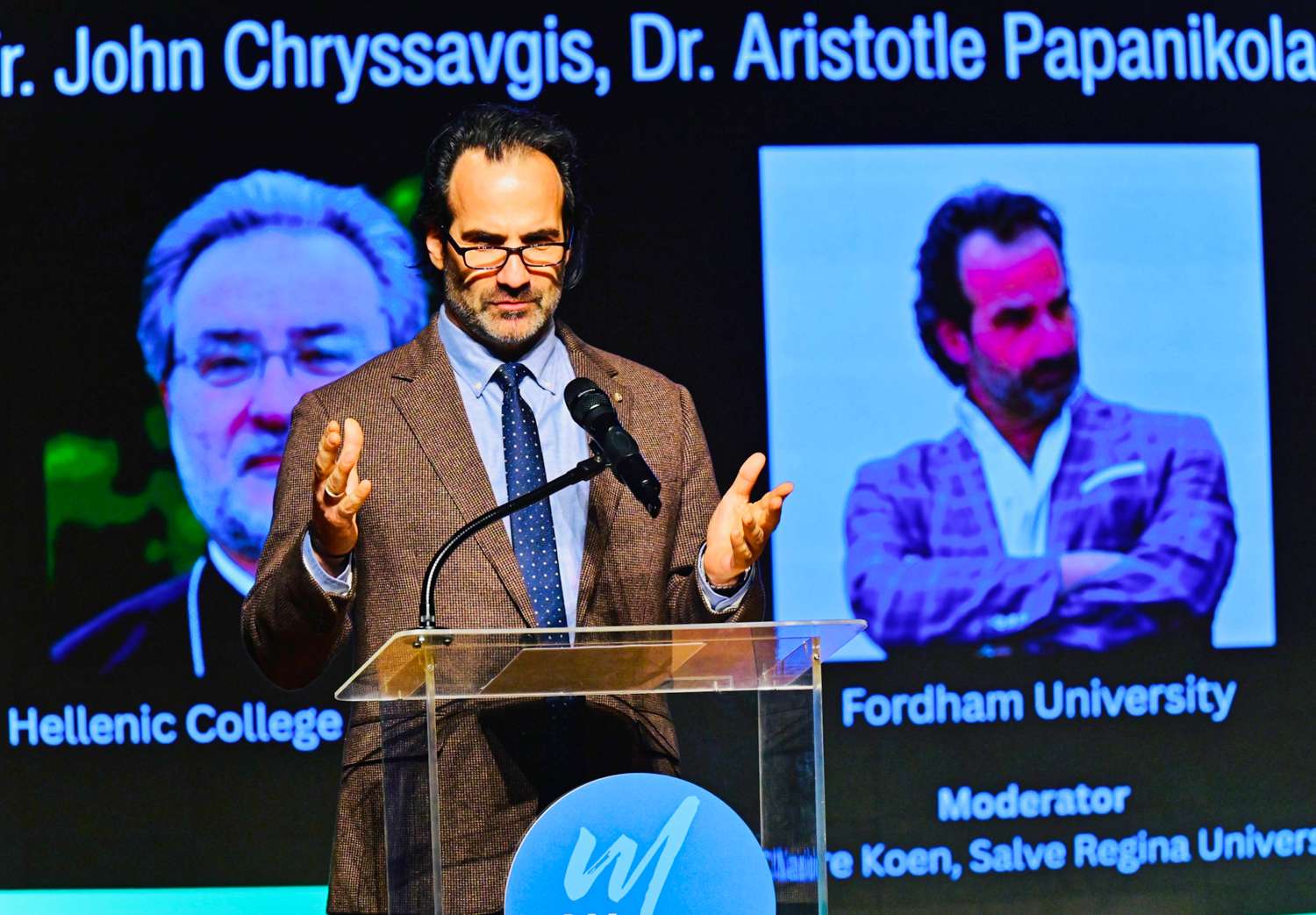
“The Pope is right to emphasize that part of what it means to be human is to recognize our limits, insecurities, frailties, weaknesses, and finitude,” said Fordham University’s Dr. Aristotle Papanikolaou to the Orthodox Observer. “Perhaps AI will help us to embrace this dimension of the human experience with kindness, as God does.”
The post What must not be lost: Pope Leo XIV’s first encyclical confronts artificial intelligence appeared first on Orthodox Observer.