This post was originally published on this site
The Archdiocesan Council of the Greek Orthodox Archdiocese of America convened virtually on May 8, 2026 for its spring meeting, in a five-hour session. The meeting, held ahead of the 48th Biennial Clergy-Laity Congress in Cleveland from June 30 to July 3, also marked the closing meeting of the current Archdiocesan Council term. Its agenda reflected the breadth of the Archdiocese’s work: Hellenic College Holy Cross, Saint Basil Academy, St. Michael’s Home, National Ministries, finance and audit, administration, the Holy Eparchial Synod, legal affairs, and communications.
His Eminence Archbishop Elpidophoros of America opened the meeting with prayer and framed the Council’s work around the theme of the upcoming Clergy-Laity Congress: “Rise and Build.” “The good work that we propose to enjoy in the 48th Congress of our church is an intensified focus on the growth and the development of our parishes and how the national ministries of the Archdiocese can most positively affect their communal and ecclesial lives,” His Eminence said.
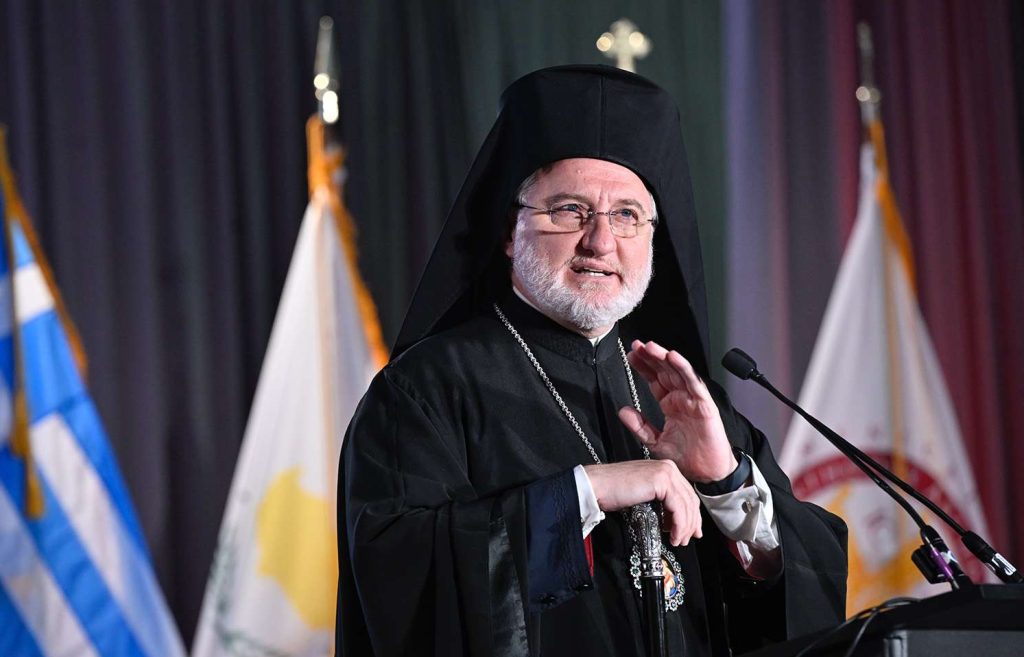
The Archbishop described a Church entering the Congress with confidence, grounded both in the Resurrection and in a renewed public interest in Orthodox Christianity. “The future of our Archdiocese is extraordinarily bright,” he said. “It is bright because we are illuminated by the resurrection of our Lord Jesus Christ and because we are proclaiming His good news, the good news of salvation and eternal life in Him.”
He added that Orthodox Christianity is drawing attention in a way that should shape the Archdiocese’s mission in the public square. “So many of you realize that we are witnessing a level of interest and level of seeking about Orthodox Christianity that is unprecedented in our country,” His Eminence said.
John Catsimatidis, vice chairman of the Archdiocesan Council, followed with remarks praising the state of the Archdiocese and the management team assembled under the Archbishop’s leadership. “I’ve never seen the Archdiocese work so efficiently as it does now,” Catsimatidis said in his opening remarks. “I’ll certify as a business person that the Archdiocese is in better shape than it’s ever been in the last 40 years.”
Hellenic College Holy Cross: Strong Enrollment and Infrastructure Needs
The first major institutional report came from Fr. Michael Lambakis, interim president of Hellenic College Holy Cross Greek Orthodox School of Theology, who presented a picture of a school with renewed momentum, particularly in enrollment.
“One of the most wonderful and exciting developments that continues to go in a very, very positive direction, in a sustainable direction, is the outstanding enrollment at Hellenic College and Holy Cross,” Fr. Lambakis said. He reported that “Hellenic College has more than doubled its full-time undergraduate student body over the last three years, with consistent growth since the fall of 2022.” The school expects to graduate 61 students on May 16, including 40 from Holy Cross, with 18 Master of Divinity students among them.
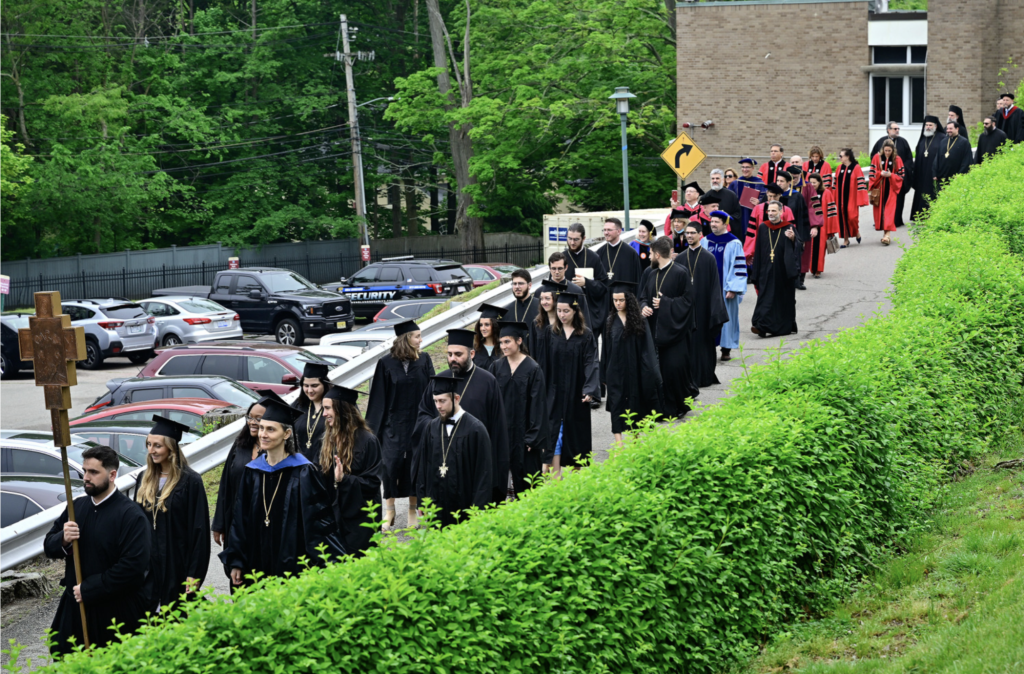
Fr. Lambakis also noted that applications are significantly ahead of last year, with Hellenic College receiving 150 applications compared with 96 a year earlier, and Holy Cross applications also exceeding the prior year’s level. Growth, however, has produced a new challenge: space. “With our continued growth, we, unfortunately, will not have enough on-campus housing for all of our in-person students,” Fr. Lambakis said, noting that the school is looking for off-campus housing near campus. The school also continues to face physical plant needs. Still, he continued: “Although our school does face some challenges, we are in the process of turning the ship in the right direction.”
Archbishop Elpidophoros welcomed the shortage of dormitory space as a sign of growth saying this is the first time that he likes one of the challenges that the school is facing: “We have no space, no more space for new students,” His Eminence said. “Isn’t that a wonderful challenge? Isn’t that a wonderful problem?”
Saint Basil Academy: Relocation, Continuity, and a Renewed Educational Vision
The Council then heard a three-part presentation on Saint Basil Academy from Dr. Steven Gounardes, Fr. Costas Sitaras, and Fr. Nikiforos Fakinos.
Dr. Gounardes reviewed the history of the Academy, founded in 1944, and its evolution from an orphanage into a residential care center serving children and families in crisis. Today, the Academy has 21 children across its programs and remains licensed and supervised by the New York State Office of Children and Family Services. He emphasized that the ongoing discussion about the Academy’s future should not be misunderstood. “A very important emphasis here is the relocation of Saint Basil Academy, not its closure,” Dr. Gounardes said.
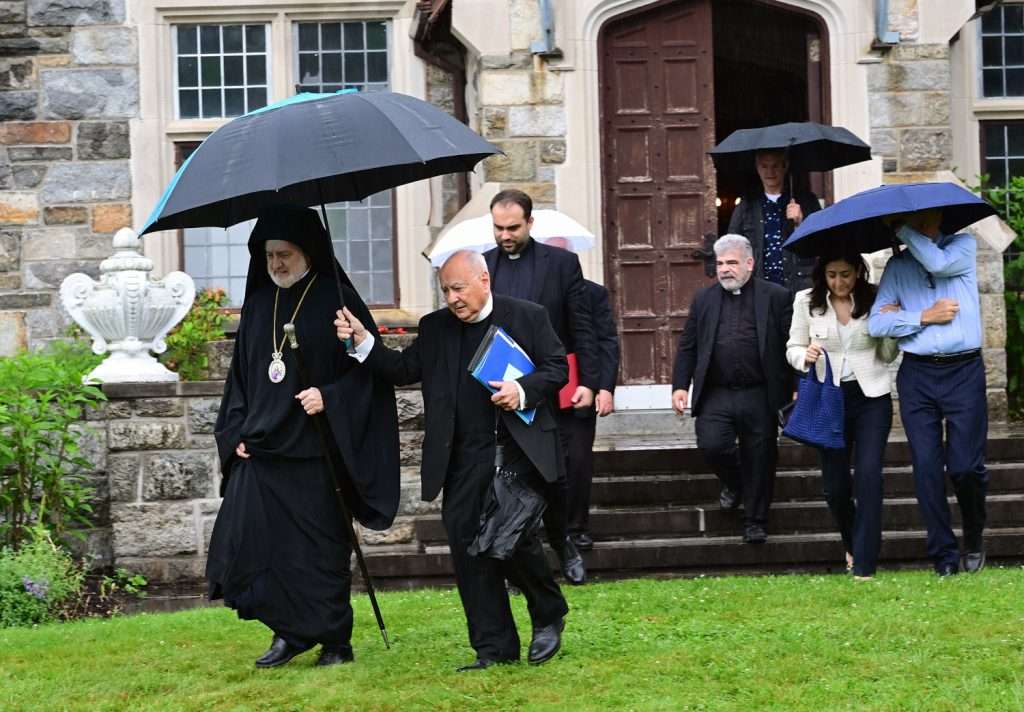
The Academy’s board, he said, has reviewed more than 80 properties, visited 17 sites in person, and is reviewing seven additional properties. The challenge, he said, is finding a facility that meets the complex requirements of a residential child-care ministry, including state licensing, building codes, fire safety, accessibility, programming space, and health inspections.
Fr. Sitaras described the “actual life of Saint Basil Academy,” organized around three programs: the Youth Program, the Bridge Program, and the Family Program. The Youth Program currently serves seven young people ages 6 to 18. The Bridge Program serves five post-high-school young adults preparing for independence. The Family Program serves nine children in four families, primarily single mothers with one or two young children. “What we do is help them get their education or training, help them with financial planning, help them get a driver’s license, help them get a car, whatever is necessary to get them to be independent adults,” Fr. Sitaras said of the Bridge Program.
Fr. Fakinos then presented the case for relocating the Academy to Nassau County, Long Island, describing it as a growing Greek Orthodox and Greek American area with strong parishes, donors, schools, universities, hospitals, youth programs, and employment opportunities. “At the same time, it is His Eminence’s vision to revisit and reestablish the academy as what the name consists of, an academy, an educational institution,” Fr. Fakinos said.
Archbishop Elpidophoros later clarified that the proposed educational mission was not intended to be merely local: “My vision is to have a successful school, an Archdiocese school, which will then be a model to open other schools everywhere in the country, Saint Basil’s Academies.”
St. Michael’s Home: Long-Awaited Progress Toward a New Facility
His Grace Bishop Andonios of Phasiane reported on the progress of the new St. Michael’s Home in Uniondale, Long Island, a project that has long been central to the Archdiocese’s care for seniors. “This August will mark my 30th anniversary as the director of St. Michael’s,” Bishop Andonios said, noting that early in his tenure it became clear that the Home needed to expand not only in size but also in levels of care. He said that over three decades, “well over 400 residents needed to be transferred to other facilities for a higher level of care they required as a result of the aging process.”
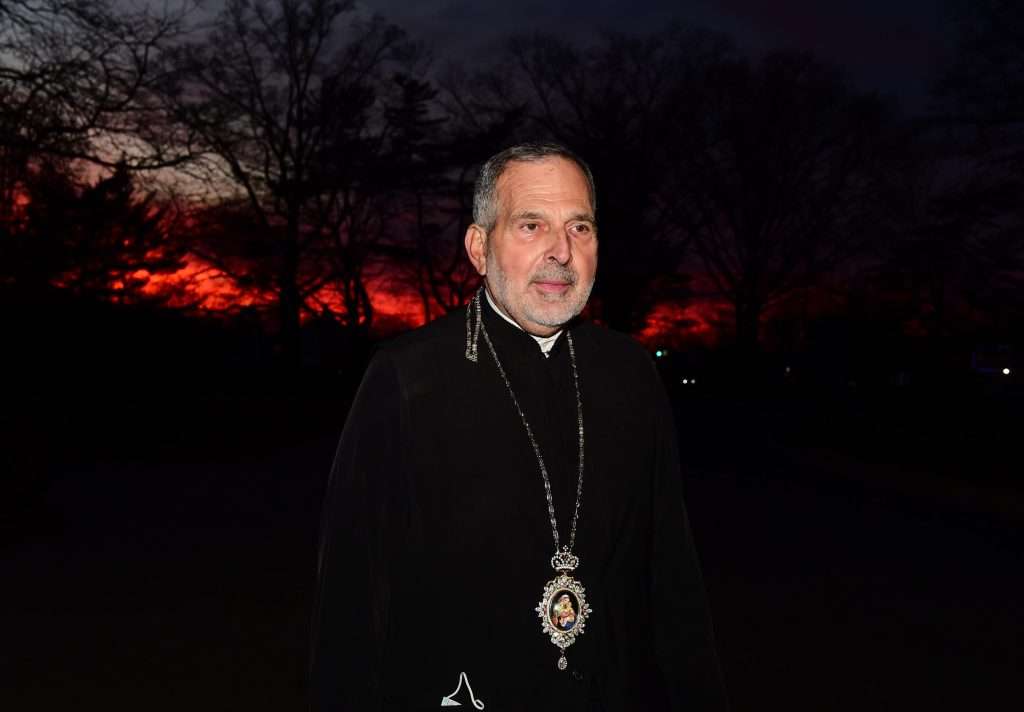
The new Uniondale facility is intended to address that gap. “It has been a long and, at times, very challenging process to keep construction moving forward,” Bishop Andonios said, “but this has been our commitment, and I’m happy to say that there is definitely light at the end of the tunnel.” He reported that exterior work has been completed and interior work is advancing. When finished, the new facility is expected to house approximately 150 residents, compared with roughly 50 at the current facility. “Once completed, there will be a magnificent state-of-the-art continuum care facility,” Bishop Andonios said.
The Council also heard an update on financing for the project, including preliminary approval for tax-exempt bond financing and a letter of intent with Diamond Community Bank for a loan of up to $31.5 million, structured as a drawdown so that funds are used only as needed.
National Ministries and the CARA Survey: Listening, Data, and Parish Support
Parishes across the Greek Orthodox Archdiocese of America are growing, clergy leadership remains central to parish vitality, and clergy and ministry leaders are asking for stronger formation with a centralized ministry platform to help them. Those were among the key takeaways from the initial findings of the National Parish Ministry Leadership Survey presented at the May 8, 2026 Archdiocesan Council meeting.
The presentation was delivered by Archon Theo Nicolakis, Director of National Ministries and CIO, together with Dr. Jonathon Wiggins, Senior Research Associate at the Center for Applied Research in the Apostolate (CARA). CARA, affiliated with Georgetown University, and with decades of expertise evaluating Churches and ministry programming, conducted the survey.
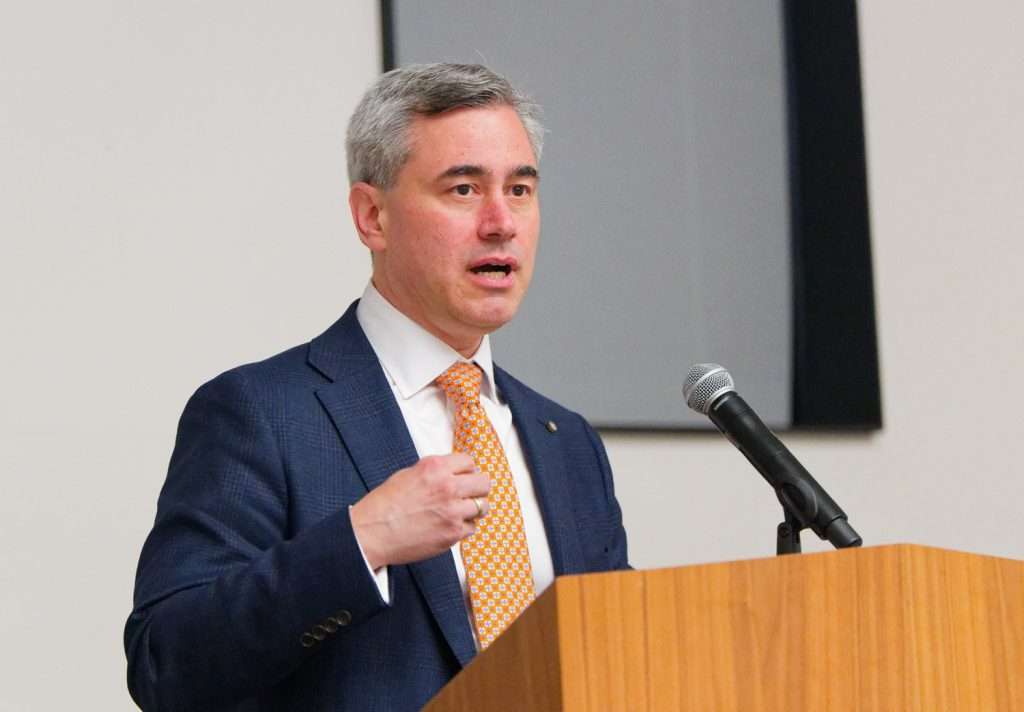
1,856 ministry leaders from all metropolises responded to the survey. The findings showed both strengths and strain: 63 percent of respondents characterized their parishes as growing, while 61 percent of non-clergy respondents reported a relatively negative experience in mentoring and training for ministry leadership. The survey identified a strong correlation between parish growth and satisfaction in key areas of parish life such as effective sermons, worship quality, adult catechism, spiritual formation, parish mission and vision, and adult religious education.
The survey also pointed to clear priorities for national investment. “The top areas selected where the Archdiocese should invest more were young adult ministries, youth religious education, youth ministries, adult religious education, and marriage and family supports,” Nicolakis said. “All five of these areas are faith formation.”
A central finding was that parishes are asking the Archdiocese and National Ministries to provide coordination, resources, and shared digital infrastructure. Approximately half of respondents identified centralized digital content platforms and online presence strategies as areas where Archdiocesan assistance would be most helpful. Archon Nicolakis indicated that 67 percent wanted “a centralized hub on goarch.org organized by topic and needs.”
“We heard clearly that fragmentation is a real obstacle for clergy and parish ministry leaders,” Archon Nicolakis said. “They are asking us to increase their capacity and make it easier to be successful in their ministry.” In response to the survey data, the National Ministries are realigning into strategic ministry portfolios: Faith Formation, Parish Leadership, Young Adult Leadership, Youth and Camping, Hellenic Education and Culture, Digital and Innovation, Generosity, Worship, Military, Hellenic Dance and Choral, and Parish Safety. This ministry portfolio-based structure will align ministry focus, optimize investment, and correspond outputs to the needs expressed by clergy and parish leadership.
A plenary session dedicated to the survey findings will take place at the upcoming Clergy-Laity Congress in Cleveland, June 30-July 2.
Executive Committee and Administration Committee
Nick Karacostas, Secretary of the Archdiocesan Council, reported that the Executive Committee had met three times since the previous Council meeting on October 17, 2025: January 13, April 6, and May 7. Much of the committee’s work, he said, focused on finance, including St. Demetrios of Astoria, the Archdiocese line of credit, quarterly financial reports, audit matters, 403(b) planning for clergy and lay employees, clergy housing allowances, budgeting for future years, and transfers into the Archdiocese’s captive insurance company.
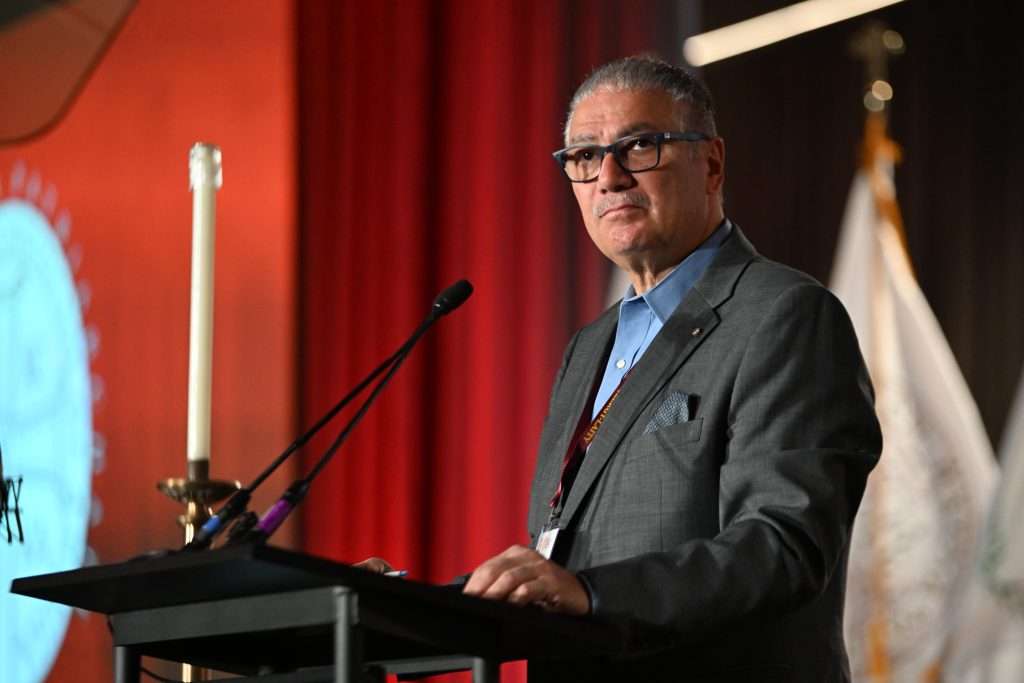
Theodore Theophilos, chair of the Administrative Committee, reported on two principal areas of work. The first is a joint effort with the Legal Committee to review the consultation process for the election of metropolitans and auxiliary bishops. Theophilos said a subcommittee met on May 5 and developed a draft of proposed changes. Those proposals will next go to a joint meeting of the Administrative and Legal Committees. If approved, the recommendation would be referred to the Eparchial Synod, then to the Archdiocesan Council, and finally to the Ecumenical Patriarchate for ratification. The second initiative, still in its early stages, is a review of the policy for clergy sexual misconduct.
Finance, Budget, Pension, and Audit: A Stronger Institutional Foundation
Elaine Allen, Treasurer of the Archdiocese, and Lazaros “Lou” Kircos, chair of the Finance Committee, presented the financial report including the 2025 results, Clergy Pension Plan funding update, and 2027–2028 budget recommendations.
Allen described an institution that has moved into a period of sustained financial stability: “This is the eighth straight year where we have met our budget, probably unfounded in the history of the Archdiocese, that we have had this kind of financial stability for such a long period of time,” she said. She added that these results can only be achieved through the wholeness of the Church working together to achieve this outcome including a commitment to transparency and accountability, revenue growth through diversification of funding sources and strong cost controls.
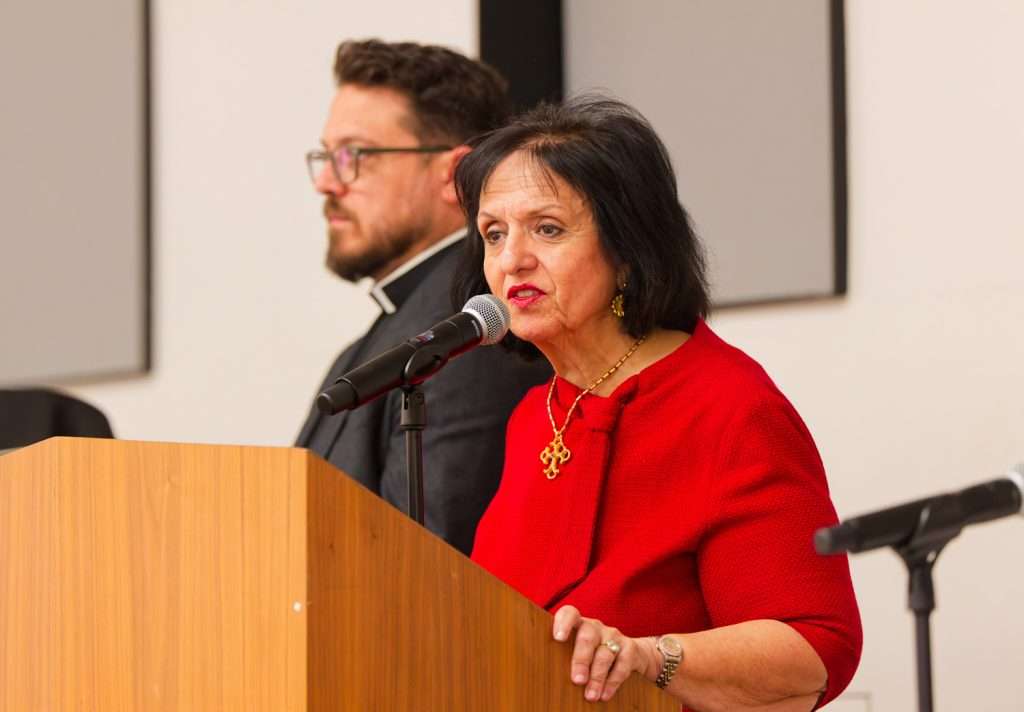
She reported that the Archdiocese continues to increase liquidity and unrestricted net assets and has built reserves in anticipation of future needs including investments in expanding National Ministries benefiting parishes, faith formation and affiliated institutions as well as funding future contingencies. She also reviewed major priorities established under Archbishop Elpidophoros, including support for Hellenic College Holy Cross, strengthening the Clergy Pension Plan, supporting the St. Nicholas National Shrine, investing in St. Demetrios Cathedral of Astoria and its school, and expanding parish-facing programs.
The pension plan showed particular progress. Allen reported that at the end of 2025, the plan was 65 percent funded with more than $100 million in investments, up from 53 percent when the current funding initiative began after the 2020 Clergy-Laity Congress and from a low of about 47 percent in 2022. “The bottom line is this pension funding mechanism is working,” Allen said. She also described a significant shift in the Archdiocese’s financial position: “It used to be that the Archdiocese was a borrower of funds from others,” she said. “That’s turned around to where now we are a lender only because of our ability to have brought positive financial results to the bottom line and conserve our assets.”
Kircos reported that Total Commitment had met budget for 14 consecutive years and that 2026 is on track to become the 15th. He also noted that 184 parishes now pay their Total Commitment through direct monthly remittances: “That is a tremendous expression of trust and support for the Archdiocese and this system,” he said.
The pension update included what Kircos called a milestone moment. As of April 30, pension assets had reached $104.5 million, and the plan was 67.5 percent funded, compared with a long-term 2026 target of 57.4 percent. “The new funding program is working,” Kircos said.
The Council approved a motion recommending that the Clergy-Laity Congress reduce the annual increase in benefits funding from 2.3 percent to 2 percent for 2027 and 2028. The motion was overwhelming passed. Kircos then presented the proposed 2027–2028 budgets. Total Commitment is recommended to increase in line with inflation, at 3.2 percent per year. The budgets include $3 million for Hellenic College Holy Cross, $1.5 million in support of the Ecumenical Patriarchate, $1.5 million in pension funding above that required for Archdiocese participants, Metropolis support of over $7 million including increased minimum support for small Metropolises, and over $7 million for National Ministries including parish and clergy ministries and National Church outreach. The Council resoundingly voted to recommend approval of the budgets to the Clergy-Laity Congress.
The financial presentation concluded with the Audit Committee report from Anastasia Economos, the committee’s new chair. “On April 30th, BDO, our independent auditors, issued an unmodified or clean audit opinion,” Economos said. “This is the fifth consecutive year that our audit financial statements were issued within four months of the end of the year.” She also reported that “BDO also did not identify any material weaknesses in internal control,” noting that this has been the case for the last nine years and had not recommended any less significant improvements in internal control. Timely audits performed by independent auditors are a cornerstone of the governance by the Archdiocesan Council over the finances of the Archdiocese.
Holy Eparchial Synod: Pastoral, Canonical, and Strategic Work
His Grace Bishop Athenagoras presented the report on the work of the Holy Eparchial Synod, focusing on its February 18, 2026 meeting, held by teleconference under the presidency of Archbishop Elpidophoros. The Synod, he reported, addressed “matters of administrative, pastoral, and canonical importance,” including the visit to the United States of His Beatitude Archbishop Ioannis of Albania for a conference at Holy Cross honoring the late Archbishop Anastasios of Albania. The Synod also approved the initiation of the process for transferring the community of Holy Theodores in Gloversville from the Metropolis of Detroit to the Archdiocesan District, pending the consent of the Archdiocesan Council and the final approval of the Ecumenical Patriarchate.
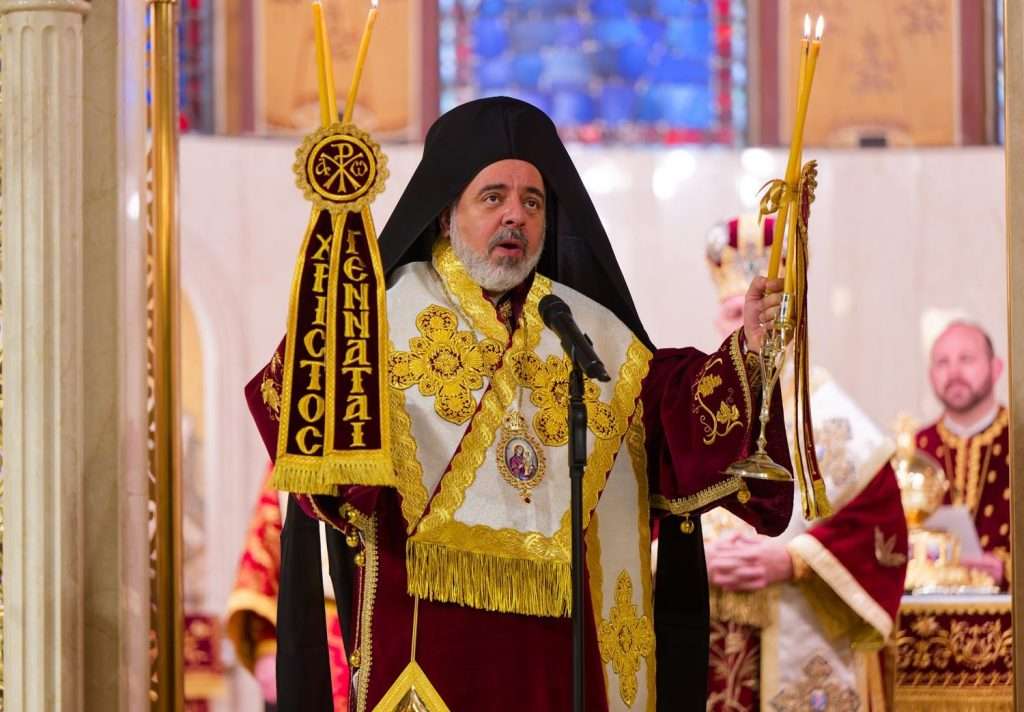
Bishop Athenagoras also reported that the Synod approved new guidelines on parish and clergy engagement in political activity, began the canonical process for the election of an auxiliary bishop for the Metropolis of Chicago, and adopted decisions related to the clergy benefits fund, youth safety protection protocols, psychological evaluations for seminarians and priesthood candidates, catechetical programming for newly illumined Orthodox Christians, and catechist training in cooperation with Holy Cross.
“In conclusion,” Bishop Athenagoras said, “the Holy Eparchial Synod once again reflected the sacred body’s commitment to addressing the contemporary needs of our church with a spirit of synodality, pastoral responsibility, and strategic vision.”
Legal Update: Risk, Whistleblower Reporting, and Trust
General Counsel George Tsougarakis presented the legal report in two parts: the legal exposure facing the Archdiocese and its metropolises, and the regular report on the Archdiocese’s third-party monitored whistleblower platform.
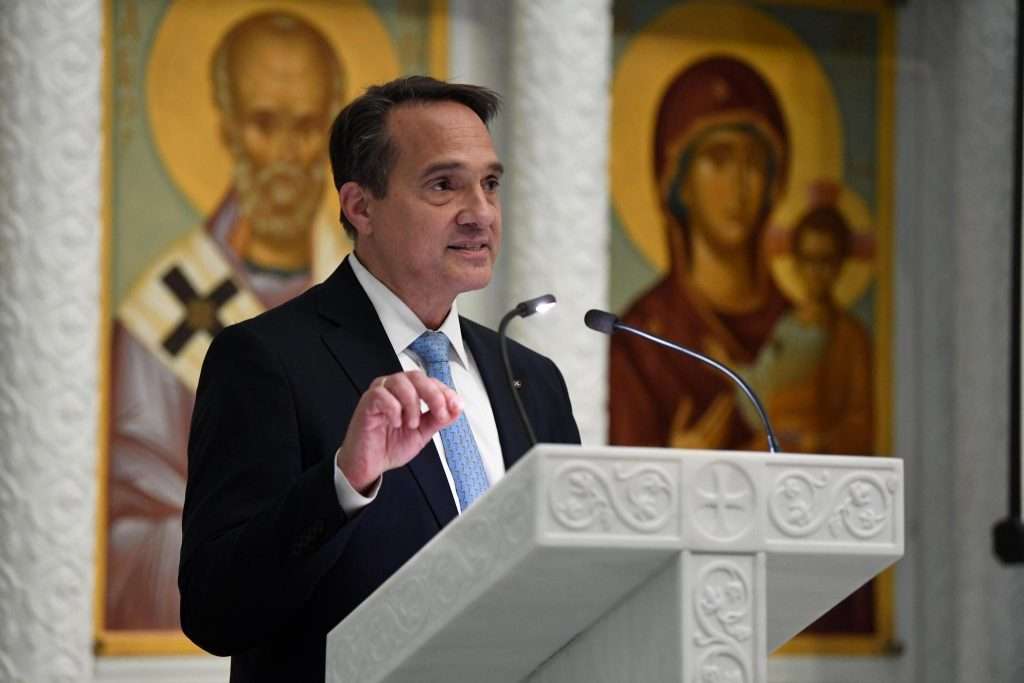
Tsougarakis said that the largest legal exposure facing the Archdiocese stems from the Child Victims Act cases—those cases arising from alleged conduct occurring decades ago. He cautioned that while it is still too early to determine liability, damages, or ultimate cost, the Archdiocese is actively defending the cases to minimize any potential exposure to the Archdiocese. He also lauded the success of the whistleblower policy in minimizing exposure from current activities.
“The policy acts as an early warning system allowing the Archdiocese to address issues in a transparent and consistent manner,” Tsougarakis said. “And the platform builds trust. People are confident that when they raise concerns they will be heard and addressed. In an institution like ours, which is based upon faith, the existence of such trust is essential.”
Communications Report: A Transformed Orthodox Observer and a Stronger Public Voice
The Department of Communications had submitted a report describing a broad transformation of the Archdiocese’s communications strategy, tools, and public voice.
The Orthodox Observer has been reshaped from a long-standing print publication into a fully integrated digital platform, including a redesigned website, a twice-weekly digital newsletter in English and Greek, and expanded social media engagement. The average average newsletter open rate is 56 percent, 21 percentage points above the industry average; subscriber growth is 75 percent over two years, and is now approaching 40,000 subscribers; and more than 12 million views across Meta platforms in a three-month period, a 66 percent increase.
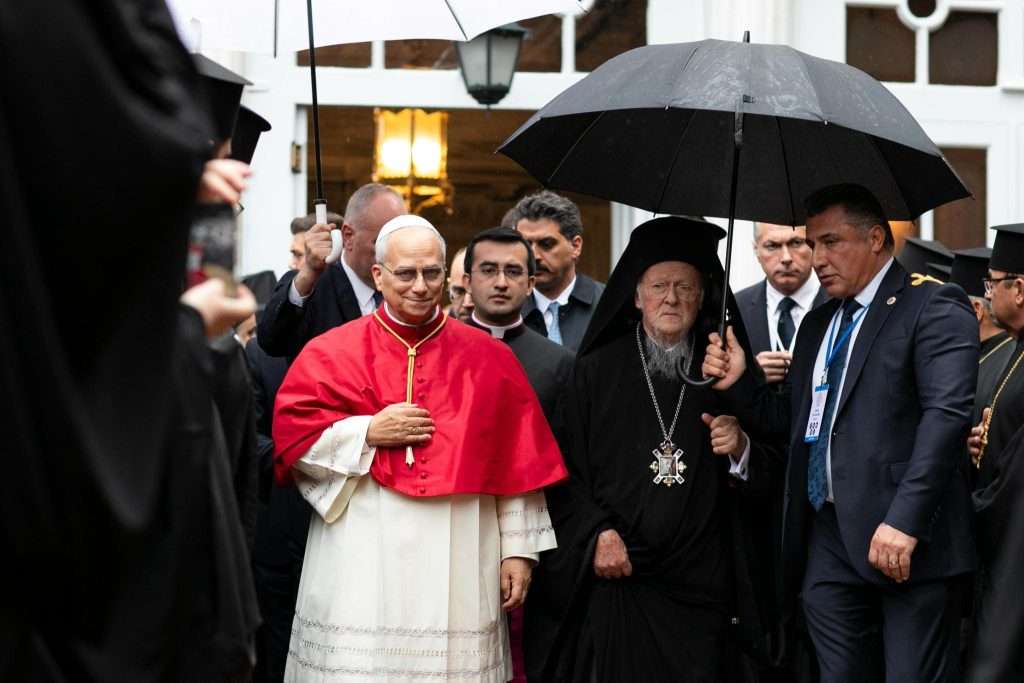
The expanded coverage of major ecclesiastical and public events, including the Apostolic Visit of His All-Holiness Ecumenical Patriarch Bartholomew to the United States, meetings between Archbishop Elpidophoros and Pope Leo XIV, the visit of Pope Leo XIV to the Phanar, international pilgrimages, engagements with government leaders, metropolis and parish visits, institution and organization events, and original theological and cultural articles in English and Greek. Another important development has been “Reports from the Field,” an Orthodox Observer initiative that brings forward the voices of clergy and laity from across the country and beyond, widening the publication’s lens beyond institutional announcements to the lived experience of the Church.
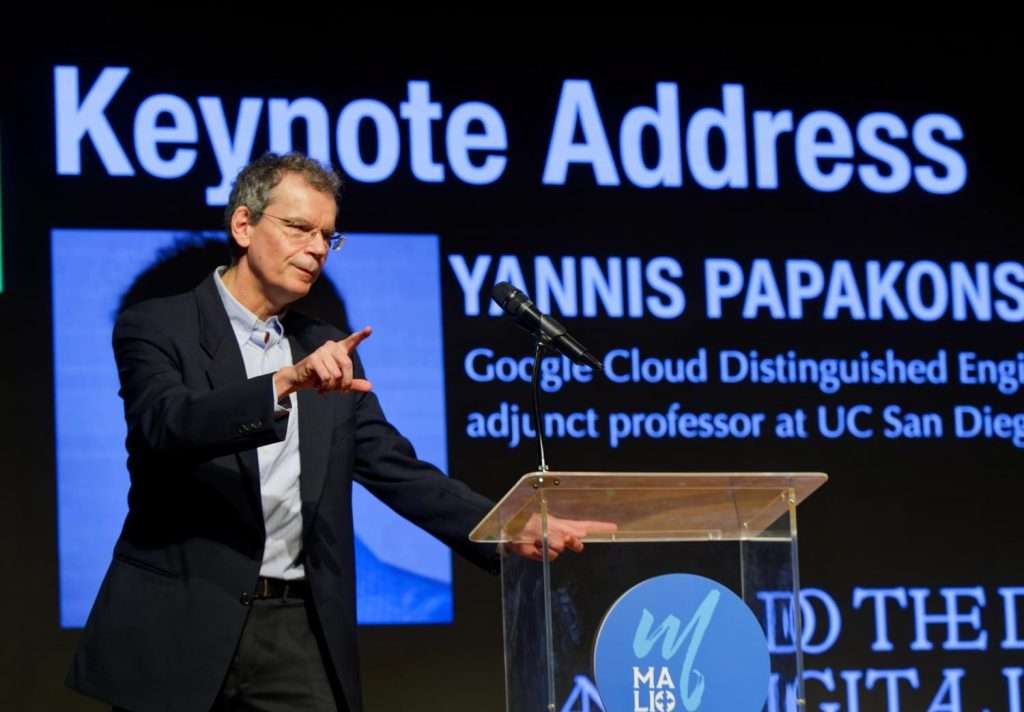
The report also highlighted two larger strategic initiatives now taking shape: the Orthodox Observer Artificial Intelligence and Theology Initiative, which culminated in a conference at the Maliotis Cultural Center featuring keynote speakers Michael Kratsios, Assistant to the President and Director of the White House Office of Science and Technology Policy, and Dr. Yannis Papakonstantinou, Distinguished Engineer and Adjunct Professor at UC San Diego, alongside leading theologians, scientists, and public thinkers, including Rev. Dr. John Chryssavgis, Archdeacon of the Ecumenical Patriarchate, Executive Director of the Huffington Ecumenical Institute at Hellenic College Holy Cross, and co-editor of For the Life of the World: Toward a Social Ethos of the Orthodox Church. The initiative reflects the Archdiocese’s recognition that artificial intelligence is an immensely consequential technology — rich with promise, shadowed by disruption, and already raising urgent ethical, existential, and theological questions about personhood, responsibility, creativity, and what it means to be human.
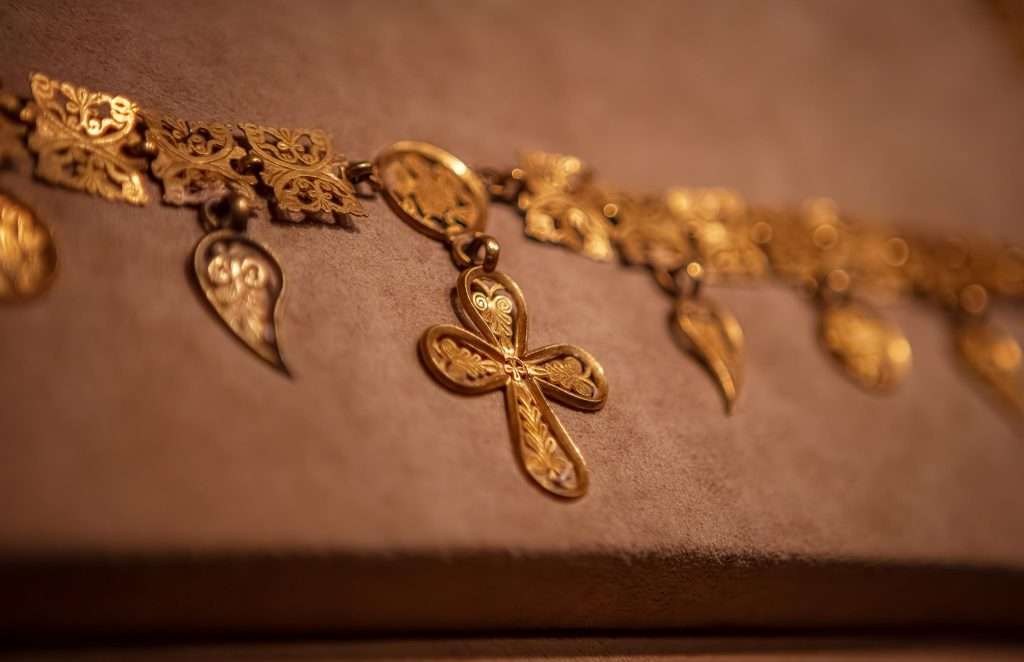
The second is an ambitious Byzantium Cultural Project, funded by Leadership 100, which will connect the Greek Orthodox Archdiocese of America with major cultural institutions in the United States and abroad. For an Archdiocese that is an Eparchy of the Ecumenical Patriarchate of Constantinople, the project is not an exercise in nostalgia, but an effort to trace, interpret, and present its living origins: Byzantium as a Christian civilization whose legacy continues to speak through Orthodox theology, iconography, architecture, chant, liturgical imagination, and a vision of beauty in which art is never merely decorative, but a form of witness.
But the strongest advocacy for the transformation of communications came not from the written report, but from Catsimatidis himself. Speaking as a successful businessman and radio station owner, he singled out communications as one of the clearest areas of institutional progress: “Communications, we are the best,” Catsimatidis said. “The archdiocese right now, in 2026, is the best in communicating with our flock and with our world. And I think it’s never been that good before.”
He continued: “Communications on the Ecumenical Patriarchate, with All Holiness, the Archdiocese and in all our churches and all our [metropolises is], the best communications ever that I’ve seen.”
The post Archdiocesan Council reviews growth, financial strength, and national ministry priorities ahead of Clergy-Laity Congress appeared first on Orthodox Observer.