This post was originally published on this site
What does it mean to be Greek American? Lily Talmers explores this question by blending Americana folk music with Greek rebetika melodies.
“The songs help me seek connection to both things,” Talmers said. “I write music to be able to access music more deeply. Greek music is always a part of that vision.”
Talmers began playing music at a young age. She grew up in the Detroit metropolitan area with a Greek father and American mother, and was encouraged toward piano and cello. Her Greek American family viewed classical music as acceptable, but ultimately expected Talmers to become a doctor or lawyer.
She began secretly writing music through high school and college, teaching herself to play guitar and taking a few lessons when she could.
As Talmers began to write more and share her work with musical friends and at open mic events, her musical endeavors slowly grew. Realizing that she wanted to pursue music more seriously, Talmers began to make records with her friends. Though her family was skeptical at first, she worked to earn their respect and their support was present through it all.
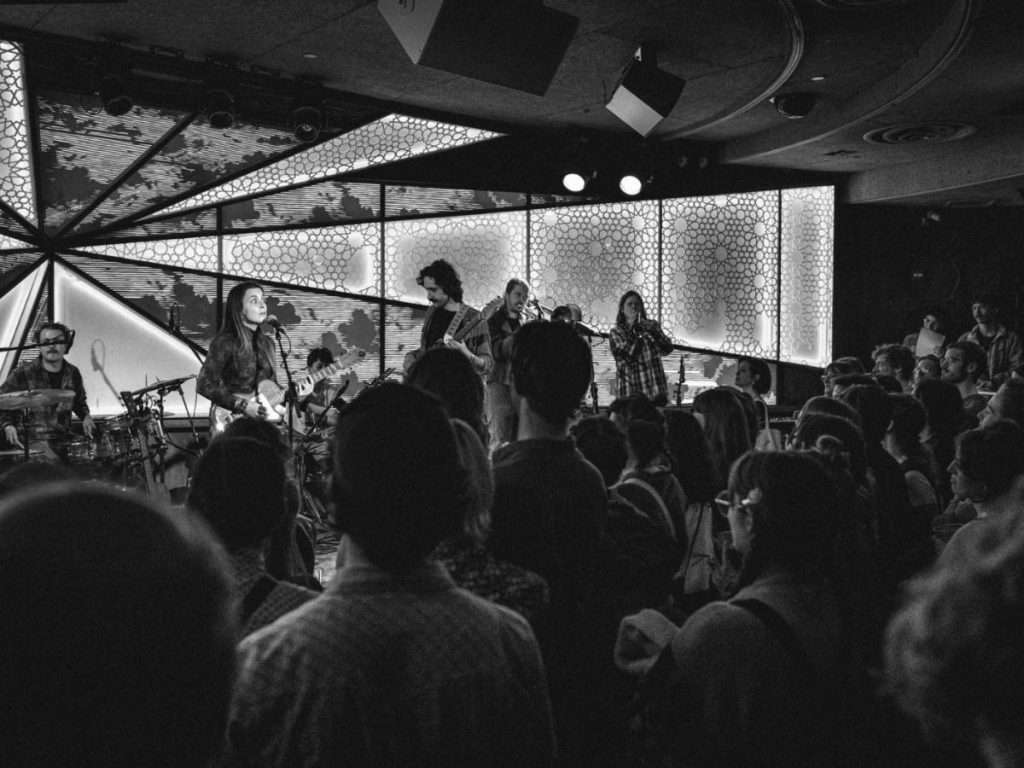
Talmers’s undergraduate thesis focused on rebetika and urban folk music in Portugal. She found that this music is typically made by people who feel like outsiders within a culture, comparing this finding to her own self-identification as a third culture kid. Coined in the 1950s by U.S. sociologist Ruth Useem, the term “third culture kid” identifies children who spend formative years in a different culture than their parents, thus shaped by both their parents’ culture and that of their country of residence.
“Being a member of the Greek diaspora is coming to terms with how you are an outsider to actually being Greek,” Talmer said. “You’re not really Greek, but not really American.”
Talmers describes her music as a way to honor her Greek roots and keep the culture alive, melding it with the American culture in which she was raised. Greek music has always been an integral part of her life, and she says it undoubtedly influences her songwriting and musical technique.
She also shares how immigrant groups were misunderstood by her childhood peers, pushing her to become comfortable with not being entirely understood by the general public.
“Greek language and dance is something different and foreign to the average American–most people wouldn’t think it would be fun, but I loved it,” Talmers said. She is adamant about not following trends and instead finds herself guided by cultural influences and gut feelings.

Even as she came of age during a decline of religiosity, Talmers grew up in the Church and often preferred Sunday School to her regular education. She viewed the parish as a place she could ask big questions, and saw her religious identity as intimately tied to her Greek culture.
“I am not afraid of my religiosity because it’s also my culture,” Talmers said.

She currently studies at Union Theological Seminary, affiliated with Columbia University. The program allows her to take additional classes at Fordham University’s Orthodox Christian Studies Center.
Talmers credits her steady, close ties with the Church to people whose love she wishes to emulate–her priest, her γιαγιά, her entire family. “My comfortability in the church has been due to loving and open-minded figures who encouraged me,” she said.
The music Talmers produces is as much a religious endeavor as it is cultural.
“I see the work I do as a form of ministry,” Talmers said. “With music, you can facilitate a space in which people can access deeper emotions and their relationships to the divine and other people.”
“As a performer, the content of what I write is true to me,” she said. “But I am also trying to communicate in a way that allows space for people to become more deeply engaged in worship, spirituality, and biblical tradition.”
In her view, this is what others are also seeking in the Church.
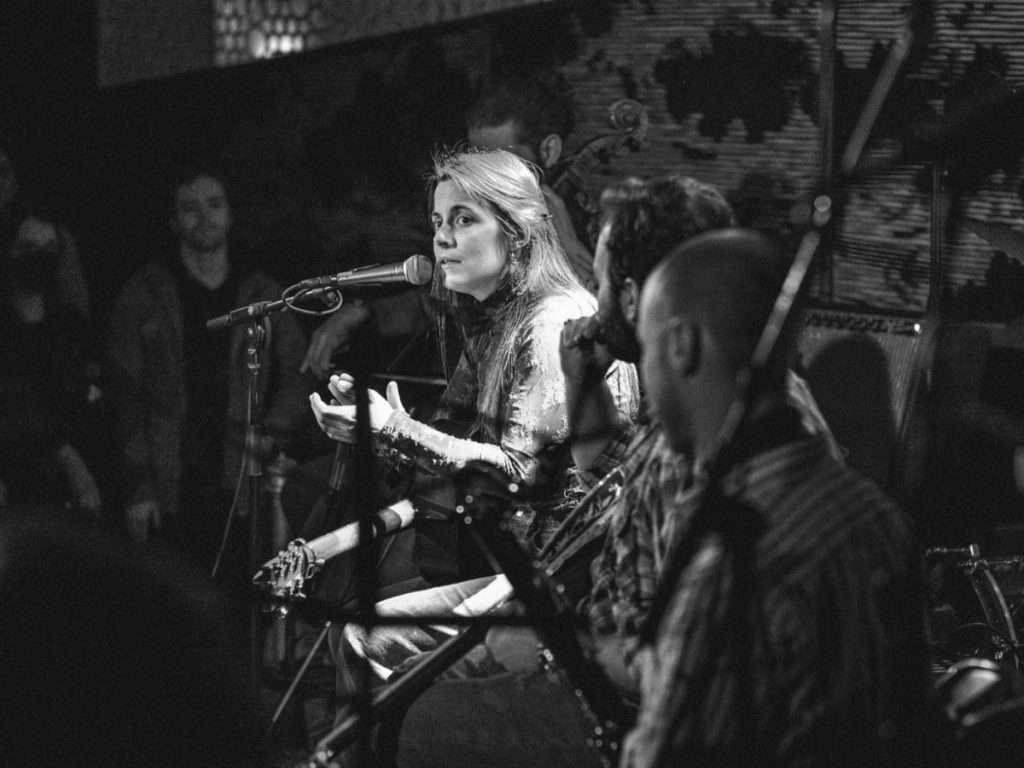
Talmers recently released an album entitled “It Is Cyclical, Missing You,” and hopes to continue building her career as a recording and touring artist. She has been on a few tours already, and is excited to expand with a manager and booking agent.
She also wants to continue teaching. Talmers has taught literature at the University of Michigan, and teaches songwriting seminars for American and Greek folk music communities. Her dream is to both teach and perform at music festivals.
Talmers shares how special it is for her to connect with the Greek diaspora around the world. At a show in Germany, she spoke to an older attendee and discovered that he was a Greek immigrant who had lived in Germany for years. She noted he sounded similar to her γιαγιά, and found the two had left Greece around the same time.
Talmers typically plays a few Greek songs at her shows, and the man was excited to hear these as well as her musical fusions. His health prevented him from returning to Greece, and he expressed how meaningful it was to hear music from his culture.
“Immigration can make you feel like an outsider,” Talmers reflected, explaining that the interaction helped both her and the man feel understood. “Music brought that connection.”
The post Lily Talmers is blending rebetika and Americana folk appeared first on Orthodox Observer.