This post was originally published on this site
This Friday marks twenty-five years since that morning when 2,977 people lost their lives. Of these, 2,753 were at the World Trade Center, 184 at the Pentagon, and another 40 aboard an aircraft that crashed in a rural area of Pennsylvania. They were passengers who had understood what was about to happen and fought back. Among the dead in New York were 343 firefighters. While those who could still escape ran for their lives, those firefighters climbed the stairs of the burning towers.
This is the Friday when I shall stand where those towers once stood and pray for the repose of their souls. Before committing their crime, the men who planned the terrorist attack that morning had already constructed a precise profile of their enemy. Their target was the United States, and, in their minds, those innocent people were the enemy who had to be destroyed.
It was a deliberate distortion of reality. The victims of that day came from more than ninety countries and represented a vast range of religious, social, and cultural backgrounds. They included Christians, Jews, Muslims, Hindus, as well as people of no particular religious faith—a fact that certainly made them no less worthy of love and respect. Among them were bond traders and dishwashers, people who cleaned offices at night—people of every social background and walk of life.
> Read: At St. Nicholas Shrine, 9/11 memorial service upholds interfaith unity
In the minds of the terrorists, an unprecedented distortion of reality first had to take place, making it possible to place all these different people into a single category: that of the “enemy.” Human identity had to be stripped of its distinctiveness and unique worth and reduced to a single, impersonal, collective identity. That of the “enemy.” Only then could the destruction of the other be presented as almost inevitable, as the supposedly inescapable outcome of a conflict between “us” and “them.” And it is precisely here that the anthropological and theological depth of the lie is revealed: whenever we cease to recognize our neighbor in the face of the other, whenever the other ceases to be perceived as a person and is instead identified impersonally as the “enemy,” the way is opened to the dismantling of their human worth—the way to violence.
This dismantling of a person’s human worth begins in the mind, as an ideology; it is then disseminated among wider circles and ultimately carried out with weapons. For violence does not always begin with the act itself. It begins much earlier, when the other ceases to be regarded as a person and begins to be described as a threat, as an object of fear, and ultimately as an obstacle to be removed. It is therefore deeply troubling that, in our day, language that turns entire populations indiscriminately into faceless and threatening masses is being revived with such ease and recklessness. Whenever a people or a social group is described as an “infestation,” an “uncontrolled flood,” or a “contamination” to be eradicated, we are no longer confronted merely with extreme rhetoric.
We have already entered the realm of moral and anthropological aberration, where the denial of personhood prepares the way for denying the other’s right to exist. Wherever a fellow human being ceases to be recognized as our neighbor and is turned into a faceless “problem,” language has already begun to prepare the ground for the evil that will follow. Confronted with this distortion of the human person, the Church offers her own answer—simple in its formulation, yet profoundly demanding in its implications: every human being is created in the image of God. This fundamental truth admits no exceptions, degrees, or conditions. It does not apply only to those whom people deem “worthy,” nor is it limited to those who speak our language, belong to our community, or stand beside us before the Holy Altar. The Church is therefore called to recognize in the face of every human being, regardless of origin, language, religious belief, social standing, or any other distinction, the same undiminished dignity and sacred worth.
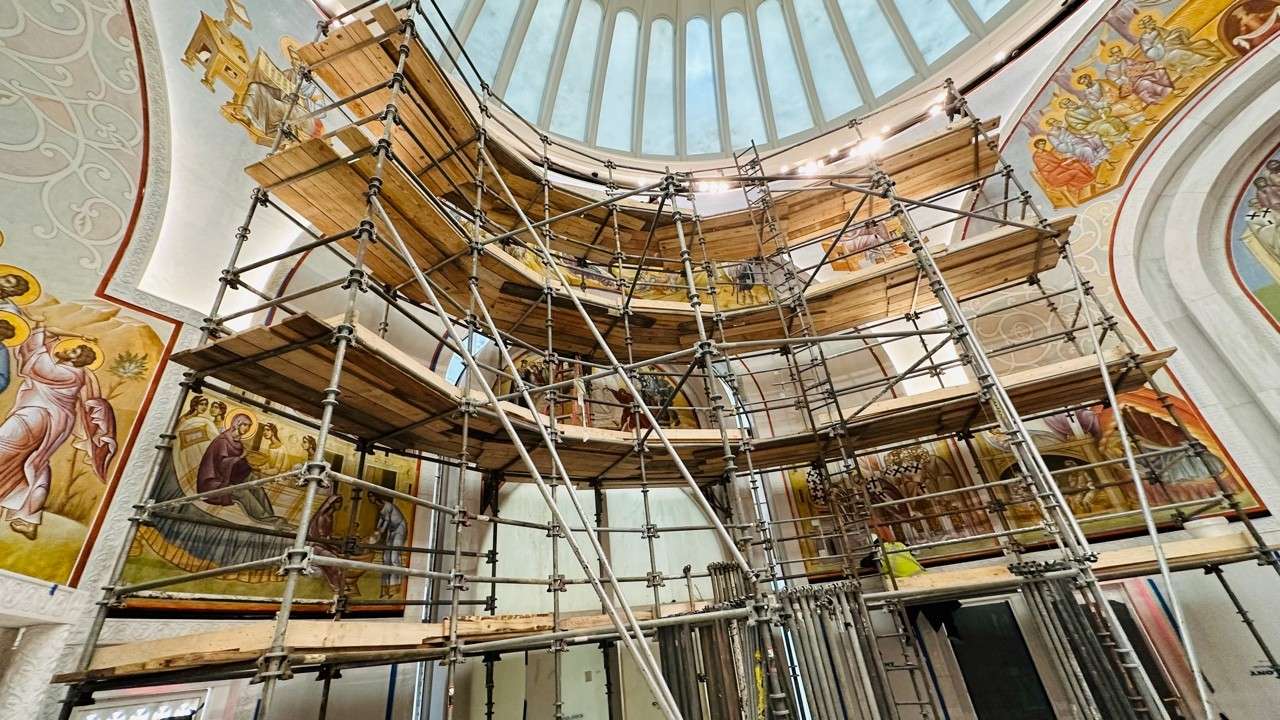
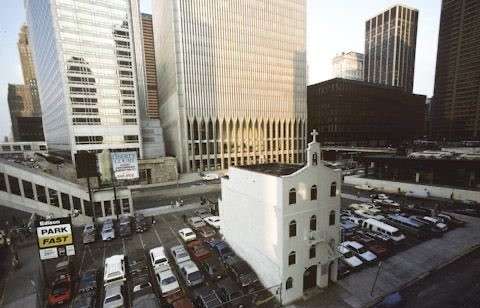
It is by no means accidental that, as I wrote above, I shall pray at this place of martyrdom, where Saint Nicholas Church stands today. As early as 1916, Greek immigrants sought a place of prayer in this land, which was then foreign to them. They created the old Saint Nicholas Church, dedicated to the patron saint of seafarers, by converting a former tavern on Cedar Street. Around that small church, the modern metropolis gradually grew, and as time passed, the skyscrapers rose ever higher, until the works of human hands seemed to overshadow the Saint’s humble house of prayer.
Time and again, the parishioners were told that the land on which the church stood was worth far more than the church itself, and that selling the property would bring considerable financial gain. And time and again, they refused to sell it. For the community, the church was neither a mere building nor a piece of property with monetary value. It was a place of historical memory and prayer.
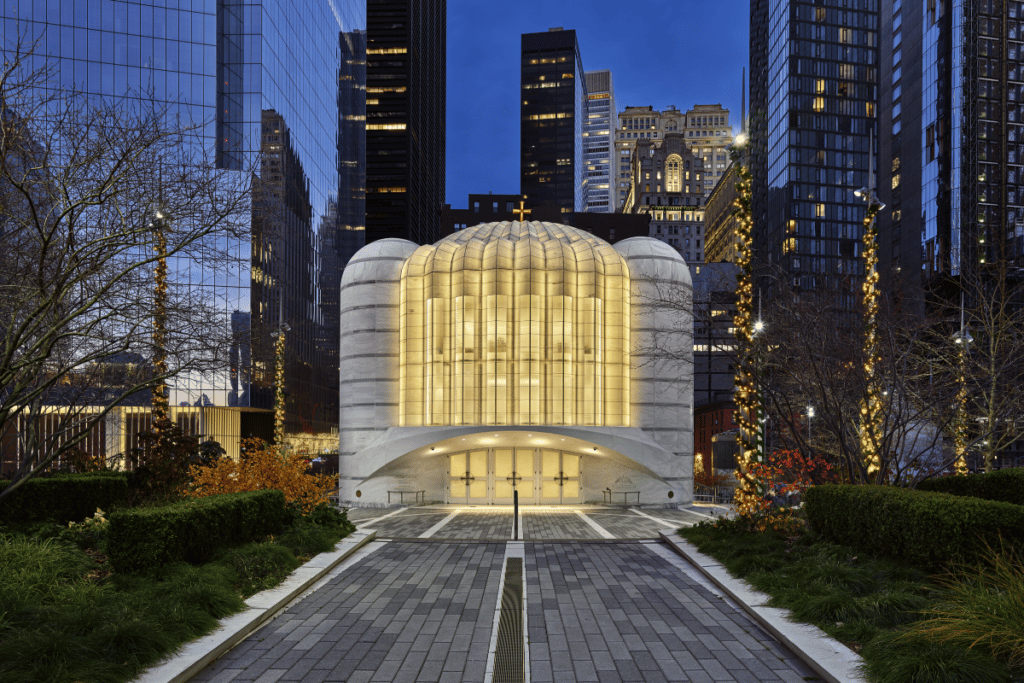
On September 11, 2001, the South Tower collapsed directly onto Saint Nicholas Church. It was the only house of worship completely destroyed that day, and from the ruins, amid the dust and devastation, only two icons were recovered. Then, just as our forefathers had done a century before, we too refused to leave the church buried beneath the rubble. We never considered surrendering it to the market logic of value and profit. And just as they preserved Saint Nicholas as a place of worship and memory, so too did we choose to raise it anew from the ruins, as a witness to continuity and hope. Today, Saint Nicholas Church stands once again at the heart of the World Trade Center, built of white Pentelic marble—a quiet yet powerful testimony to the victory of memory over oblivion and of life over destruction.
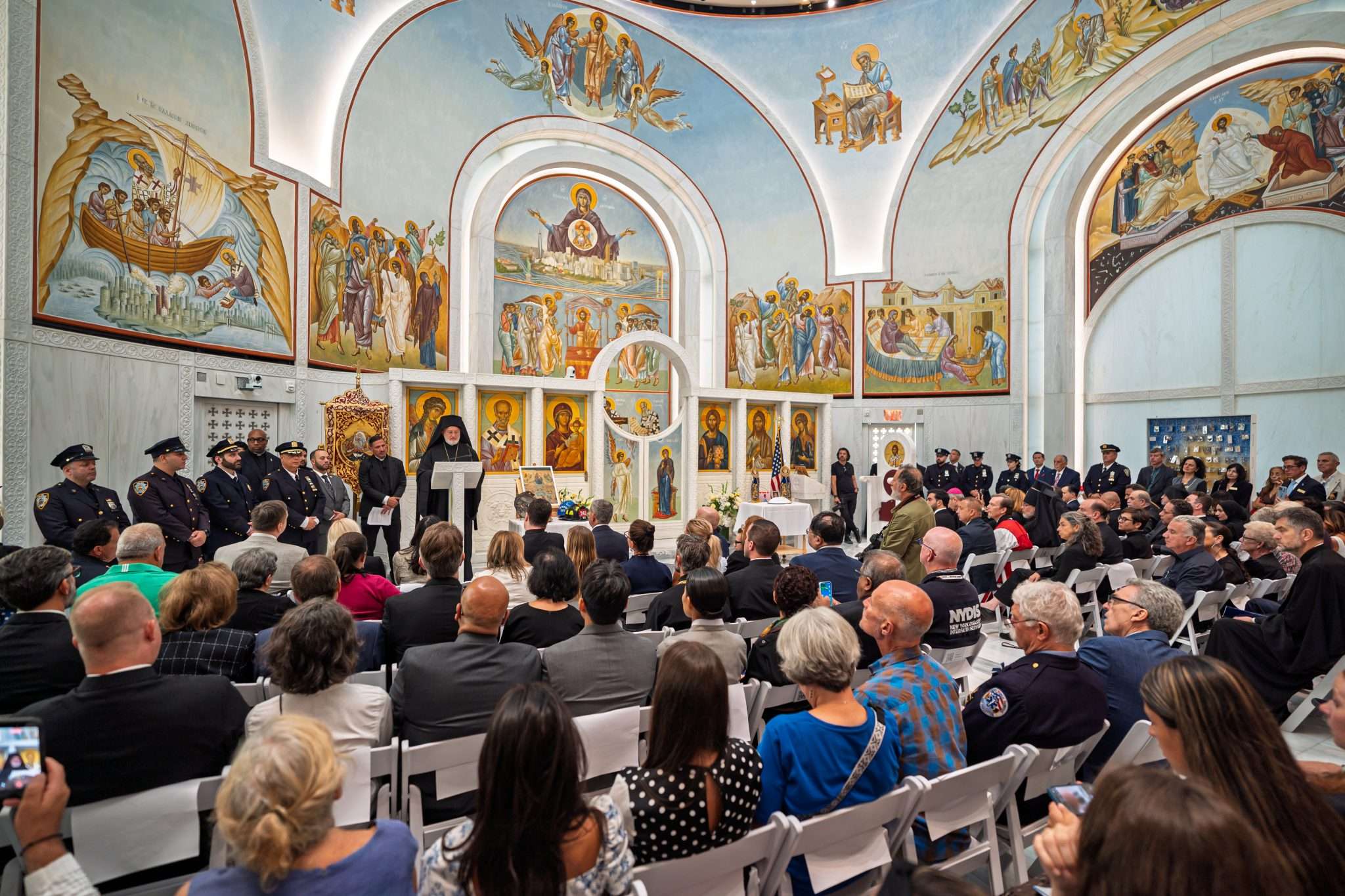
This Friday, we shall pray for all those who perished there twenty-five years ago. Among them were many children of our Greek American community. Yet we shall pray not only for the dead, but also for the living—for this generation and for those to come, so that no one may ever again invent a “plausible” or “convenient” reason with which to justify the destruction of a fellow human being.
We who buried the dead of September the Eleventh have neither the right nor the luxury of forgetting. May the memory of our dead and Saint Nicholas Church at Ground Zero in New York always teach us that the other is not an enemy, but a person; not a threat, but our neighbor; not a number within a faceless mass, but a human being, unique and unrepeatable, created in the image of God.
This piece was originally published in the Greek Daily TA NEA.
The post Opinion | Violence begins long before the act appeared first on Orthodox Observer.