This post was originally published on this site
After moving to Athens when I was 15, I found myself surrounded by graffiti on a scale I had not seen in New York, covering entire walls of neighborhoods, highways and even monuments. This made me wonder what impulse leads people throughout history to mark surfaces and leave a trace? Now, graffiti is illegal and considered damage to public and private property, yet it continues. My interest in graffiti on the streets of Athens intensified and brought me to the Iviron Monastery library at Mount Athos.
Delving into “Silk Road Graffiti” by Dale Johnson, a Syriac Orthodox monk and linguist who documented writings at the margins of ancient scrolls (marginalia) was illuminating. He described marks of children practicing their letters, travelers leaving messages that were sometimes answered decades later, as well as doodles and notes accumulated over hundreds of years. It irked me that historians often treat marginalia as secondary, even distracting. The more I researched, the more I realized the margin is often where the reader becomes present, visible, uncertain, and curious. And marginalia are also the graffiti which cover the walls of Athens today.
In December 2025, I made the long trek to the Holy Monastery of Iviron on Mount Athos to look for marginalia in medieval manuscripts. Coming from Greece’s mainland. I arrived at Mount Athos as a pilgrim would: slowly and tired but with intention. Once there, my visit was a medieval experience: Time moved differently even though church bells rang loudly to mark the functions of the day. The architecture, the communal life of the monks, and the natural setting were more vivid than I had expected.
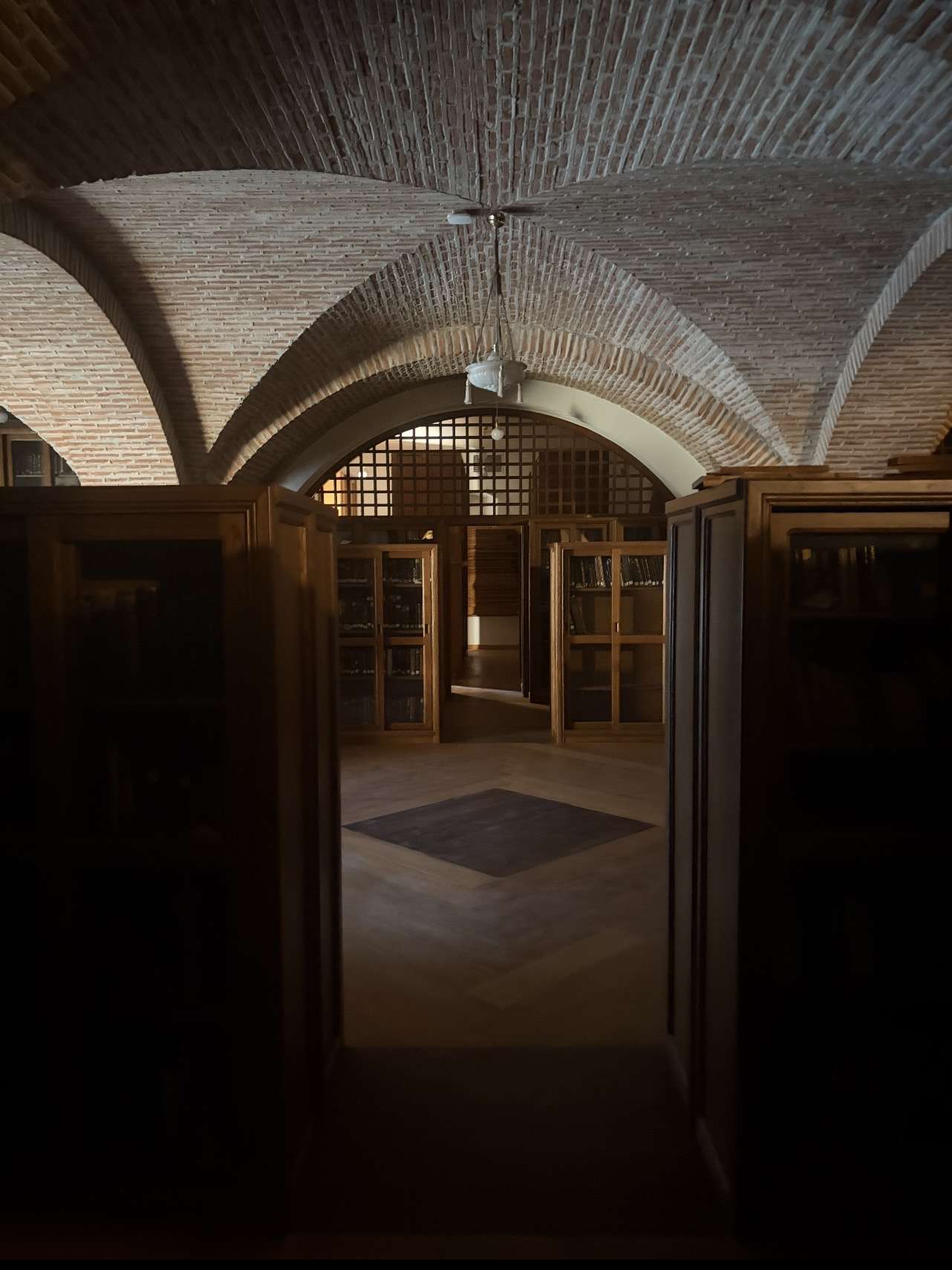
A dark doorway took me into the library, a vaulted space with brick arches and ceiling-high shelves on either side. From there I saw a series of corridors lined with more wooden shelves and glass cabinets. Monk Theologos Iverites, the librarian, guided me through the collection.
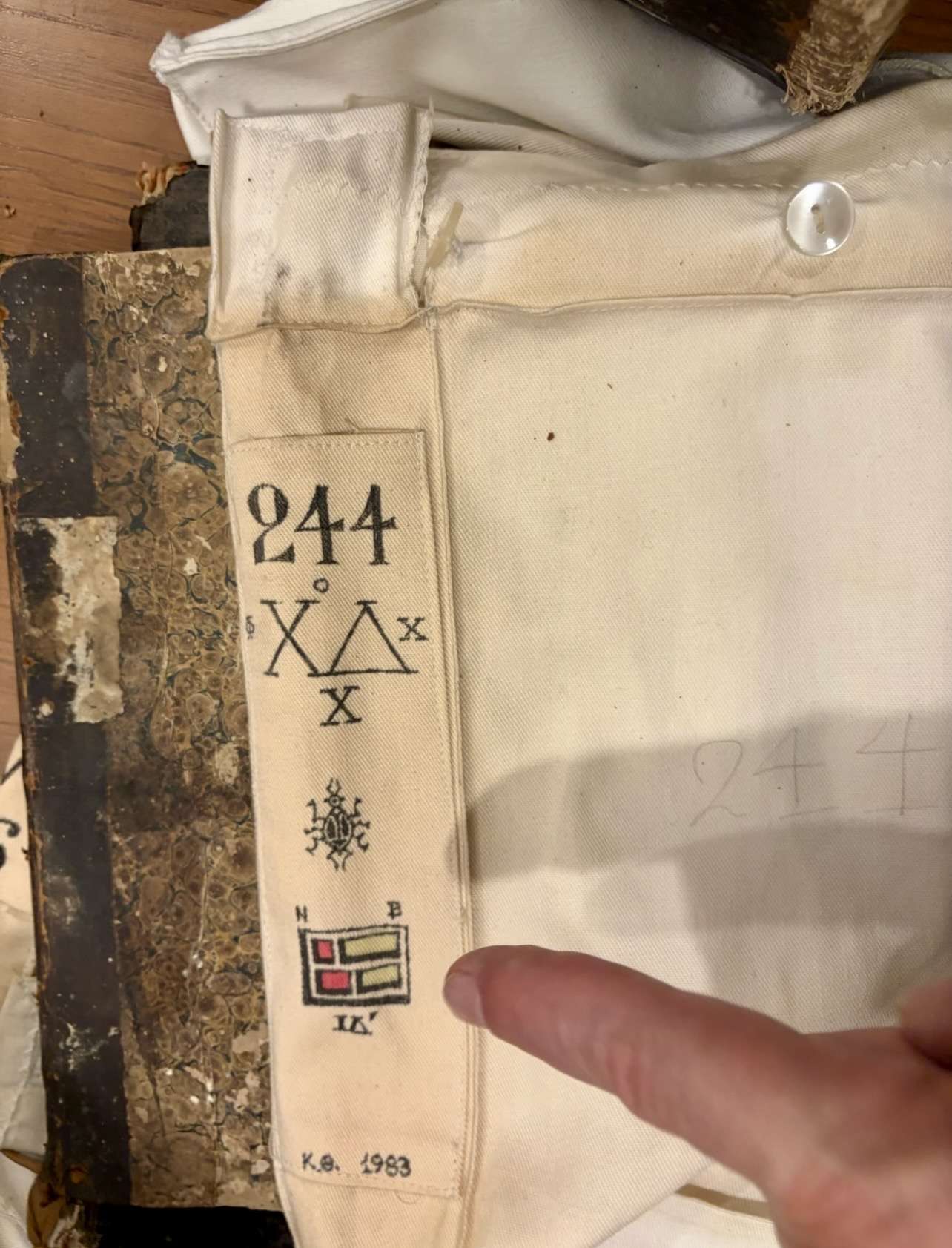
The wrapping of the manuscripts struck me first. Most volumes were covered with white cloth cases to protect the books from insects. Each had a small, inked symbol alongside a number followed by geometric marks, below which a beetle or other bug had been drawn. This was to indicate which type of insect had infested that manuscript.
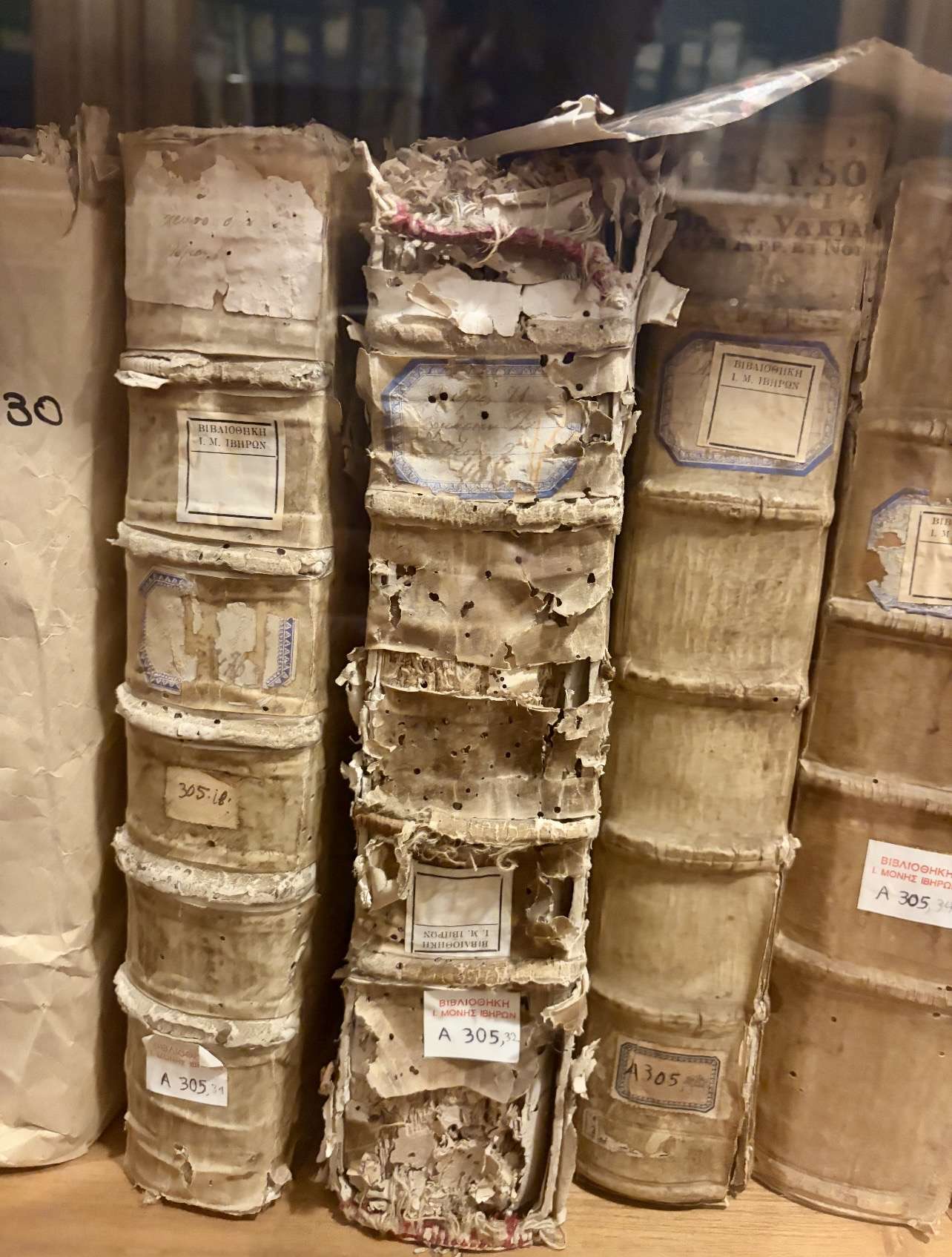
It saddened me to see so many of the shelved manuscripts with disintegrating bindings and covers, due to infestation. Entire collections are disappearing slowly, eaten away. I closed one book as carefully as if it were an eggshell that could crack, yet a small cloud of dust rose from the eroding pages. The earthy smell of the old paper made me feel I was on an archeological dig. It moved me to holding a book from the 9th century.
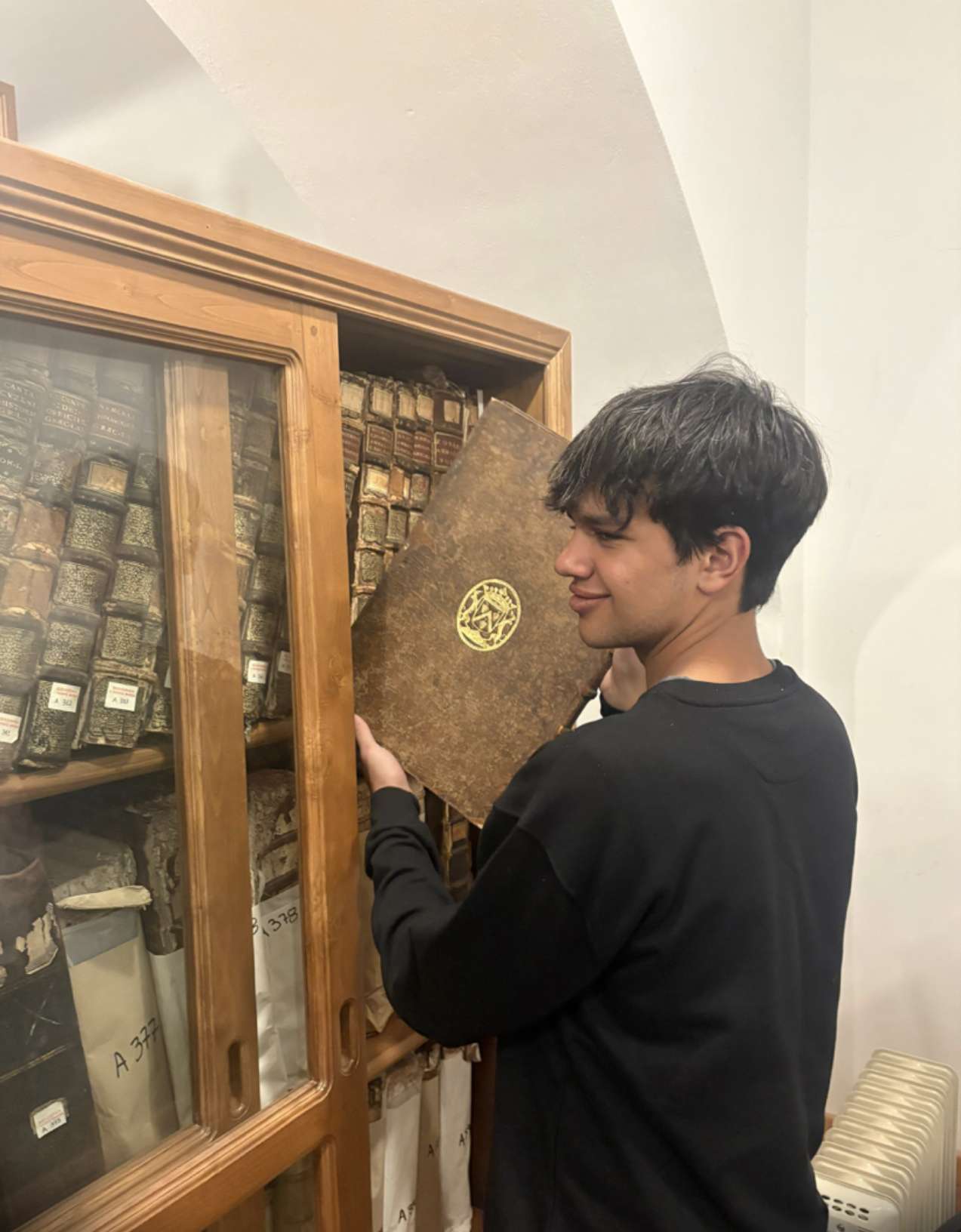
Monk Theologos Iverites has spent years scanning manuscripts before they are all lost. As I assisted him in this preservation work, he helped me identify and translate the marginalia we came across in the many layers that exist in a single manuscript. The notes on the Ottoman invasion to Greece, historical remarks, signatures, drawings, and senseless doodles captivated me. On the inside cover of one manuscript, multiple writers had left their marks across centuries, with crosses, names, and dates all crowded together, each person annotating the previous message. In another manuscript, I spotted a blank end leaf with just two series of a strange, code-like text. In some volumes, I saw signatures rewritten, layers of the same names. The impulse that Johnson had documented was not specific to one culture nor one road but omnipresent in a world of readers. It thrilled me to find that each manuscript had at least three stories or layers: the literal meaning of its text, the journey it has taken over centuries, and the notes and marks in its margins. I had become part of a chain of people discovering them and then helping to restore these unique books before passing them on. The manuscripts have survived Ottoman invasions, insect damage, centuries of handling and I want them to live on.
My dyslexic mind leads me to read around edges before focusing on centers. To me, the margins are the most honest part of the page. The text of a book conveys what is required and expected while the margins express the irrepressible. This understanding took me from New York City and then Athens to one of the most sacred libraries of Orthodox Christianity in Northern Greece. What looked like peripheral noise near the main event became a valuable archive. The margin is not an accidental holding bin but an oasis for scribes in need of more space.
Ari Antelman is a senior at Moraitis School in Athens. He grew up in New York City and is currently conducting independent research on language and memory in Greek American communities.
The post What graffiti taught me about ancient manuscripts appeared first on Orthodox Observer.