This post was originally published on this site
Every Sunday morning at St. John the Baptist Greek Orthodox Church in Des Plaines, IL, a small group of children gather in a classroom. The room, intentionally quiet and calm, is filled with soft voices, bright visuals, and sensory tools, specifically gathered by a special group of volunteers who hold a Sunday School class for those who have been forgotten for too long–children with developmental disabilities.
For these children and their families, the class is not just Sunday School, but the feeling that they belong. This important ministry began, as many worthy things do, with a conversation and an urge to do something meaningful.
Nick Petrus, a speech-language pathologist who has spent the last eight years working with children and adults with developmental disabilities, first encountered disability ministry through a Metropolis of Chicago initiative known as Team Belong.
While attending events hosted by Team Belong, Nick saw families come together for monthly meetings at local churches. The format was thoughtful: children participated in activities tailored to them, while parents listened to speakers or simply breathed for a moment among others who understood their lives.
“They were meaningful,” Nick recalls, “but they were infrequent.”
After one of those meetings, Nick and a group of volunteers found themselves voicing the same thought aloud: What if this existed every week? What if families raising children with disabilities had a consistent place in church life—not just an occasional event, but a schedule that they could count on? This impulse toward inclusion became the spark that started the ministry.
With the encouragement of Abby Vlahos, a parent from St. John Church, and Elaine Kakis, the Sunday School director, Nick began imagining something simple and sustainable: a special education Sunday school class that would meet weekly focusing on accessibility of the faith.
Two years ago, in February 2024, the class began and now meets nearly every Sunday.
Most weeks between four and six children attend—not many by typical classroom standards, but the students are consistent. Their ages range from six to 13, although most are around seven or eight years old. All current students have a diagnosis of autism, but the class is open to children with other developmental disabilities, including Down syndrome and intellectual disabilities.
“Consistency is everything,” Nick says. “Especially for these kids–and also for their parents.”
The classes last around 30 minutes and designed to reduce sensory overload. Inside the classroom are fidgets, squeeze toys, and other sensory supports, purchased through a grant from the Hellenic Foundation. These tools are not distractions, but common ways for children to regulate, focus, and feel safe enough to participate and learn.
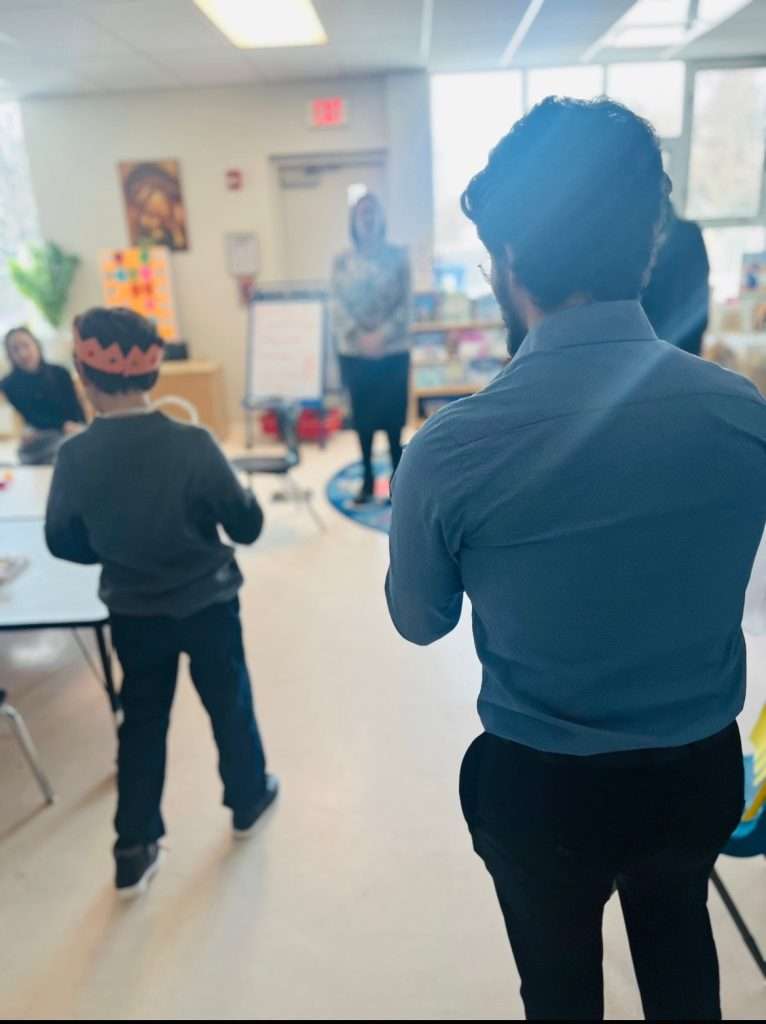
Nick often bases the simple lessons on the Gospel reading of the week, translating scripture into concrete, accessible concepts. He says the goal of the class has always been “to make the Christian teachings accessible and understandable for people who have disabilities.”
As a speech pathologist, Nick relies heavily on visuals–often just one or two images that capture the heart of the story. Hands-on activities follow, reinforcing the lesson through movement and play.
To assist in the preparation for each class, an Orthodox educator from Michigan, Summer Kinard, is providing weekly curriculum tailored specifically to learners with disabilities. Her materials—visual schedules, prayer aids, lesson plans—have transformed the preparation and expanded what the class can offer.
Nick describes one recent, unforgettable Sunday, when the class reenacted Palm Sunday. An inflated ball became the donkey. Construction-paper palms flew through the air. Laughter and joy filled the room. For students who could not speak, speech-output buttons gave them a voice. One button, pressed again and again, proclaimed: “Save us.”
“It was beautiful,” Nick says. “One of those weeks that reminds you why this matters.”
Icons also play a central role. On weeks when words may be too abstract, Nick simply shows an icon connected to the lesson. In Orthodox Christianity, symbolism and visuals open the doors for understanding—especially for children who struggle with verbal language.
Nick remarks, however, that music is where the children truly connect without pressure. “It helps us bond without needing words,” he says.
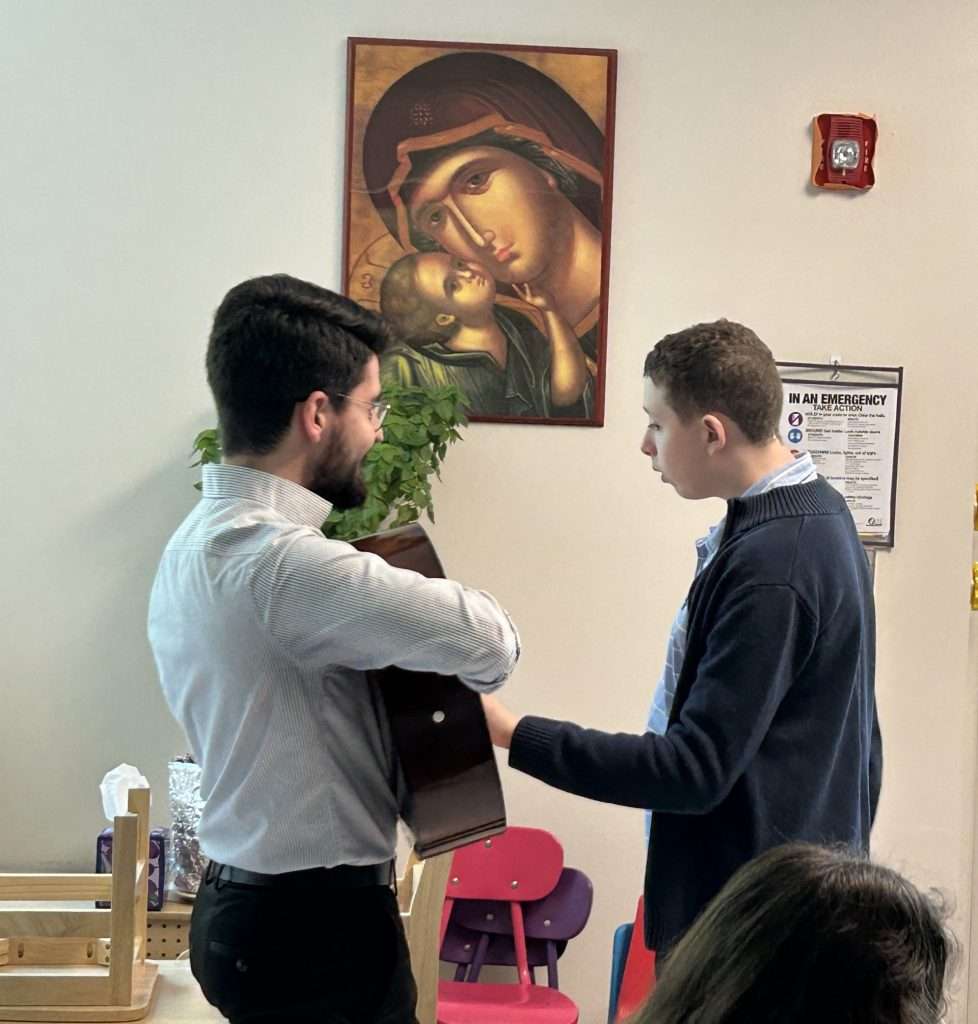
Nick, who’s been playing guitar since he was 14, says when he starts playing the room changes. Children who were restless just moments before grow still; some sing along instinctively, while others sway or smile. One of their favorite songs–“God Is the Boss,” written by Orthodox musician Gigi Shadid—teaches children how to make the sign of the cross through melody and movement. After years of repetition, the children know it by heart.
How the Sunday School class teaches prayer has also evolved to meet the children where they are. At first, the class ended with the Lord’s Prayer, using visual aids. But one child found the prayer deeply distressing, reacting with intense distress whenever it began. So, the class adapted.
With guidance from Summer Kinard, they developed alternative prayer methods. Now, they end class by holding a cloth together and gently shaking it—a physical and active reminder of their experience together. A speech-output button repeats, “Lord, Jesus Christ, have mercy on your students,” while the class prays for families, for one another, for whoever needs prayer next. The same child who once fled the room now presses the button himself.
“It’s quieter,” Nick says. “But it’s prayer. And everyone can participate.”
Perhaps the most profound impact of the ministry is not what happens in the classroom, but what happens because of it.
One older student in the class had not received communion since infancy, because the sensory environment of the main sanctuary had made receiving impossible. But this Sunday school ministry began—and as the parish also used a quieter chapel space—something changed. That child received communion again, and now does so every week.
For Nick, moments like that rise above lesson plans.
Beyond the children, families are finding something equally sacred: support. At a conference last May, parents spoke openly about feeling excluded— and even feeling unwelcome—in church. The pain was real. For Nick, hearing the Archbishop, hierarchs, clergy and lay leaders listen, respond, and commit to action marked a turning point.
“I’ve seen how exhausted these families are,” he says. “Lack of sleep. Constant stress. And then to feel excluded from your spiritual home—it’s heartbreaking.”
At St. John Church, parents know there is a place for their children–a place designed with care, where their presence is valued and cherished.
Nick is quick to emphasize that this ministry would not have happened if not for the vision, advocacy, creativity, and expertise of women, including parents Abby Vlahos, Elaine Kakis, Summer Kinard, and Gigi Shadid.
As for parishes considering something similar, Nick’s advice is simple.
“Try it,” he says. “It doesn’t have to be perfect. It just has to exist. Show up. Be kind. Be flexible. Every week, it works out.”
He also offers to help any parishes interested in beginning a similar ministry. Sometimes, all it takes to transform a community is 30 minutes, a quiet room, and the courage to love everyone.
For more information on this ministry visit: www.goarch.org/autism-awareness.
St. John the Baptist Greek Orthodox Church in Des Plaines, IL is a pilot parish for the Greek Orthodox Archdiocese of America’s initiative “On Behalf of All: Toward an Accessible Divine Liturgy for Children with Disabilities.”
The post How a Sunday School became a sanctuary for children with disabilities appeared first on Orthodox Observer.