This post was originally published on this site
Michael N. Bapis was born and raised in Salt Lake City, a place where being Greek Orthodox meant you belonged to something small, but so strong. The strength of his commitment to his faith is evident as he speaks with pride and love, preparing to lead Leadership 100 as it continues to grow in its mission and members.
On the day before the official announcement and the passing of the torch from Demetrios Logothetis, who held the position of Chairman for the past four years, that Michael senses he is not only taking on a new responsibility, but a role that he is already familiar with.
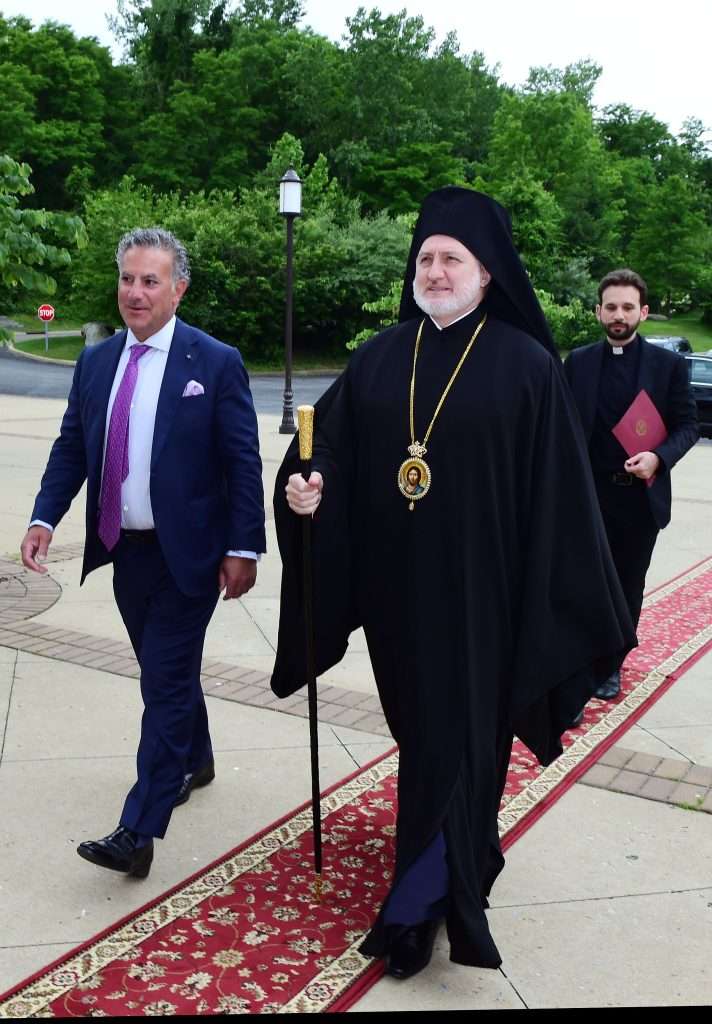
Beginning his role as Chairman of Leadership 100, the endowment fund supporting the Greek Orthodox Archdiocese and its ministries and programs, he is aware that the title is prestigious – and the responsibility immense. But for Michael, it feels less like stepping into something new and more like continuing a story that had been unfolding since childhood.
Growing up, the Greek Orthodox community in Salt Lake City wasn’t vast like it was in New York or Chicago. It was intimate. Close-knit. If you were part of it, you were truly part of it.
His parents, both born in the United States, met through the church—at a GOYA or Young Adult League event, the type of gathering where faith and heritage intertwined naturally. For Michael and his sister, Alethia, church wasn’t optional or occasional. It was required; it was embedded; and it was formative.
The Bapis family attended Holy Trinity in Salt Lake City and also drove forty-five minutes to Ogden to the Transfiguration Church, where his maternal grandparents were deeply involved. Michael served as an altar boy in both churches. He went to Greek school. He attended basketball tournaments organized by the Sons of Pericles and AHEPA. His family even helped start a Sons of Pericles chapter in Salt Lake.
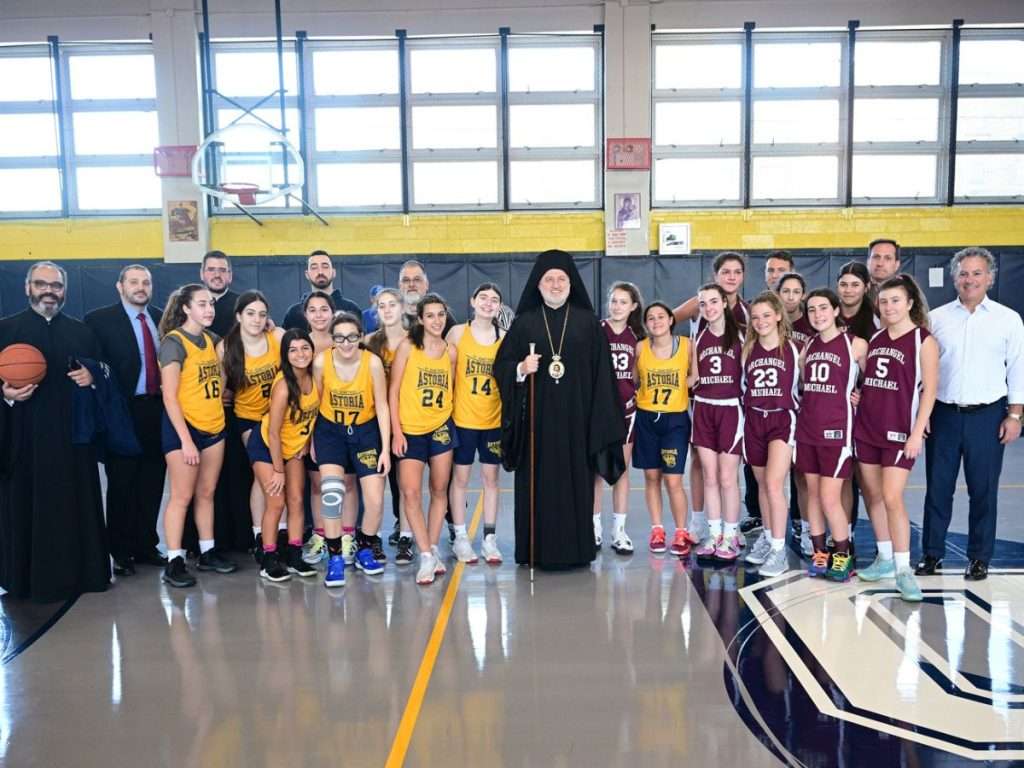
In Utah, as in many cities and towns across the country, the Church became more than Sunday worship. It was identity. It was heritage. It was a second home outside of school and sports. Because alongside the church, sports were a big part of his life.
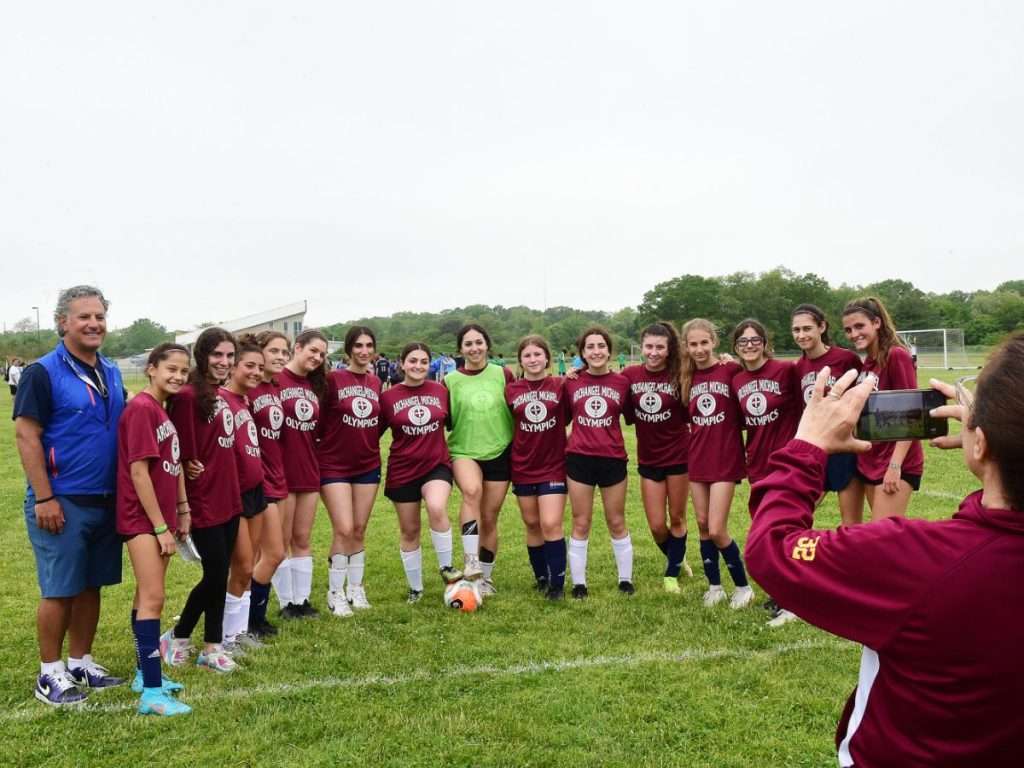
Michael played golf at the University of Utah. Later, in a move that surprised some people, he went to Greece—not for golf, but to play basketball at the American College of Greece. The experience deepened his connection to his heritage in a way that only living in the homeland can.
When he returned to the United States, he worked at a golf course in Scottsdale, teaching the game he loved. Then came an internship at Morgan Stanley in New York. That opportunity changed the trajectory of his professional life. Finance became his arena. Eventually, he would become Managing Director, Private Wealth Advisor and Head of Sports and Entertainment with at Vios Advisors at Rockefeller Global Family Office.
But even as his career advanced, the Church remained the constant force.
Leadership 100 entered his life when he was young—back when the annual conference had about ten kids running around the hotel hallways. His parents joined and became involved and brought their children along. What began as attendance turned into commitment. Then, married to Eleni, the couple continued as members of Leadership 100.
It was years later, he and others noticed something: the next generation was missing.
The founders of the organization had built something visionary. One of Michael’s close mentors, Peter Pappas Sr., was at the forefront of building the foundation that he is grateful to be such an integral part of today. However, at a young age and as a young professional, Michael rallied with his close friends, including Drake Behrakis, The Demakes Family, The Pappas Family, and the Pantelidis Family, to name a few, in efforts to change the landscape for the generations to come.
They all worked relentlessly to rebuild the Young Professionals program.
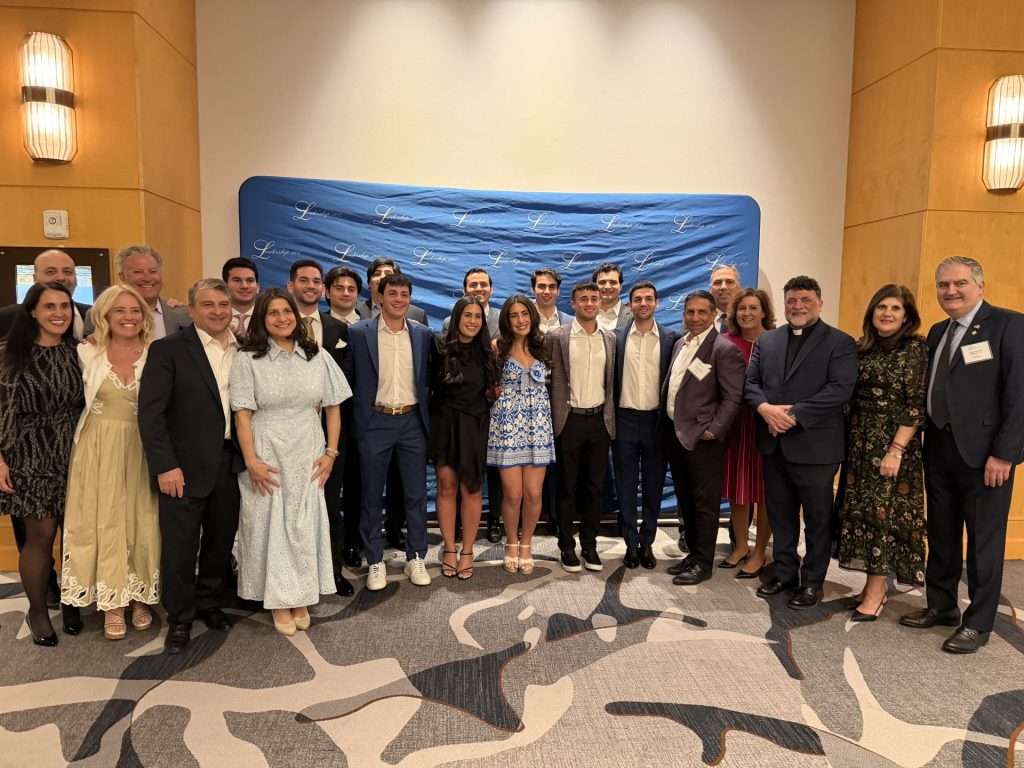
Today, more than 150 young professionals attend events. They fly in from across the country continuing their friendships that have formed at Leadership 100 Conferences. Children who once ran barefoot around swimming pools now attend as young adults, reconnecting with friends they met many years ago.
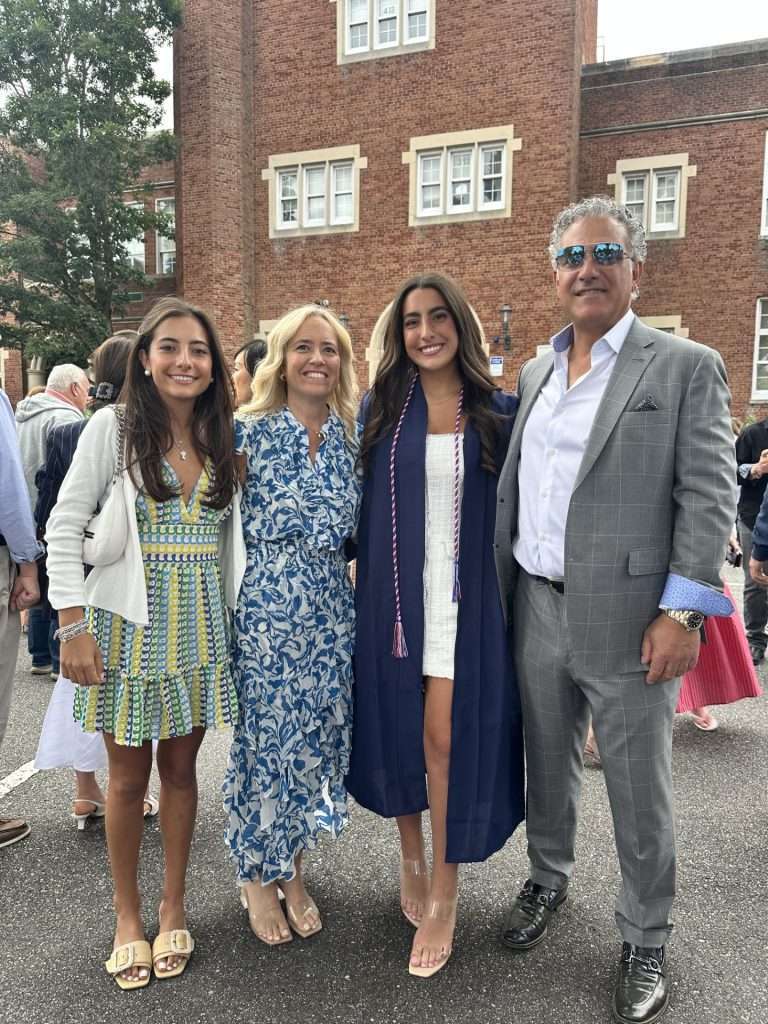
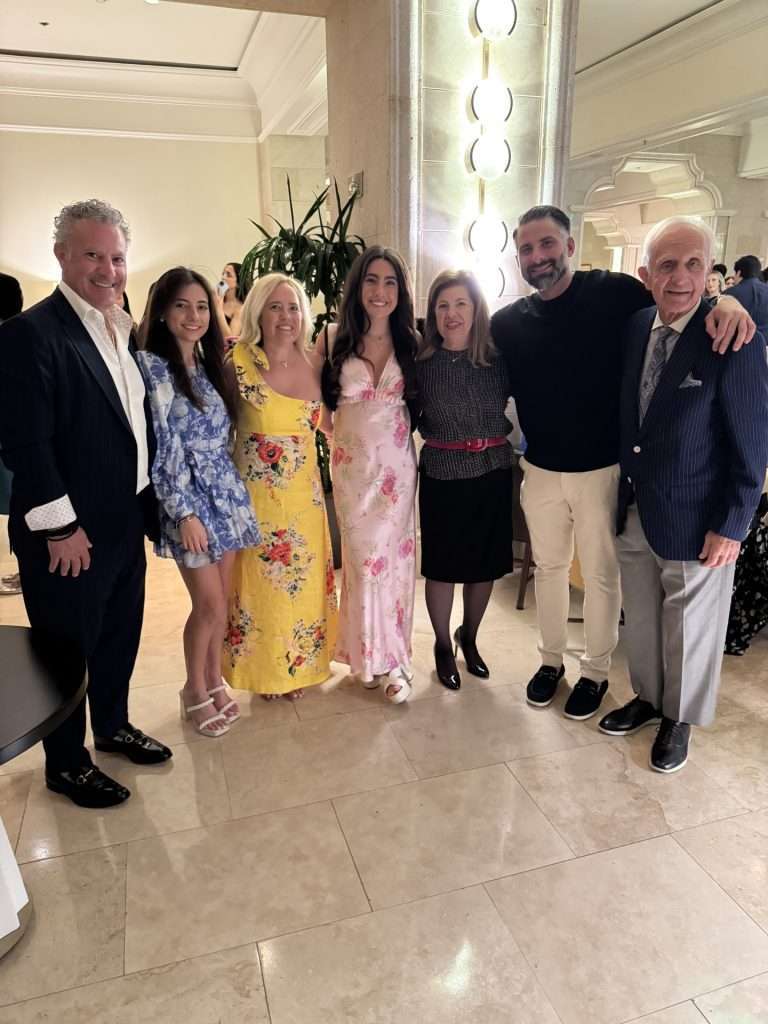
Michael laughs when he remembers being one of those children. Now his own daughters, Maria and Georgia, walk through the same conference. People approach him and say, “I remember when you were this tall.” Time melts away at moments like that. The hallway where kids once skipped and ran about now also hold college-bound and professional young adults discussing careers and how the Church has given so much to them.
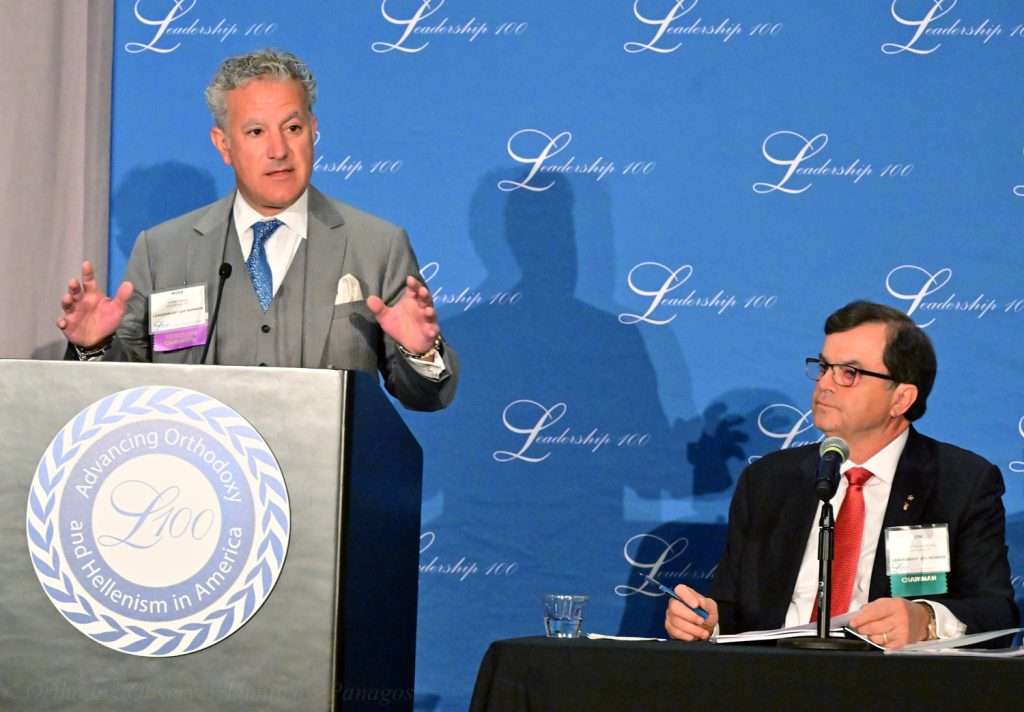
Now, Michael knows it is his turn to lead the organization, to give back, what he has received from the Church and from Leadership 100.
When asked how it feels to serve as Chairman, Michael doesn’t reach for grand declarations. Instead, he speaks with humility.
He is honored.
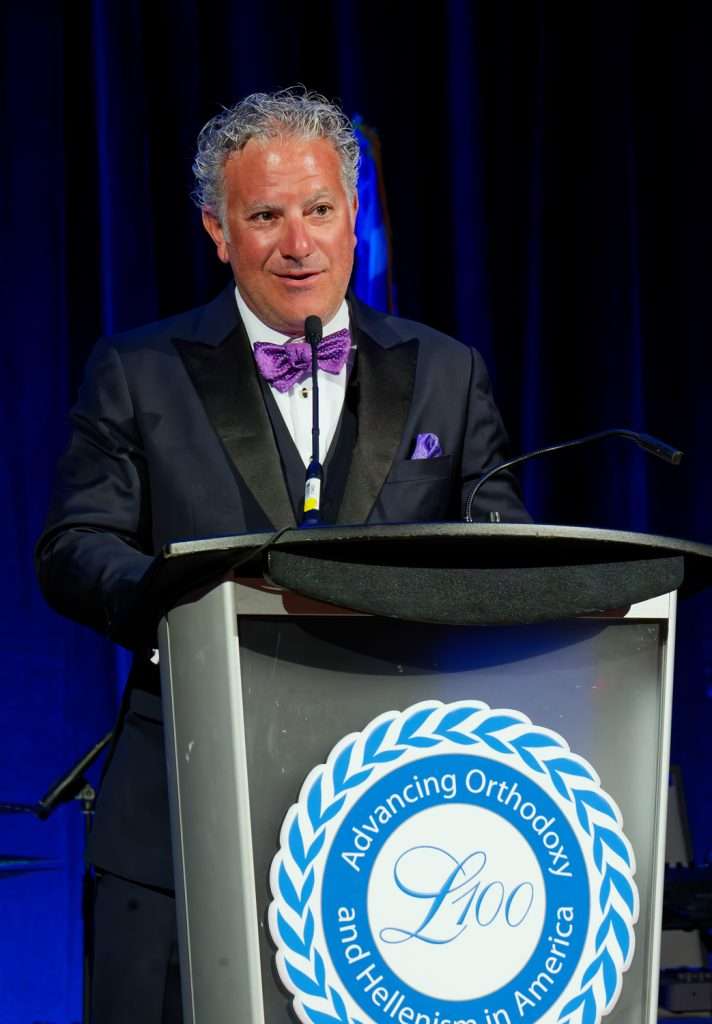
“Leadership 100 has been guided by prominent, faithful, hardworking Greek Orthodox leaders for decades.” He is proud to note that the organization supports the seminary. It supports our clergy. It supports ministries. It supports the infrastructure that allows Orthodoxy to flourish in America. Without that support, he says simply, “the whole thing ends in America.”
Its structure is unique. Members contribute to an endowment. The principal remains untouched. Only the interest funds the mission. It is stewardship in its purest form—a model designed not for today alone, but for perpetuity.
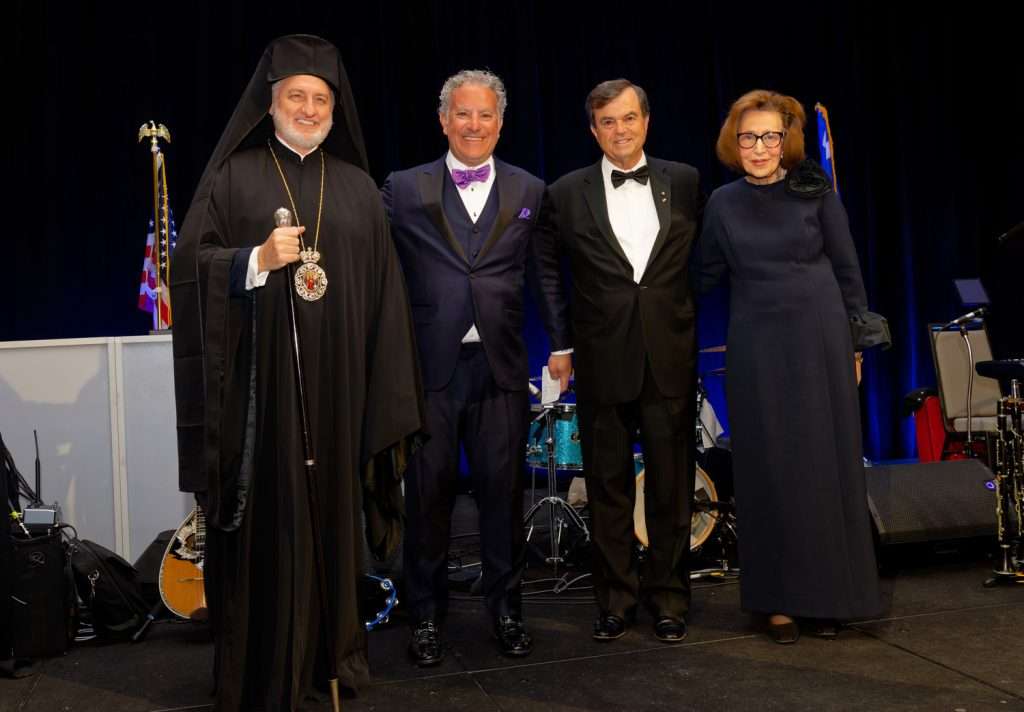
His goals for the next two years are not radical departures. They are rooted in progress.
“Let’s take what is successful and build on it. Make it stronger. If you’re not adapting, and progressing a vision, you’re dying,” he says.
He wants more engagement throughout the year, more opportunities for connection, more listening and more responding. This strategy will keep members excited and invested—not just financially, but personally.
When he speaks about the future—beyond his term, beyond his own tenure—his focus shifts.
It comes back to priests and parishes. He knows of the importance of finding and training our clergy. In America, he says, “Orthodoxy and Hellenism begin at the local level. A strong parish with a good priest draws families together.” That is foundational.
He also speaks about the youth, highlighting the critical importance of Ionian Village, Metropolis, District and local camping programs. Places where children surrender their phones, focus on Christ and faith and discover independence. Places where friendships are formed without screens and without distractions. It is here where faith becomes personal, rather than blindly inherited.
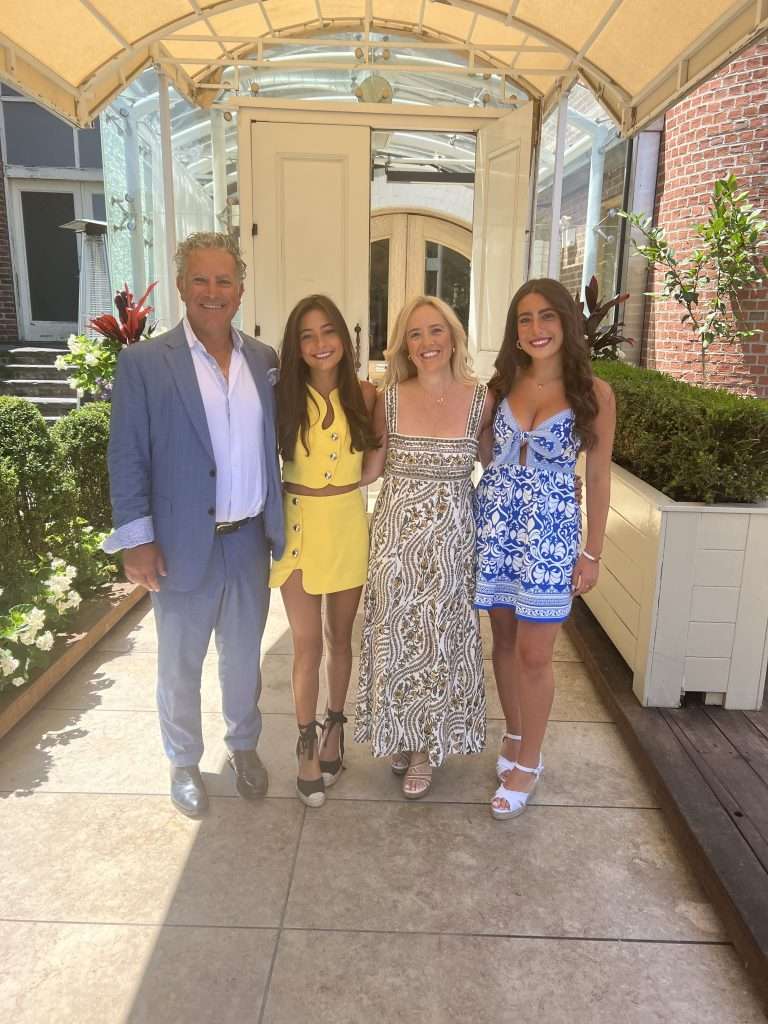
His own children were transformed at Ionian Village. He saw it firsthand. When they returned home from camp, something had changed. They were more confident. More grounded. And when they left for college, they already had a network of Orthodox friends nearby. “That connection that camping offers,” he says, “is everything and is lifelong.”
Leadership 100, in his mind, must continue to invest in that future—supporting the programs that shape the next generation, “because ultimately, this isn’t about titles, it’s about continuity.”
From altar boy in Utah, to successful businessman in New York City to Chairman of Leadership 100 – from a conference with only ten children to gatherings of hundreds – from being remembered as a young child to watching his daughters step into their own place within the community, Michael’s journey has never been separate from the Church. It has simply developed and matured alongside it.
As he officially begins his term, Michael is eager and prepared to serve the Church and the organization he has received so much from, Leadership 100.
The post Michael Bapis elected Chairman of Leadership 100 appeared first on Orthodox Observer.