This post was originally published on this site
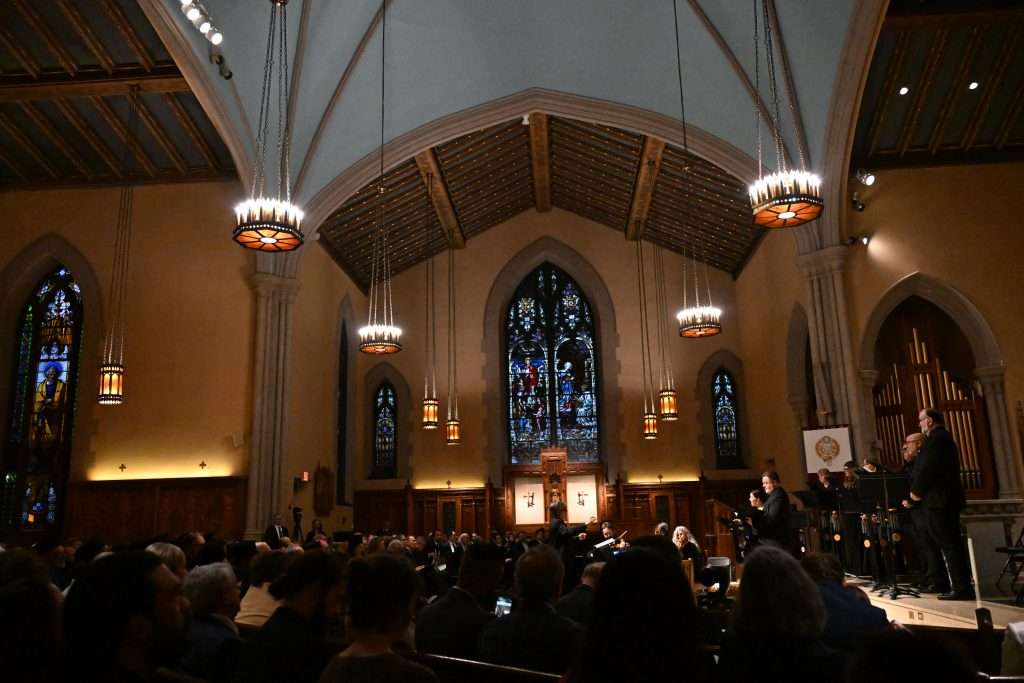
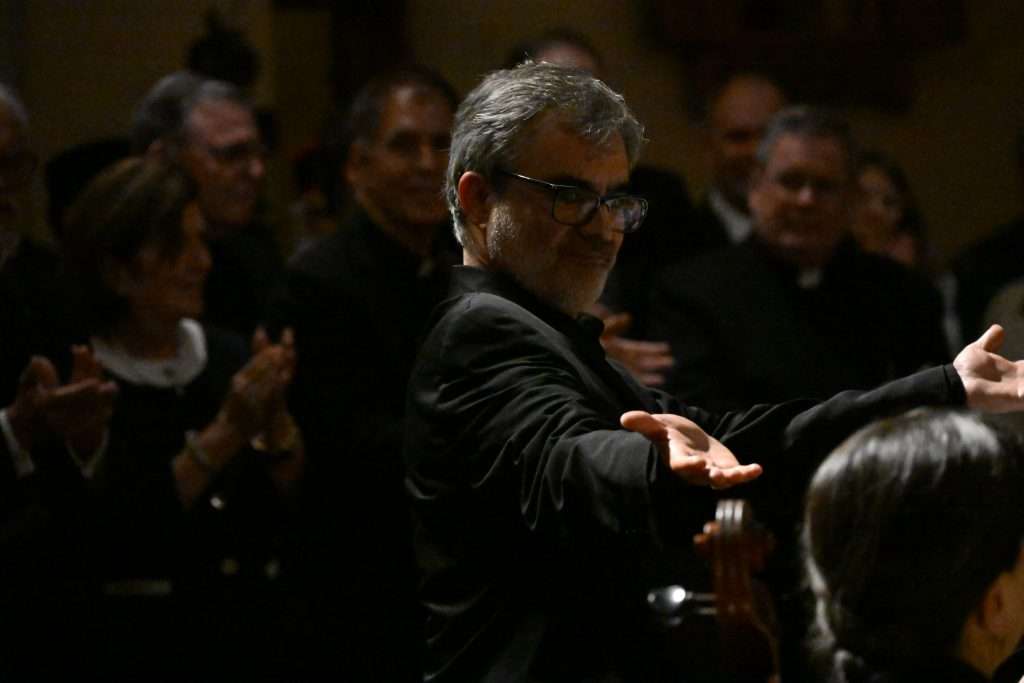
Founder and Music Director Alexander Lingas will move into a new role as Music Director Emeritus this spring, passing the baton to a new generation while redirecting his focus towards academic work. Dr. Lingas will conduct the final concerts of Cappella Romana’s current season on March 6 and 7, 2026, featuring Maximilian Steinberg’s extraordinary Passion Week. Following these concerts, the Board will name Dr. Lingas as Music Director Emeritus.
He has decided to step down as Music Director in order to concentrate on his academic work in the fields of Eastern Orthodox liturgy and music. Cappella Romana will look forward to inviting Dr. Lingas to take the podium as a guest director in the years to come following the appointment of a new Music Director.
When a devastating earthquake struck San Francisco in 1989, few could have predicted that two fundraising concerts organized in its aftermath would spark a musical revolution. Alexander Lingas founded Cappella Romana in 1991, launching a three-and-a-half decade odyssey to resurrect the lost voices of Byzantium and transform how the world experiences sacred music from the Christian East and West.
Alexander Lingas writes, “I gathered a group of friends under the name ‘Cappella Romana’ to offer a benefit concert in 1991 representing, in embryonic form, a vision of combining passion with scholarship to explore the musical traditions of the Christian East and West. I am deeply grateful to all the artists, staff, board members, volunteers, generous benefactors, and audiences who joined me in cultivating that vision over the last 35 years. It has yielded a bountiful harvest: a world-class ensemble with an international reputation for its broadcasts, commissions and premieres of new works, educational outreach, live performances, recordings, research initiatives, and publications, both pastoral and scholarly.”
He continues, “Having discussed with Cappella Romana’s Board the idea of succession over the past few years, I decided that the time had now come for me to relinquish my current role in order to give priority to scholarship and theological education. I will continue to serve the liturgical and musical traditions of the Christian Roman oikouméne through my affiliations with the Institute for Orthodox Christian Studies in Cambridge (UK) and the Institute of Sacred Arts at St. Vladimir’s Orthodox Theological Seminary in Yonkers, New York.”
Commenting on this change, John Paterakis, President of the Board of Directors, said: “I am so grateful for the work done by Alexander, not only in creating Cappella Romana, but in growing us into the premier artistic organization for the establishment of Byzantine and Orthodox music in the greater canon of global music. From the very beginning Cappella Romana was far more than a modest regional organization and made a national and international impact almost immediately. That impact has now expanded considerably with our recording label Cappella Records and Cappella Romana Publishing. Alexander and I have been friends for many decades, and I have always admired his steady scholarship in this field. He is clearly the leading scholar on Byzantine music in the English-speaking world, and we support his decision to focus now on his important written contributions to the field.”
“Even as a graduate student in 1991, Alexander Lingas had a vision for a group that would go on to become the leading ensemble in the world for music of the inheritance of both Eastern and Western Christian traditions,” said Mark Powell, Executive Director. “Over the course of his career he has been recognized as one of the leading world authorities in music of the Orthodox world.” He continued, “We all wish him well in his next endeavors. His vision of Cappella Romana will outlast us all, to transform hearts and minds through this extraordinary music, long into the future. We’re looking forward to Cappella Romana’s next fruitful era.”
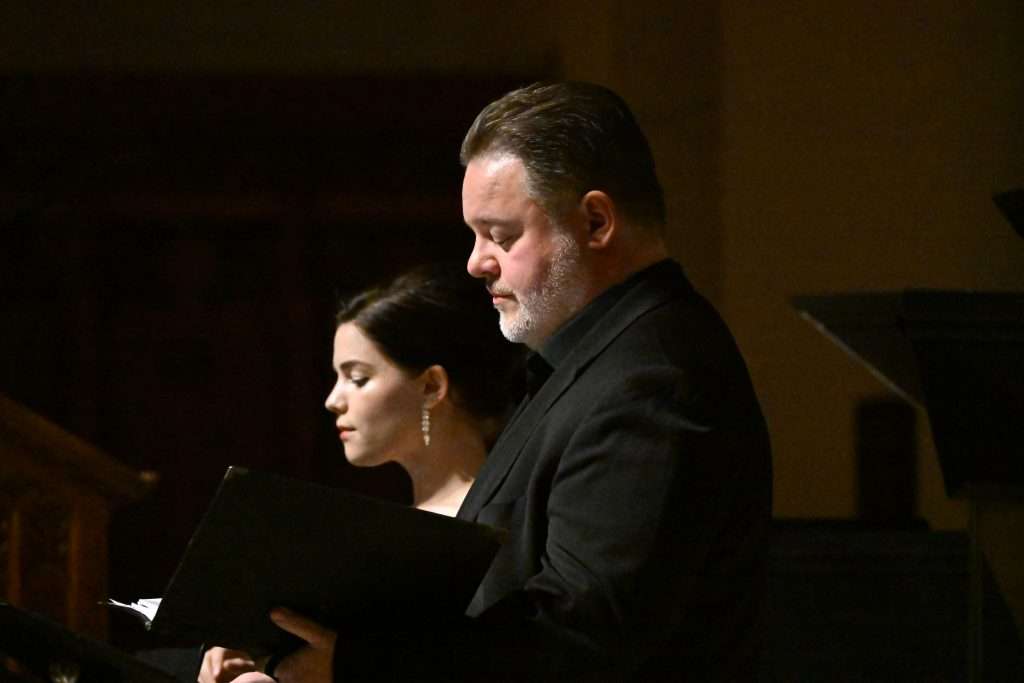
The Board has appointed John Michael Boyer, currently Associate Music Director of Cappella Romana, as Interim Music Director for the 2026-27 season, the concerts of which will be announced in March. Guided by Cappella Romana’s strategic plan, over the next year the organization will conduct an international search for a new Music Director.
As Professor Emeritus at City St-George, University of London, a Research Fellow at the Institute for Orthodox Christian Studies at Cambridge (UK), Professor of Music and Associate Director of the Institute of Sacred Arts at St. Vladimir’s Orthodox Theological Seminary, and a Visiting Professor at UCLA, Lingas continues to mentor the next generation of scholars and performers, including Cappella Romana’s Interim Music Director.
“Alexander Lingas has been my trusted advisor and mentor throughout my career; it has been a profound joy to sing for him in Cappella Romana for the past 27 years and to serve as his Associate Music Director for the past nine,” said John Michael Boyer. He continued, “His depth of knowledge, his artistic vision, and his inspiring presence have set the stage for the organization’s next era. I am honored and excited to take up the reins for the next season. It promises to be a beautiful series, steeped in the artistic vision with which Alexander has moved audiences and colleagues alike for the last 35 years.”
Cappella Romana will hold two receptions around the March concerts of Steinberg’s Passion Week, celebrating Dr. Lingas and his many achievements while also marking Cappella Romana’s 35th anniversary:
- Seattle: A pre-concert reception will take place on Friday, March 6, 2026 at 6:30pm prior to the concert at 7:30pm at St. Demetrios Greek Orthodox Church.
- Portland: A post-concert reception will take place on Saturday, March 7, 2026 at Holy Trinity Greek Orthodox Cathedral. The concert at St. Mary’s Cathedral in NW Portland begins at 2:00pm and all audience members are welcome to join the reception after the concert, across town at the Greek Orthodox Cathedral (3131 NE Glisan Street), the site of Cappella Romana’s founding in 1991.
From Earthquake Relief to the King’s Coronation: Alexander Lingas’s Extraordinary Legacy and Cappella Romana’s Future
A Scholar’s Vision Becomes Reality
Lingas, who completed his doctorate on Sunday Matins in the Rite of Hagia Sophia at the University of British Columbia before studying theology with Metropolitan Kallistos Ware at Oxford, brought both scholarly rigor and performative passion to his vision. He defined Cappella Romana’s mission: to experience and understand the transcendent beauty of the sacred music of the Christian East and West, especially of Byzantium, cultivating this rich cultural heritage and sharing it worldwide through performances, recordings, publications, scholarship, and new artistic creation.
Early Triumphs: Putting Byzantine Music on the Map
The ensemble’s first concert, “Orthodox Music Ancient and Modern,” performed in San Francisco and Portland in April 1991, set the stage for decades of achievement. By 1993, Cappella Romana achieved national acclaim with the first performance of Arvo Pärt’s Passio by a group other than the Hilliard Ensemble. The NPR-broadcast performance announced that a major new voice in sacred music had arrived. Cappella Romana’s early championing of Pärt’s music later led to Cappella Romana’s week-long 2017 Arvo Pärt Festival and its pioneering recording “Arvo Pärt: Odes of Repentance.”
In 1993, Cappella Romana became the only classical music organization to present concerts in both Portland and Seattle—a commitment that continues today.
The 1990s saw ambitious projects including 1997’s “Latins in the Levant,” also directed by Paul Hillier, which evolved into “The Fall of Constantinople,” one of Cappella Romana’s most celebrated programs that captured public imagination at performances following the September 11 attacks.
In 2001, Cappella Romana presented its first all-chant program (Old Roman in Latin and medieval Byzantine in Greek) under renowned Greek musicologist Ioannis Arvanitis, with sellout performances marking the organization’s tenth anniversary. Lingas’s deep connections to Byzantine chant—cultivated through Fulbright and Onassis-funded studies with cantor Lycourgos Angelopoulos in Greece—brought authenticity that captivated audiences.
A Recording Legacy That Changed the Landscape
Cappella Romana’s recording legacy began in 1998, with a modest cassette release, growing into an established international label, Cappella Records. The 1999 release featuring Greek-American composer Tikey Zes marked their first CD, followed by the late Father Ivan Moody’s monumental Akáthistos Hymn, which premiered in 1999.
International Acclaim
The year 2004 proved transformative. Cappella Romana debuted at the Metropolitan Museum of Art with “The Fall of Constantinople,” then crossed the Atlantic for its European debut at London’s Byzantine Festival. The performance in St. Paul’s Cathedral before thousands, including members of the Royal Family, signaled Cappella Romana’s arrival on the world stage.
The Metropolitan Museum partnership produced the Music of Byzantium recording, which sold over 17,000 copies in one year—an unparalleled achievement for Byzantine chant. International tours followed: Ireland and Northern Ireland (2005), the Smithsonian (2006), Rome, Grottaferrata, and Sicily. The ensemble’s 2006 Getty Museum appearance during the celebrated “Icons from Sinai” exhibition further cemented its reputation.
Rediscovering Lost Masterpieces
One of Lingas’s most significant achievements came with performances of Maximilian Steinberg’s Passion Week from a new edition he edited. This rediscovered masterwork had never been performed complete. Lingas investigated Steinberg’s autograph manuscripts in St. Petersburg of the work written in the 1920s, just before Stalin’s prohibitions on sacred music. With the world premiere in 2013, its 2015 recording release became a Gramophone Record of the Year.
The current season closes with a reprise of Steinberg’s Passion Week in March 2026, marking the ensemble’s 35th Anniversary and serving as a fitting celebration of Lingas’s extraordinary legacy.
The Icons of Sound Revolution
Perhaps no project better exemplifies Lingas’s synthesis of scholarship and performance than “Icons of Sound,” which utilizes Stanford University’s acoustic technology to recreate Hagia Sophia’s soundworld. This collaboration culminated in the 2019 recording Lost Voices of Hagia Sophia, mastered at Skywalker Ranch and released in Dolby Atmos.
Released just before the COVID-19 pandemic, a feature on Lost Voices of Hagia Sophia became NPR’s most listened-to story in 2020 and was profiled in a major article in The New York Times. The recording remained on the Billboard Classical Chart for over 44 weeks. In 2022, Cappella Romana performed the program at the Utrecht Early Music Festival, the world’s largest festival for Early Music. Before a packed house of 2,000 people, Cappella Romana performed this program in the virtual reality acoustic of Hagia Sophia.
Cappella Romana is one of very few early music groups from North America to perform at the Utrecht Early Music Festival, having appeared there four times so far.
A Royal Summons
A pinnacle of recognition came in 2023 when King Charles III asked Lingas to form and direct the Byzantine Chant Ensemble with members of Cappella Romana for the Coronation at Westminster Abbey. Watched by over 20 million people in the UK and countless more worldwide, this historic moment witnessed Byzantine chant integrated into the Coronation Service as a musical tribute to Prince Philip, Duke of Edinburgh. This honor complemented his title of Archon Mousikodidáskalos from Ecumenical Patriarch Bartholomew I in 2018, and the Moldavian Cross in 2019.
Championing Unheard Voices: The Kassianí Project and Black Voices in Orthodox Music
In 2020, Cappella Romana turned to Kassianí, a ninth-century Byzantine abbess and the most ancient female composer with surviving music. The Hymns of Kassianí recording, released in April 2021, debuted at Number 1 on the Billboard Classical Chart. The ensemble has also released a volume of her hymns for Christmas in both Byzantine and staff notation, and a future volume of Lenten hymns is in preparation, so that these works can be performed by other ensembles from excellent editions.
As part of its ongoing “Black Voices in Orthodox Music” initiative, the deeply moving 2025 production of The Canon for Racial Reconciliation by Nicholas Reeves and Isaac Cates represented the ensemble’s largest undertaking to date, now being prepared for a tour and recording next year.
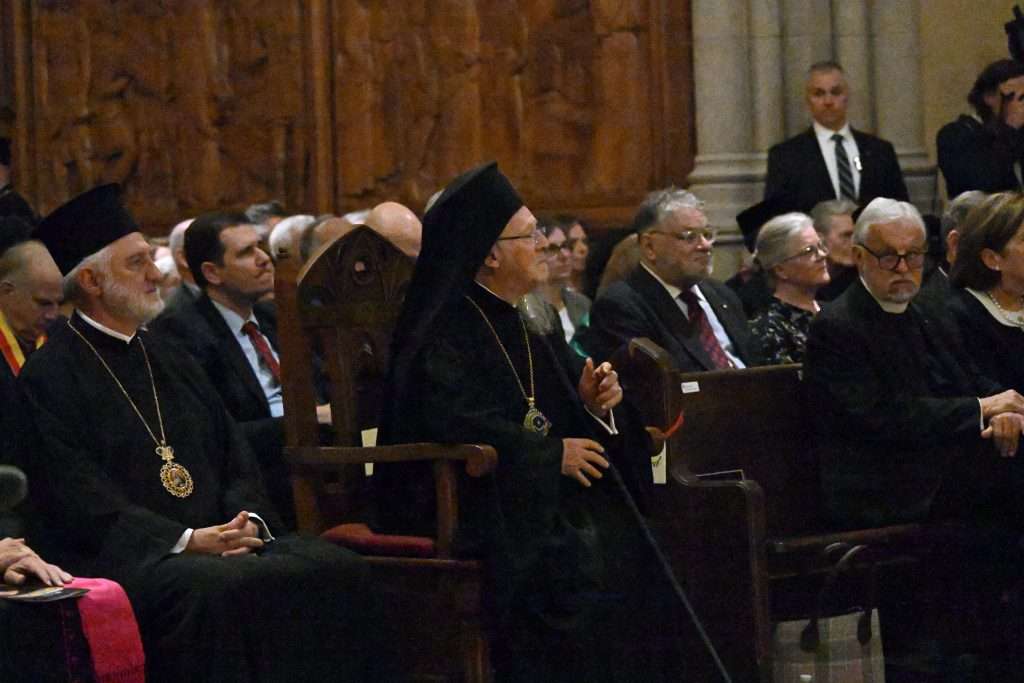
Performing for the Ecumenical Patriarch Bartholomew I
In 2023, The Archons of the Ecumenical Patriarchate awarded Cappella Romana the Sophia Award for Excellence, hosting the ensemble performing Lost Voices of Hagia Sophia at the National Shrine of St. Nicholas at the World Trade Center in New York. Two years later the ensemble returned to perform Robert Kyr’s environmental oratorio A Time for Life at Fordham University before Ecumenical Patriarch Bartholomew I, and at Lincoln Center when His All Holiness received the Templeton Prize for his work on the Environment.
New horizons ahead
From a fundraising concert after an earthquake to commanding the world’s most prestigious stages, from dusty manuscripts to Billboard chart-toppers, from Stanford’s laboratories to Westminster Abbey, Alexander Lingas and Cappella Romana have transformed sacred music from a specialist concern into a living art form that speaks to modern people of all backgrounds.
His work proves that the ancient can be perpetually new, and that Cappella Romana will continue to resonate in performances, recordings, and publications worldwide under new leadership, guided by the enduring vision he created.
Recordings
Recordings of Cappella Romana directed by Alexander Lingas:
- 1998: Cappella Romana in Concert (cassette)
- 1999: Tikey Zes Choral Works
- 2000: When Augustus Reigned: Christmas Music from the Byzantine tradition
- 2003: The Akáthistos Hymn by Ivan Moody, rereleased in 2018
- 2004: Music of Byzantium, a collaboration with the Metropolitan Museum of Art selling over 17,000 copies
- 2005: Epiphany: Medieval Byzantine Chant, re-released in 2012
- 2005: Lay Aside All Earthly Cares, Choral works by Fr. Sergei Glagolev
- 2006: The Fall of Constantinople
- 2008: The Divine Liturgy in Byzantine Chant in English
- 2008: The Kontakion on the Nativity of Christ and Orthodox Christmas carols by Richard Toensing
- 2008: Mount Sinai: Frontier of Byzantium also released as “Voices of Byzantium,” with the Metropolitan Museum of Art
- 2009: Byzantium: 330-1453, a recording released by The Royal Academy of Art in London
- 2009: Byzantium in Rome: Medieval Byzantine chant from Grottaferrata
- 2010: The Divine Liturgy of St John Chrysostom by Peter Michaelides
- 2012: Live in Greece: From Constantinople to California
- 2013: The Divine Liturgy for choir and organ by Tikey Zes
- 2013: A Time for Life, an environmental oratorio by Robert Kyr
- 2015: Good Friday in Jerusalem: medieval Byzantine chant
- 2015: Passion Week by Maximilian Steinberg, the world premiere recording (also on vinyl LP)
- 2015: Cyprus: Between Greek East and Latin West
- 2019: Venice in the East: Renaissance Crete and Cyprus
- 2019: Lost Voices of Hagia Sophia: medieval Byzantine chant, sung in the virtual acoustic of Hagia Sophia, a collaboration with Stanford University, on the Billboard chart for over 44 weeks
- 2021: Hymns of Kassianí, the earliest music by a female composer from whom we have music by Kassia, the 9th century nun
- 2022: Robert Kyr’s All-Night Vigil composed for Cappella Romana
- 2023: A Byzantine Emperor at King Henry’s Court: Christmas 1400 London
- 2023: Arvo Pärt: Odes of Repentance
Forthcoming
- The Memorial Service by Sir John Tavener
- In the Footsteps of Saint Demetrios: Medieval Byzantine Chant from Thessaloniki
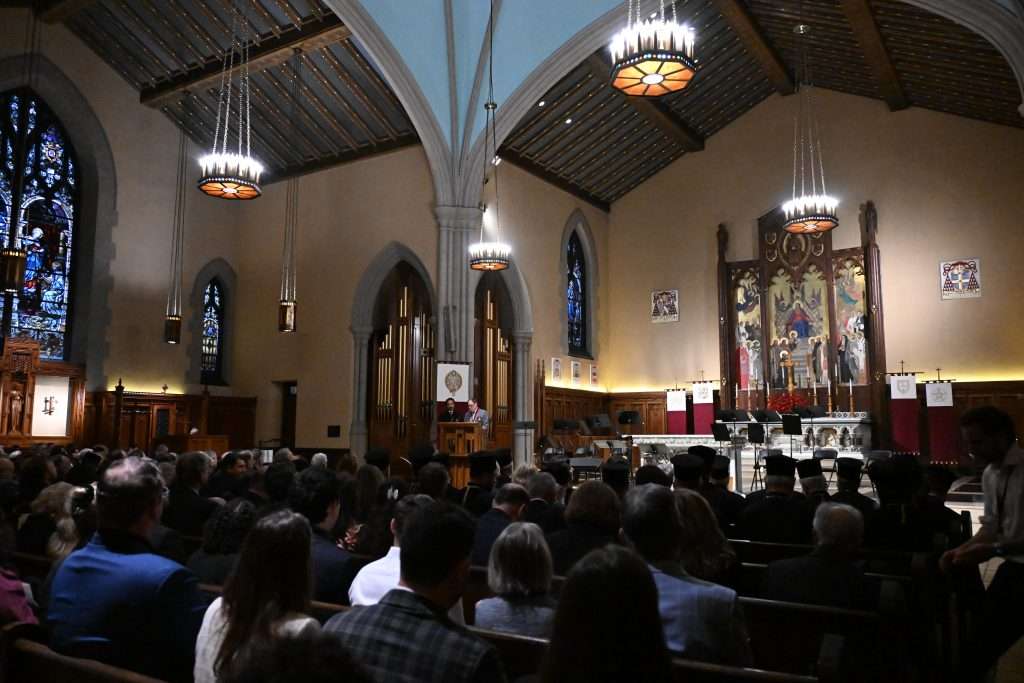
Cappella Romana
Founded in 1991 by Alexander Lingas, Cappella Romana is a professional vocal ensemble with a mission to experience and understand the transcendent beauty of the sacred music of the Christian East and West, especially of Byzantium, cultivating this rich cultural heritage and sharing it worldwide. The ensemble is known especially for its presentations and recordings of medieval Byzantine chant, Greek and Russian Orthodox choral works, and other sacred music that expresses historic traditions of a unified Christian inheritance. Cappella Romana is one of the longest-running professional vocal ensembles in North America, expressing its mission not only through performances here and abroad but also through recordings and publications, scholarship and education, engagement with heritage communities, and new artistic creation. cappellaromana.org
Alexander Lingas
Alexander Lingas is Music Director of Cappella Romana, which he founded in 1991 to explore through scholarship and performance the sacred musical inheritance of Old Rome and the West, and New Rome-Constantinople and the East.
In fall 2024 Dr. Lingas was based at UCLA as Visiting Professor in the Department of Music and Artist in Residence of Gefyra, a collaboration of the UCLA Stavros Niarchos Foundation Center for the Study of Hellenic Culture and the SNF Centre for Hellenic Studies at Simon Fraser University in British Columbia, Canada, where he directed a concert and forthcoming Cappella Romana recording of medieval Byzantine chant honoring the patron of Thessaloniki, St. Demetrios, performed with choral students from UCLA.
In 2023 he formed and directed the Byzantine Chant Ensemble for the Coronation of Their Majesties King Charles III and Queen Camilla. He has been honored twice by the Romanian Orthodox Church, receiving the Order of the Imperial Saints Constantine and Helen of the Patriarchate of Romania in 2025 and the Moldavian Cross of the Metropolis of Moldavia and Bukovina in 2019. He was elected to a four-year term as Chair of the International Society for Orthodox Church Music in June 2025.
In 2018 His All Holiness, Bartholomew I, Archbishop of Constantinople-New Rome and Ecumenical Patriarch bestowed on him the title of Archon Mousikodidáskalos (Teacher of Music).
Dr. Lingas is Dr. Lingas is Professor of Music at the Institute for Orthodox Christian Studies (Cambridge, UK), and Professor Emeritus in the Department of Performing Arts at City St. George’s, University of London. Having hosted him as the Spring 2023 Artist in Residence, St. Vladimir’s Orthodox Theological Seminary in Yonkers, New York subsequently appointed him Professor of Music and Associate Director of its Institute of Sacred Arts.
He completed his doctorate on Sunday matins in the rite of Hagia Sophia at the University of British Columbia and then, with the support of a SSHRC postdoctoral fellowship, moved to Oxfordshire to study theology with Metropolitan Kallistos Ware. From 1997 to 2021 he was a Fellow of the University of Oxford’s European Humanities Research Centre. His present research embraces not only historical study but also ethnography and performance. His awards include Fulbright and Onassis grants for musical studies in Greece with cantor Lycourgos Angelopoulos, the British Academy’s Thank-Offering to Britain Fellowship, research leave supported by the Stavros Niarchos Foundation, and the St. Romanos the Melodist medallion of the National Forum for Greek Orthodox Church Musicians (USA).
John Michael Boyer
John Michael Boyer has been a professional singer, conductor, and Byzantine cantor since 1997. He studied Byzantine Music with Alexander Lingas, Lycourgos Angelopoulos (+2014), and Ioannis Arvanitis. Having sung with Cappella Romana since 1999, he was made associate music director in 2017. John is founder and artistic director of PRÓTO, a collaborative duet with Lebanese-American cantor the Rev. John Rassem El Massih; their seminal recording, Sun of Justice, was released in December, 2017. John is an active composer and has produced new music for several recordings, including The Divine Liturgy in English in Byzantine Chant (Cappella Romana), All Creation Trembled(Holy Cross), Sun of Justice (PRÓTO); as well as Cappella Romana’s forthcoming recording of the Orthodox Funeral Office, music originally composed for the funeral of Sir John Tavener in 2013. He collaborated on the new composition Heaven & Earth: A Song of Creation, for the St. John of Damascus Society, and conducted both its premiere in 2018 and its subsequent recording with Cappella Romana (2022). John’s book, Byzantine Chant: the Received Tradition – A Lesson Book is was published in February 2023, with his Resurrectionary, an English Anastasimatárion using the translations of the late Archimandrite Ephrem (Lash) (+2016) also slated for 2023. John is founder and director of the Saint John Koukouzelis Institute of Liturgical Arts (koukouzelis. net), which offers instruction in Byzantine Music and Liturgics. He is Protopsaltis (chief cantor) of the Greek Orthodox Metropolis (Diocese) of San Francisco, currently on loan as full-time Cantor and Director of Music at Holy Trinity Greek Orthodox Cathedral in New Orleans. In 2018, John married renowned Greek philologist and modern historian, Evangelia Boubougiatzi. They have twin girls and split their time between the United States and Pyrgetos of Larisa, Greece.
The post After 35 years, founder Alexander Lingas retires as Music Director of celebrated vocal ensemble Cappella Romana appeared first on Orthodox Observer.