This post was originally published on this site
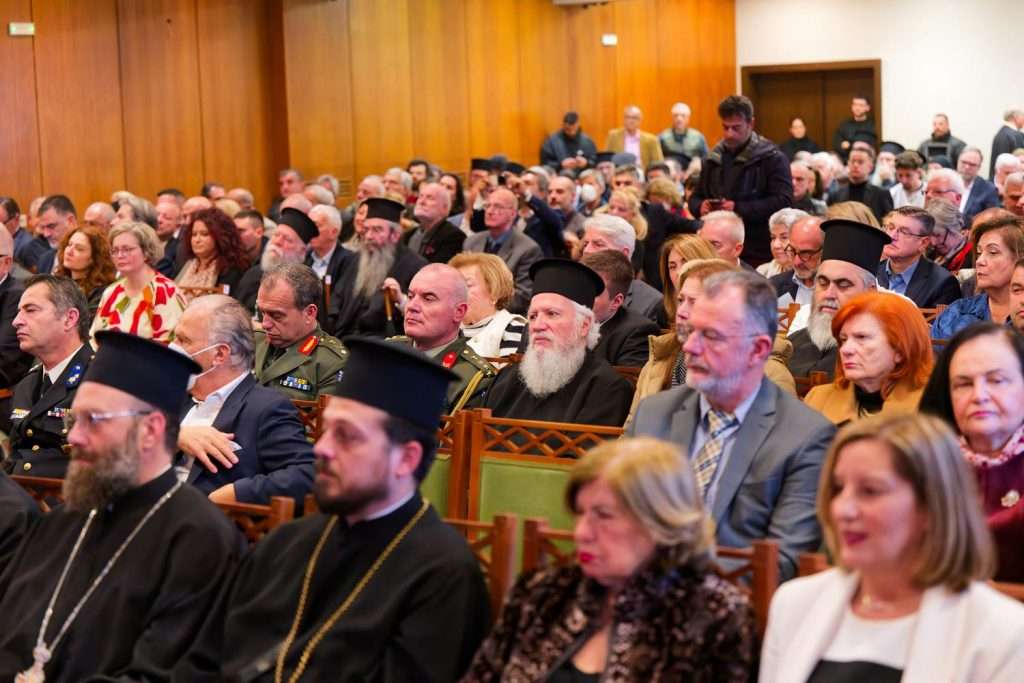
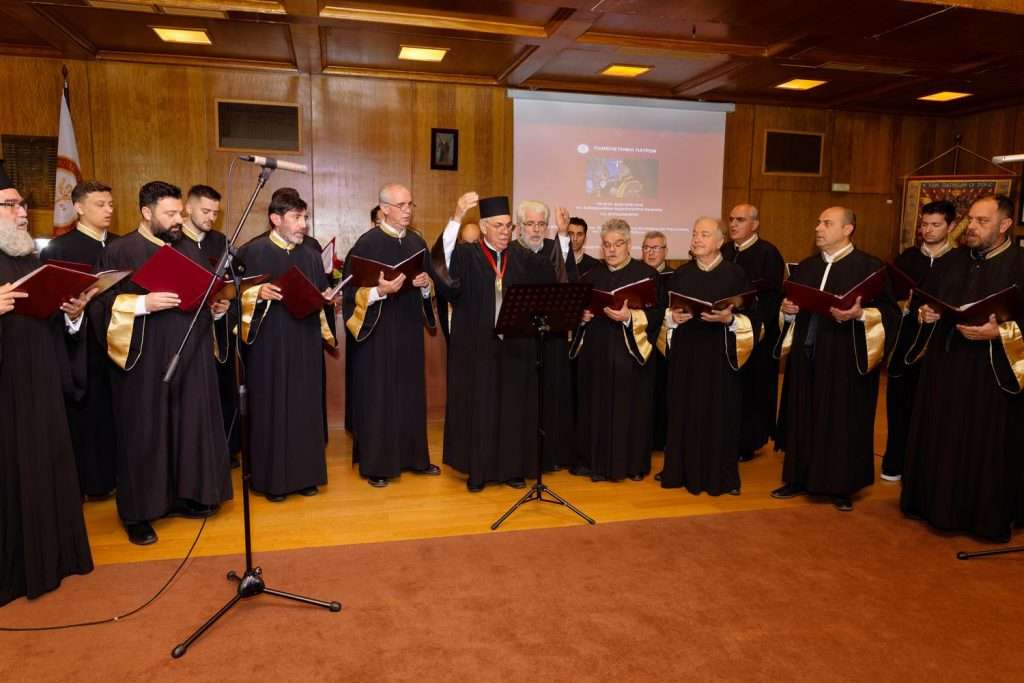
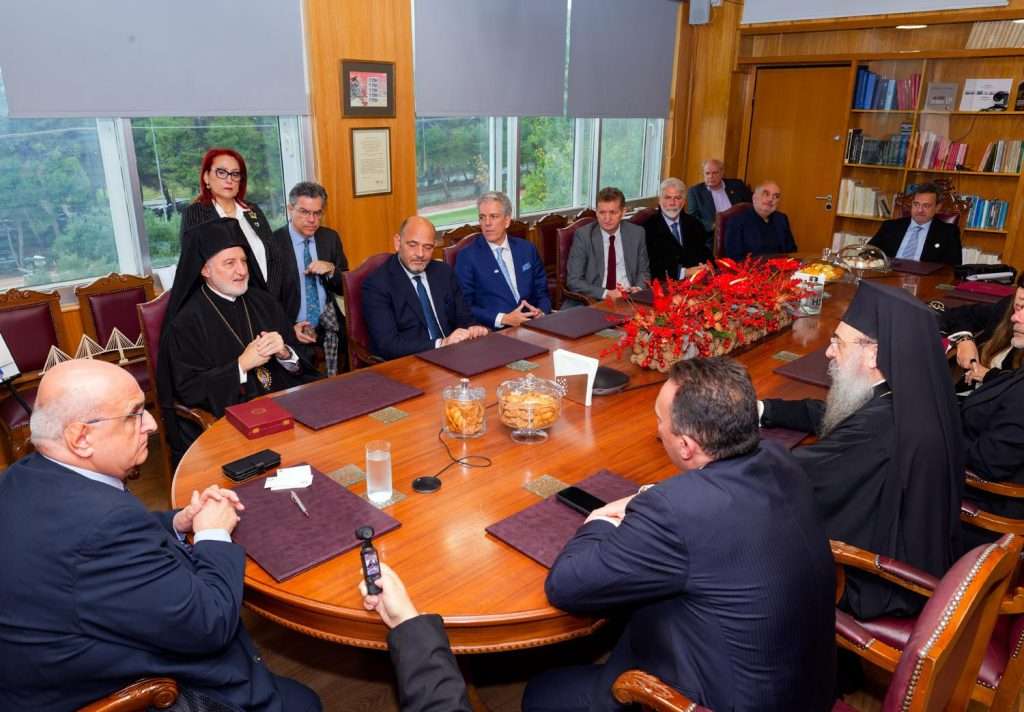
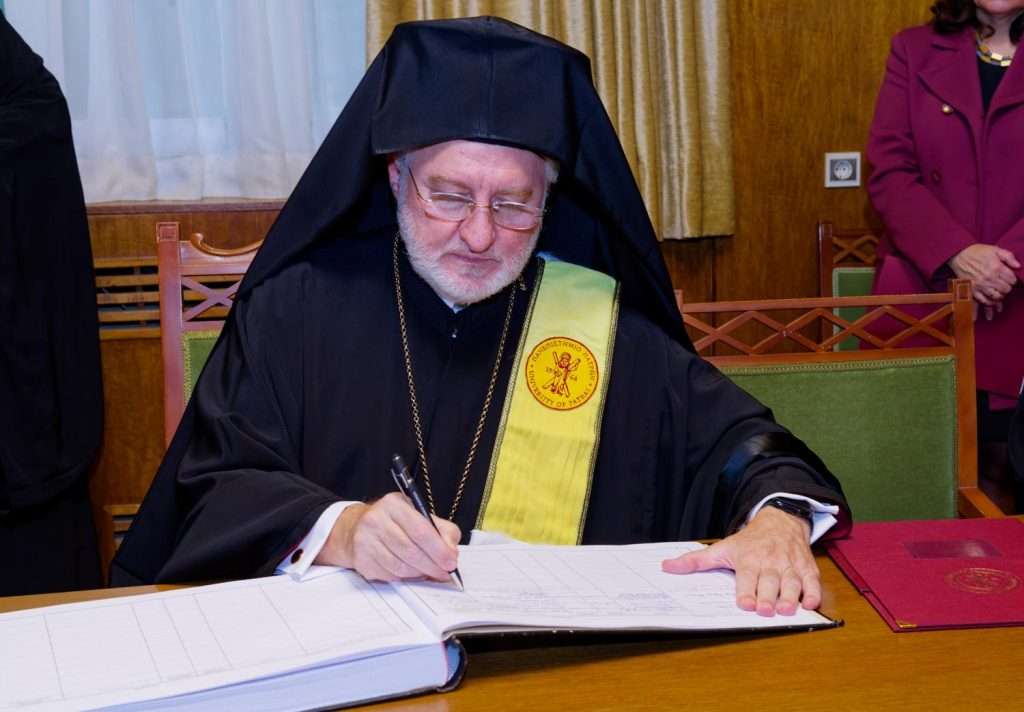
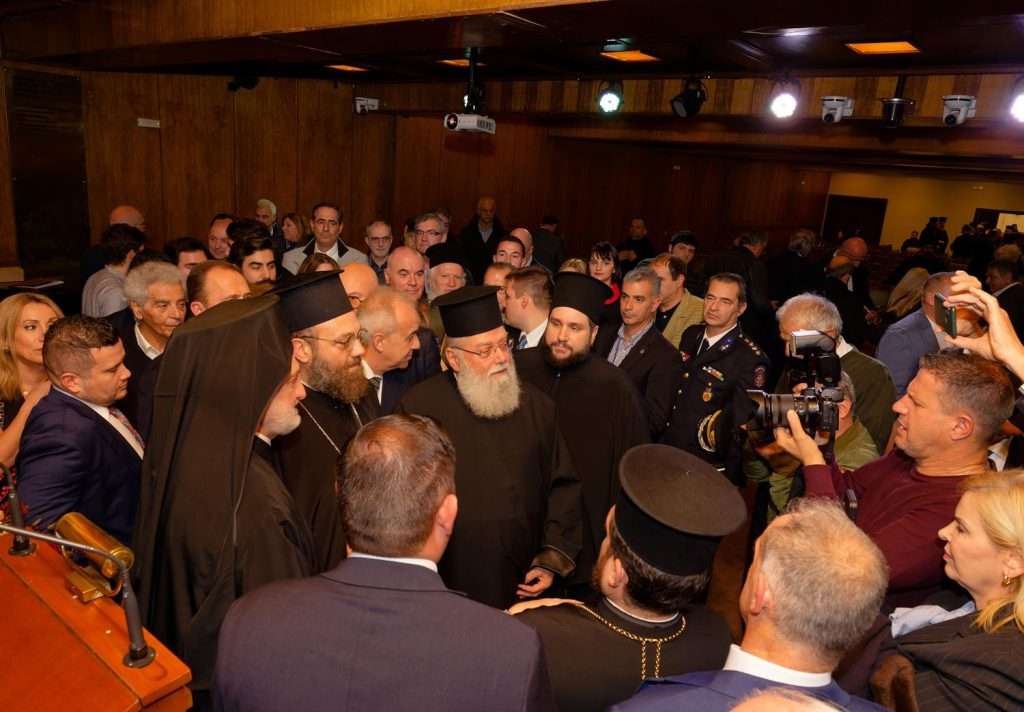
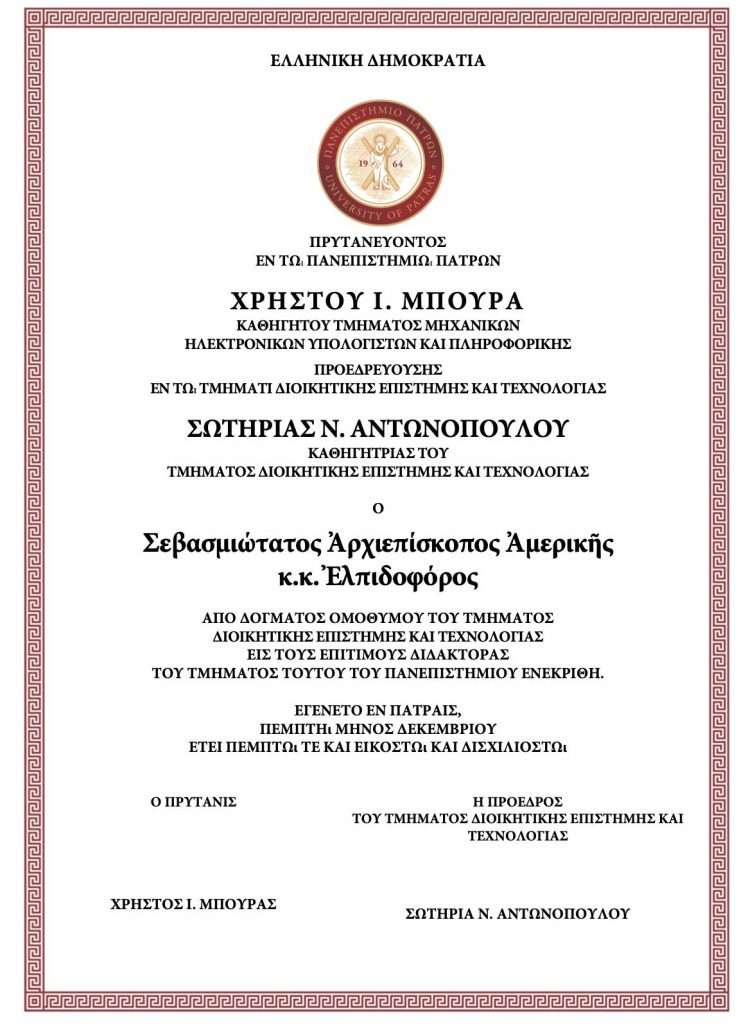
Patras. Dec. 5 — At the Ceremonial Hall “Odysseas Elytis” of the University of Patras, the Department of Management Science and Technology conferred an honorary doctorate on His Eminence Archbishop Elpidophoros of America in a formal ceremony held before a full audience, despite heavy rain outside. Rector Christos Bouras led the event. The Metropolitan of Patras was present as the representative of the Ecumenical Patriarch.
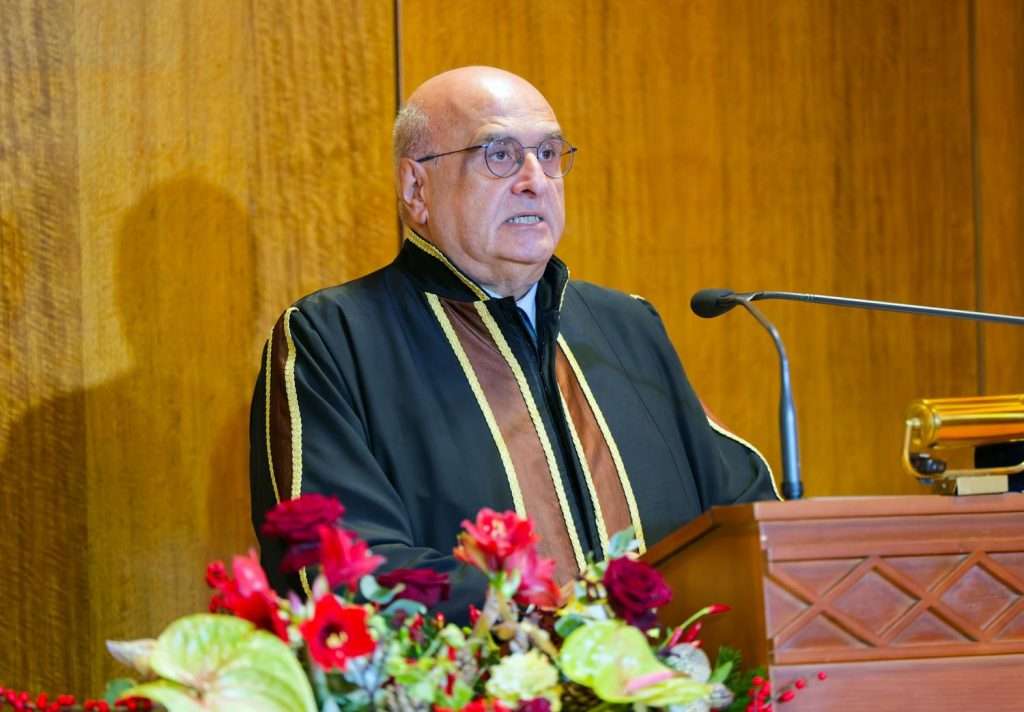
Rector’s address
In his address, Rector Bouras described why the Department and the Senate chose to honor Archbishop Elpidophoros, emphasizing the relationship between academic method and pastoral leadership. He stated:
“In the course of his life, His Eminence has demonstrated, with scholarly consistency, that management science and pastoral practice can fruitfully coexist when the research approach meets ecclesial experience. His sound judgment, his well-documented methodological approach, and the consistency that characterizes him as a hierarch reflect a deep understanding of both the institutional and the theological framework. The proposal of the Department of Management Science and Technology to honor him, which the Senate of the University of Patras unanimously accepted, highlights precisely this creative meeting of administrative thought with ecclesiastical tradition.”
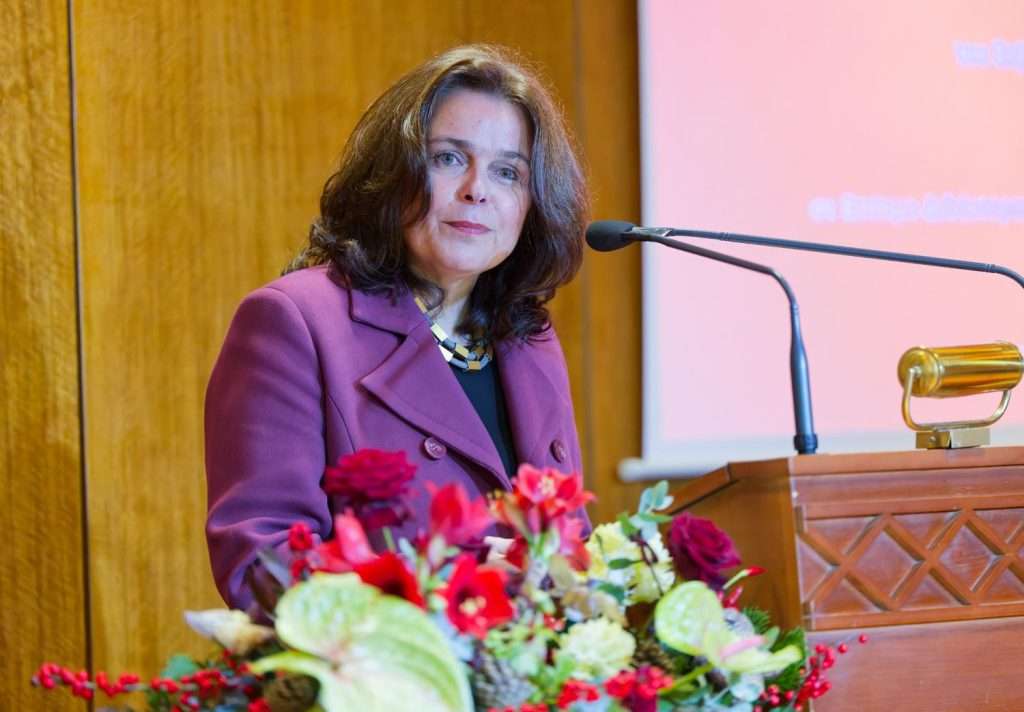
Laudatio:
The Laudatio was delivered by Associate Professor Niki Georgiadou of the Department of Management Science and Technology. She introduced the Archbishop as someone who “in a unique way combines deep theological thought with openness to contemporary technological challenges, academic completeness with pastoral sensitivity, faith in tradition with a vision for the future.”
From the moment he assumed his ministry as Archbishop of America in 2019, the Laudatio noted, he was met with the unprecedented challenge of the COVID-19 pandemic. He responded with prudence and a sense of responsibility, adopting protective measures and supporting those affected by creating the Archdiocesan Relief Fund. The text also pointed to his social sensitivity and international presence: inspired by the Christian teaching on equality and the sanctity of the human person, he joined a peaceful protest march in June 2020 against violence toward African Americans, and he publicly condemned the conversion of Hagia Sophia into a mosque, signing a joint statement with Cardinal Timothy Michael Dolan, the Roman Catholic Archbishop of New York.
Professor Georgiadou then turned to three major challenges he addressed as Archbishop of America. At Saint Nicholas at Ground Zero, he secured the funding and completed the rebuilding of the church; in November 2021 the Ecumenical Patriarch celebrated the Thyranoixia, and on July 4, 2022, the church was fully returned to worship, 21 years after its destruction and in the centennial year of the Archdiocese. On the clergy and lay employee pension plan, he launched the creation of a sustainable retirement fund for clergy and employees, resolving a long-standing problem of the Archdiocese. And at Hellenic College and Holy Cross School of Theology, through financial and organizational interventions, he ensured renewed recognition of the two institutions by the competent authorities, safeguarding the continuation of education for the Church’s future leadership.
A special section of the Laudatio focused on technology and Artificial Intelligence. Professor Georgiadou explained:
“What makes Archbishop Elpidophoros particularly relevant to the Department of Management Science and Technology is his strong interest in contemporary technological developments and especially in Artificial Intelligence.
Just a few days ago, in early November 2025, a conference was held at the Maliotis Cultural Center of Hellenic College and Holy Cross in Boston on the theme: ‘The Divine and the Digital: Artificial Intelligence and Theology.’ This conference, organized at the Archbishop’s initiative, is a milestone in the dialogue between the Church and contemporary technology.”
Quoting from his address at that conference, she noted that the Archbishop developed “a thoughtful and at the same time realistic position” and stated:
“Artificial intelligence is a development that surpasses every other issue of our time.” His Eminence described AI as “an axe that handles itself,” stressing its uniqueness: unlike previous technologies, AI appears to have the capacity for autonomous development and action. He warned of the coming of a “technological tsunami” and underlined:
“The question of where and how the Divine and the Digital intersect must be urgently placed on the table. The Church cannot avoid this issue.”
The Laudatio went on to summarize his further points: he observed that clergy already use AI tools for their sermons and that “theological chatbots” are beginning to offer spiritual advice. Although this raises serious questions, the Archbishop insisted that the response must not be fear or conspiracy thinking, but understanding. He emphasized that artificial intelligence cannot imitate conscience or love, and he called on the Church to play an active role in understanding and spiritually addressing the ethical issues that arise from new technologies, to set moral boundaries and to act as a leader, not a follower.
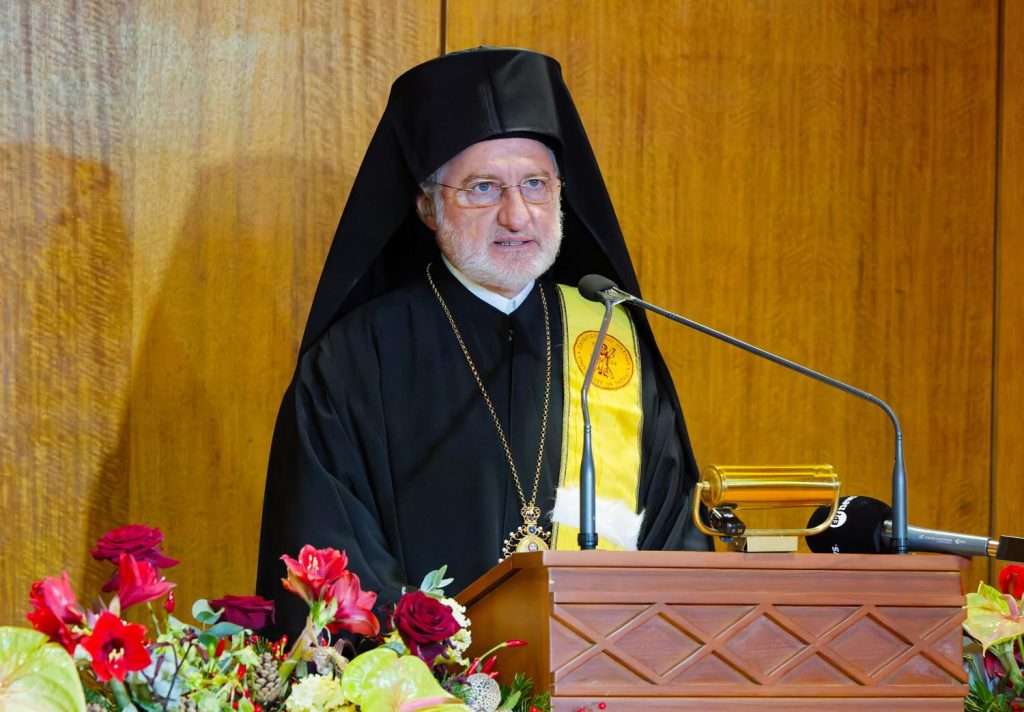
In his acceptance speech, Archbishop Elpidophoros began by expressing “sincere joy” and “deep emotion” at being in the city of Patras, which is closely connected with the holy Apostle Andrew the First-Called. He pointed out that he comes from Constantinople and has the honor and blessing to be a member of the Holy Synod of the Ecumenical Patriarchate, whose founder is the First-Called Apostle. He recalled that Ecumenical Patriarch Bartholomew “took up the cross of Saint Andrew” 34 years ago and continues the apostolic witness of Saint Andrew in today’s world.
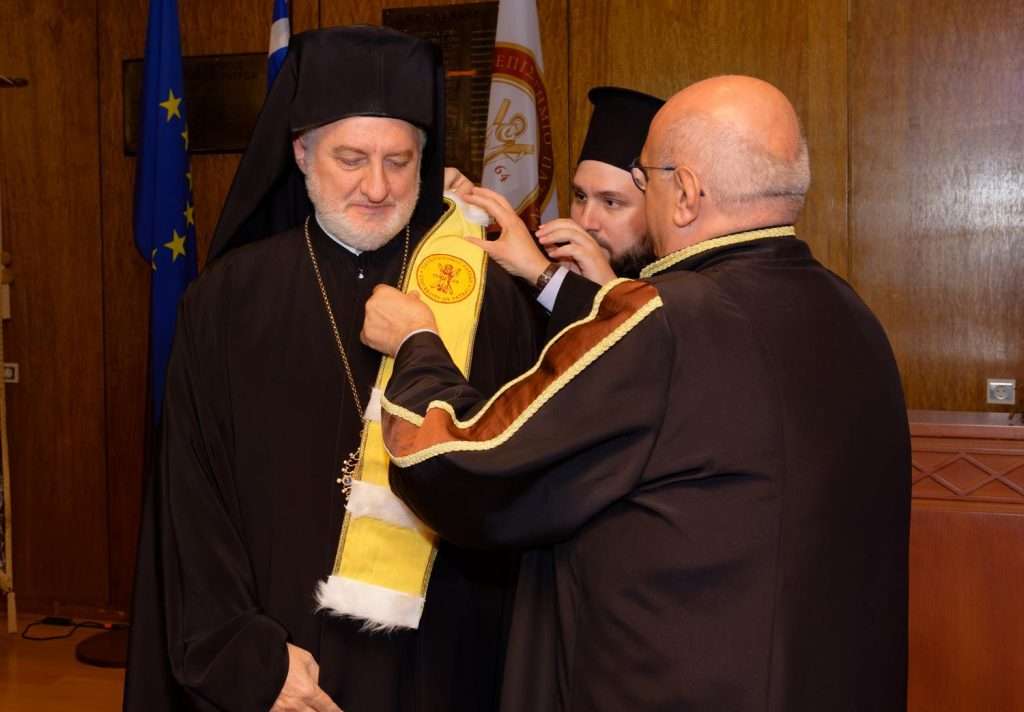
He then offered heartfelt thanks to the Rectorate of the University of Patras, which this year completes 61 years of continuous scientific activity and contribution, for their warm welcome, and to the Department of Management Science and Technology for its decision to name him an honorary doctor. Coming himself from the academic community, he said he knows the serious significance of an honorary doctorate and is therefore grateful to the faculty for their decision. He added that he sees this honor as addressed “not only to me personally, but mainly to the Holy Archdiocese of America,” the largest eparchy of the Ecumenical Patriarchate in the Orthodox diaspora, which he has had the honor to serve since 2019 and which completed one hundred years of life and service in 2022.
The Archbishop explained that the academic ceremony offered him the opportunity to share some reflections on the role of religion in contemporary open and multicultural societies. He spoke about the transition from modernity to what is called postmodernity, describing modernity as more than a historical period: a different way of seeing the world, whose beginnings lie in the Enlightenment, with its emphasis on reason and the autonomy of the subject. He recalled how certain thinkers saw religion as a remnant of the pre-modern world that should retreat before science and democracy, but he also described other approaches that understand modernity as a redefinition of religion rather than its end.
He suggested that the relationship between religion and modernity should not be seen as one of hostility, but as a “relationship of dialectical tension.” Modernity reminds religion of the limits of its power and the need for constant self-criticism, while religion reminds the modern world that human existence is not exhausted in its rational dimension, that the human being is also spiritual and vulnerable.
At a key point in his speech, he addressed globalization and its impact on religion, offering the following assessment:
“Globalization, however, entails serious risks for the authenticity of religious experience. Homogenization can threaten the diversity of religious traditions; the instrumental use of religion can rekindle nationalism and religious fundamentalism; and moral relativism can lead to the loss of the existential depth of every religious faith.
Within this environment, religion can play its critical and self-reflective role not by imposing rules, but by reminding us of the importance of responsibility and relationship. The encounter with the Other is the point at which the sacred becomes visible, where religion is transformed into responsibility for one’s neighbor. Thus, in the age of postmodernity, faith is not so much dogmatic as ethical; it is not declared, but enacted.”
At the same time, he acknowledged that globalization offers opportunities for encounter and cooperation, making clear that humanity shares common challenges such as ecological crisis, inequality, the demand for social justice and the loss of meaning. In this context, he said, religion can become an ethical partner of contemporary democracy, human rights and the rule of law, contributing to what His All Holiness The Ecumenical Patriarch Bartholomew described as a “global alliance of conscience.”
In the final part of the Laudatio, Professor Georgiadou explained that the Department of Management Science and Technology of the University of Patras considers the honorary doctorate to be not only an honor but something “organic and essential.” The Department deals with the connection between technology and management, with organizational transformation, with the ethical dimensions of innovation and digital transition, and with the impact of these on society.
Archbishop Elpidophoros, she said, embodies this synthesis in several ways: as Archbishop, he leads a complex organization with economic, social, educational and cultural dimensions; as Abbot in Halki and organizer of conferences on artificial intelligence, he has promoted the intelligent use of technology; in his interventions he raises ethical questions that must accompany every technological development; and in his leadership he seeks to anticipate and shape changes rather than simply react to them.
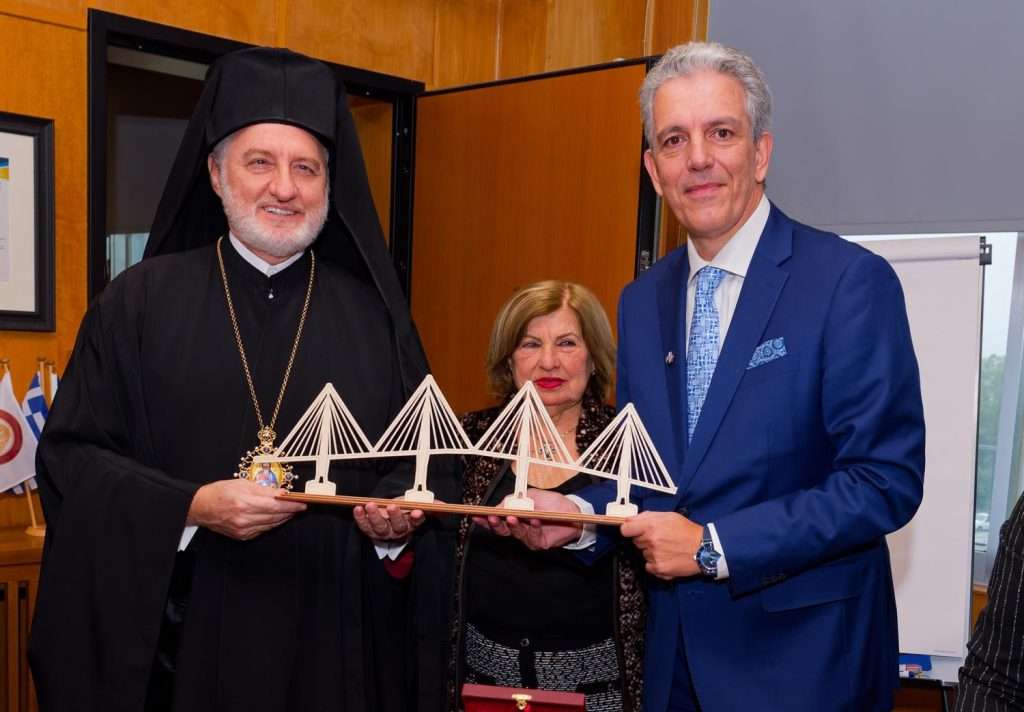
By naming him an honorary doctor, the University of Patras honors not only a hierarch and intellectual, she concluded, but “a leader who shows that tradition and innovation, faith and technology, the wisdom of the ages and a vision for the future are not incompatible, but can and must coexist for the good of humanity.”
Present at the ceremony were representatives of the Government and Parliament, representatives of the leaders of the main political parties, members of the higher judiciary, regional and local authorities, senior officials of the security services, rectors, deans and presidents from the University of Patras and other institutions, members of the academic community, and many students.
Biographical note
According to the Laudatio presented by Associate Professor Niki Georgiadou, Archbishop Elpidophoros (Ioannis Lambriniadis) was born in 1967 in Makrochori of Constantinople. He received his basic education in Thessaloniki and Athens, and in 1991 graduated with highest honors from the School of Theology of Aristotle University of Thessaloniki. His academic path includes postgraduate studies in Byzantine Philology at the University of Bonn, further study at the Saint John of Damascus Theological School in Balamand, Lebanon, and a doctorate in theology at Aristotle University. He later served as Visiting Professor at Holy Cross in Boston and was elected Associate Professor and then full Professor of Symbolics and of Inter-Orthodox and Inter-Christian Relations at Aristotle University. In recent years he has also been named honorary doctor by Democritus University of Thrace and by the University of the Aegean. His scholarly work includes a significant number of books, studies and articles on theological and inter-religious topics.
He was ordained deacon in 1994 and presbyter in 2005, was given the office of Archimandrite of the Ecumenical Throne, and served as Codicographer, Under-Secretary and then Chief Secretary of the Holy and Sacred Synod of the Ecumenical Patriarchate. He participated in Patriarchal delegations to General Assemblies of the World Council of Churches and served as Orthodox secretary in the official theological dialogue with the Lutheran World Federation. As Metropolitan of Prousa and Abbot of the Patriarchal and Stavropegial Monastery of the Holy Trinity in Halki (2011–2019), he formed a monastic brotherhood, worked for the reopening of the Theological School of Halki, established Halki as a living center of scientific and cultural events, promoted collaborations with universities in Greece and abroad, initiated a series of publications, strengthened and digitized the library, and undertook renovations and planning studies for the buildings.
In May 2019 he was elected Archbishop of America by the Holy and Sacred Synod of the Ecumenical Patriarchate, and he was enthroned on June 22, 2019.
The post University of Patras confers honorary doctorate on Abp. Elpidophoros appeared first on Orthodox Observer.