This post was originally published on this site
The second day of the Orthodox Observer’s conference on artificial intelligence (AI) and theology, held at the Maliotis Cultural Center in Brookline, Mass., continued conversation around its titular question: “Do the Divine and Digital Intersect?”
Michael Kratsios delivered the conference’s second keynote address. As the thirteenth Director of the White House Office of Science & Technology Policy, Kratsios oversees the development and execution of the U.S.’s science and technology policy agenda. He leads efforts to ensure American leadership in critical and emerging technologies, including artificial intelligence.
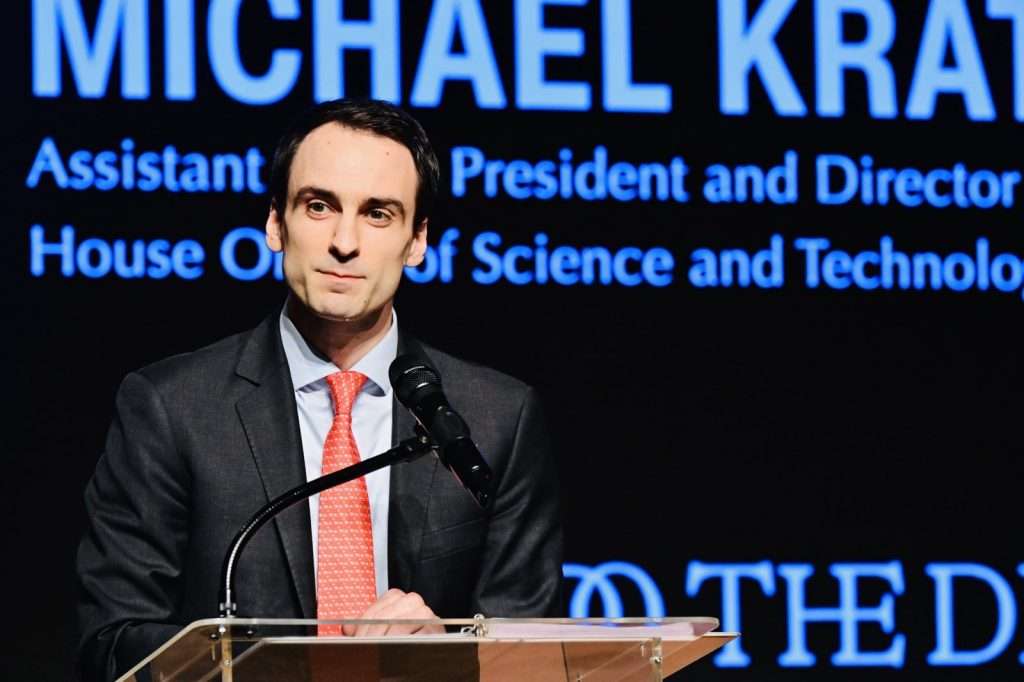
“The wisdom of Orthodoxy can speak to one of the most important issues of our time,” Kratsios said, drawing from His All-Holiness Ecumenical Patriarch Bartholomew’s recent reflections on nepsis, ascesis, and metron: watchful vigilance, self-discipline, and proper measure.
> Previously: Green Patriarch awarded the Templeton Prize for lifelong love of creation
Kratsios encouraged using new tools “responsibly, for the good of others,” while acknowledging that AI simultaneously makes clear “the necessity of faith.”
The morning’s session opened with a panel entitled “Christian Personhood and AI,” moderated by Dr. Claire Koen and including presentations from Fr. John Chryssavgis and Drs. Aristotle Papanikolaou and Gayle Woloschak.
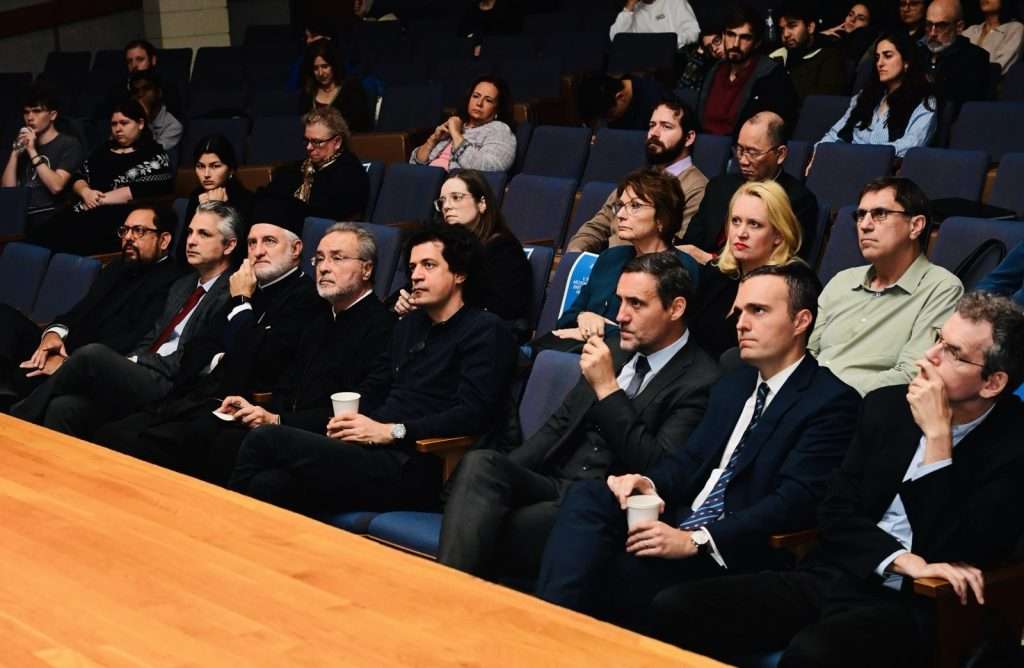
Fr. John cautioned that AI may bring “newer and faster ways to discriminate against and further divide people and communities,” citing as examples employment opportunities, housing applications, medical treatments, and parole grants.
“How is the veneer of objectivity to be reconciled with the reality of subjectivity?” he asked. “But what is far more challenging is … whether human judgment remains indispensable in determining the nature and scope of life’s paramount values.”
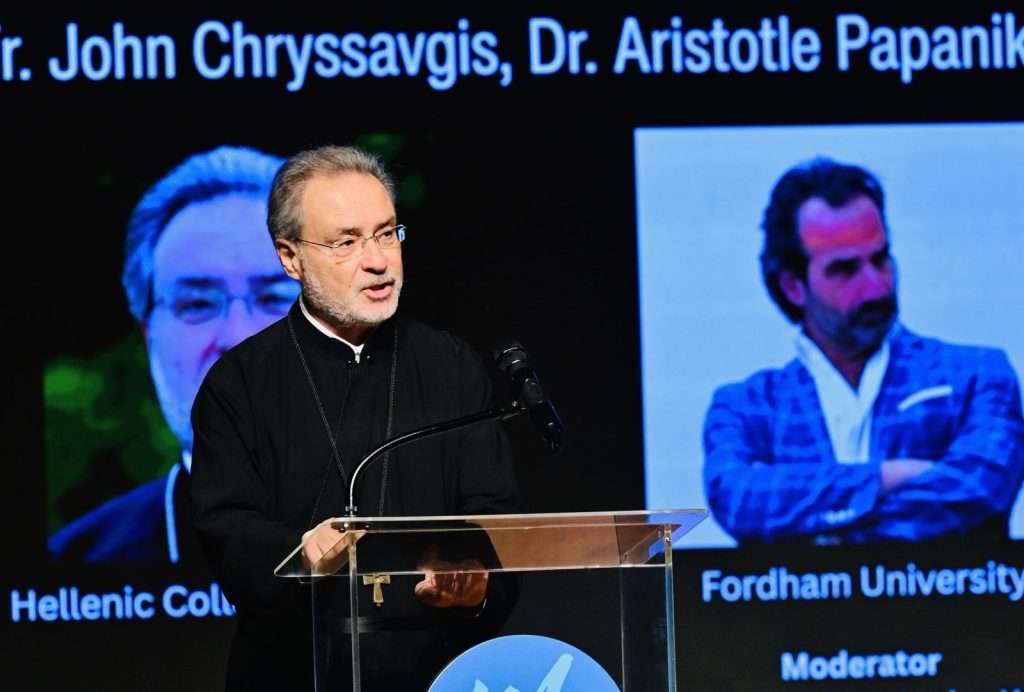
He posited that AI is unlike its technological-revolution predecessors, “whether the printing press, or the television, or the nuclear bomb,” because it can decide “whom to help or heal, whom to overlook, or whom to bomb.”
Fr. John concluded by calling for a renewed awareness of corporate power and “rapacious greed,” insisting that concern for humanity’s most vulnerable must precede technological advancement.
> Previously: ‘Better worry and prepare’: Scholars confront AI’s future
Next, Papanikolaou explored contemporary Orthodox understandings of personhood, describing a “self-evident human longing for uniqueness and freedom.” To depersonalize someone, he said, is to constitute them as “non-unique and unfree, while subjecting them to extreme forms of oppression.”
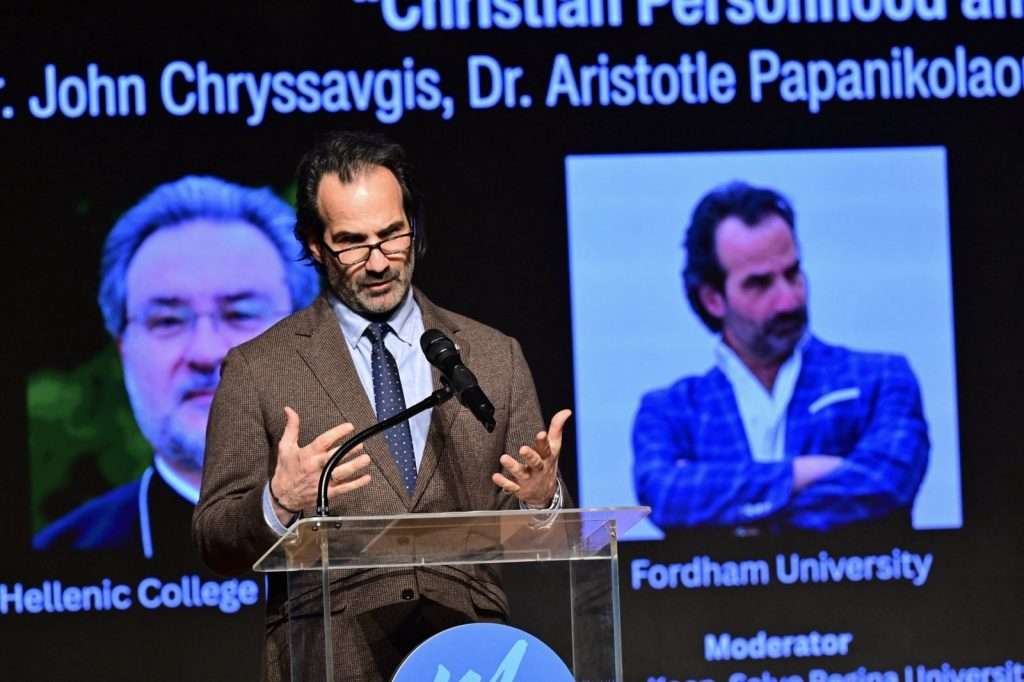
“Can AI relate to us as irreducibly unique creatures … and if humans themselves haven’t quite figured out how to love, how to deal with all that gets in the way of our loving and being loved, what exactly will we feed AI?” he asked. “And if we haven’t quite figured out how to love, is that really the ultimate threat that will allow AI to depersonalize us and thus to exterminate the human race?”
Concluding the first panel, Dr. Gayle Woloschak explored AI as a product of human creativity, arguing that it therefore cannot simply be “dismissed or discarded.”
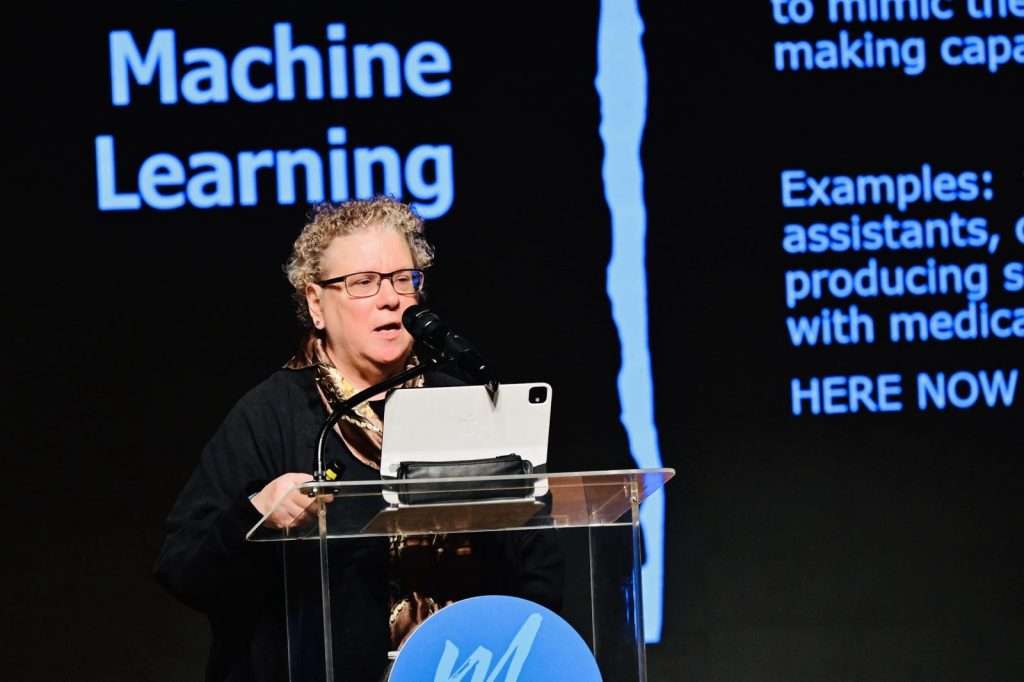
Rather, she said, AI poses questions to humanity: “What is human creativity? What does it mean to be human? And what can humans do that is unique?” Woloschak asked. “We should embrace these challenges as an opportunity to define our humanity.”
In the afternoon, the conference’s concluding panel “Cultural Implications of AI,” moderated by Dr. Jim Skedros featured Drs. Eve Tibbs, Emily Spratt, and Sarah Riccardi-Swartz.
Tibbs offered a presentation entitled “Windows or Mirrors? AI, Orthodox Icons, and the Limits of Sight,” distinguishing AI-generated images from iconographers’ work to paint or “write” icons.
“When we look at an AI-generated image, especially an icon, we are not looking through a window into divine reality,” she said. “We’re looking into a mirror that reflects our own inputs, assumptions, and desires.”
“Icons are painted by faithful and prayerful hands,” Tibbs said. Quoting St. Theodore the Studite, she reminded attendees that “AI is not baptized. AI does not pray, fast, or repent … ‘he who paints Christ while separated from His Body has painted himself.’”
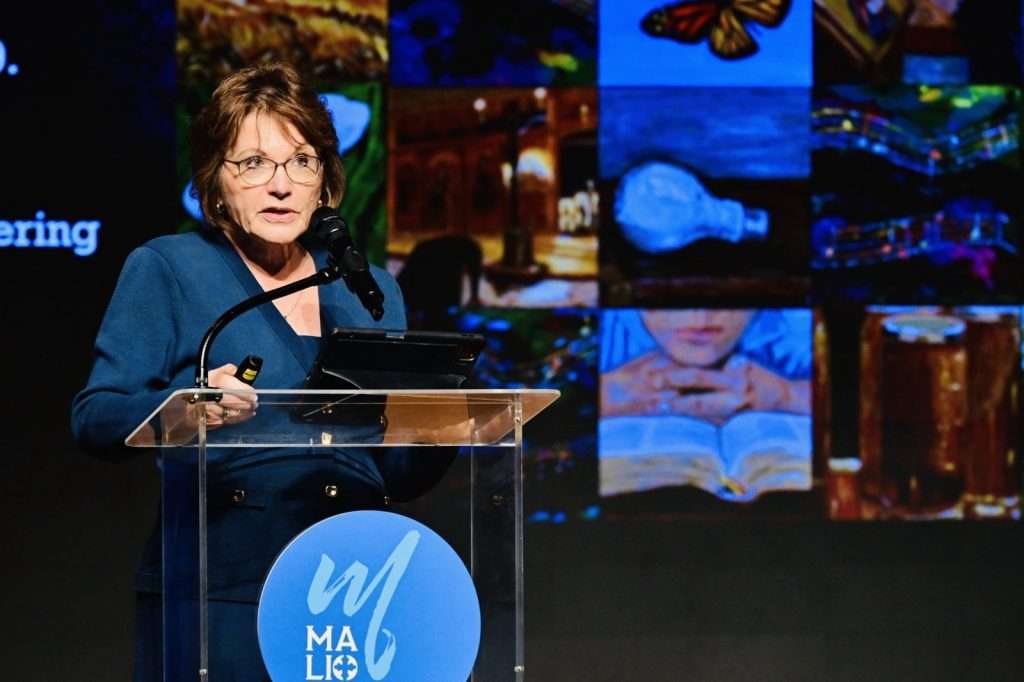
“AI can … describe what we call beautiful,” Tibbs said, “but it cannot behold … it cannot be blinded by uncreated light, or tremble at the edge of mystery. It cannot hunger for God. It cannot love.”
“Only a human can write an icon,” she concluded.
Spratt addressed the phenomenon of “griefbots” in her talk “AI and Remembrance: Theological and Social Considerations of Technomediumship.”
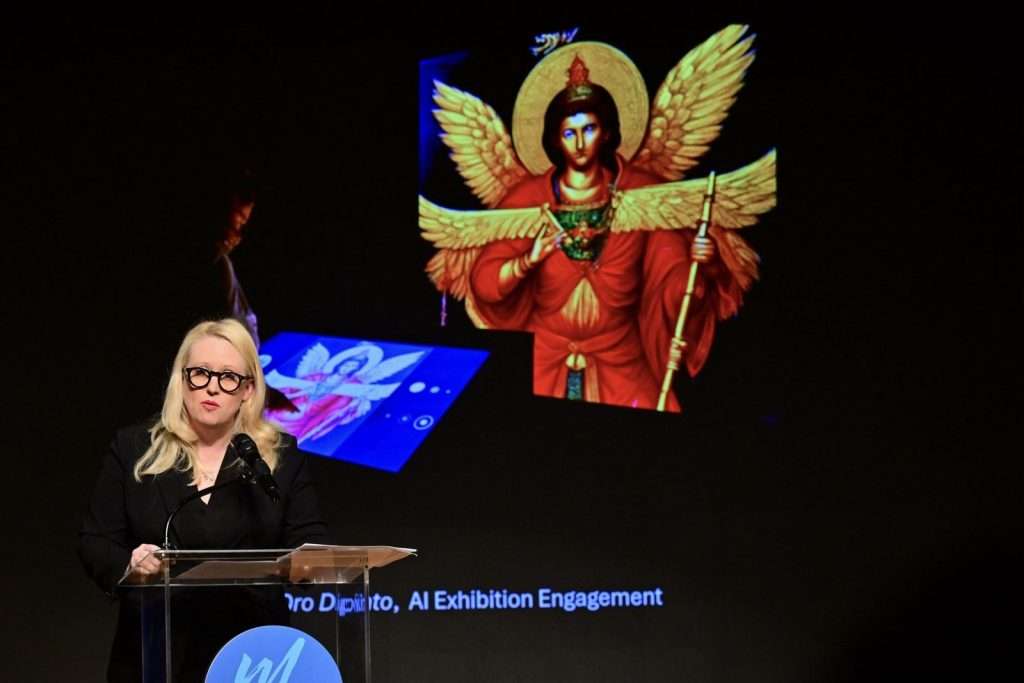
She questioned the ethical boundaries of resurrecting images or voices of the dead: “Just because we have the ability … does not mean that we should,” she said, equating such uses of AI to “parlor tricks.”
In the final presentation, Riccardi-Swartz explored how AI shapes current, dangerous trends in conversions to Orthodoxy.
Through social media algorithms, she said, AI is “baked into our online social ecologies, subtly transforming Orthodox teachings.”
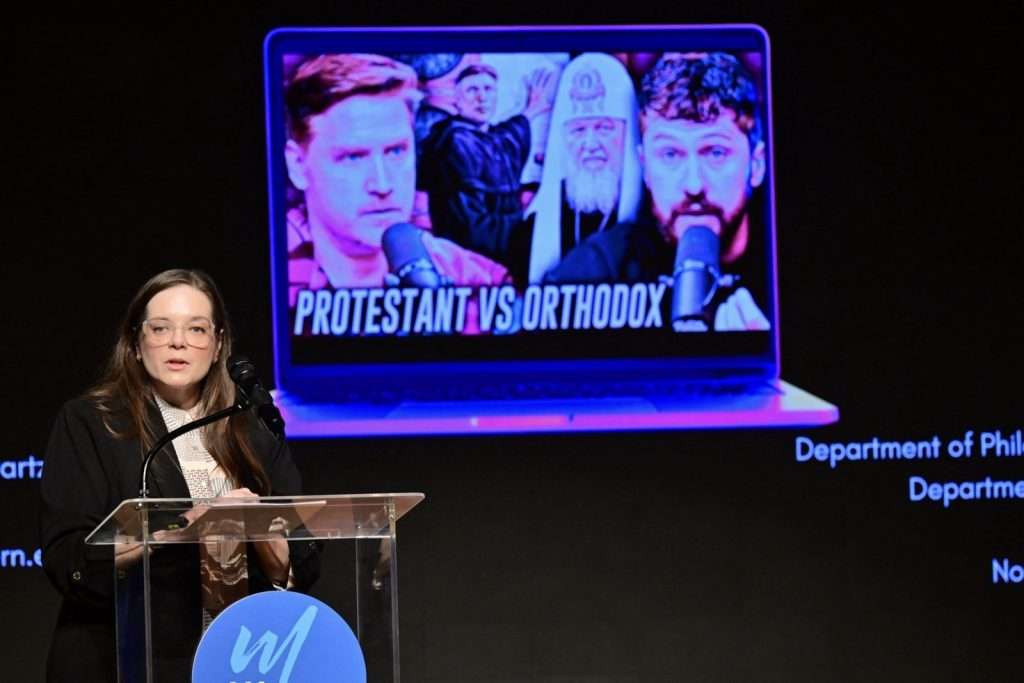
Riccardi-Swartz warned that certain content creators who “espouse to be Orthodox” share politically violent overtones while encouraging audiences to “smash the like button” or purchase memberships to private Zoom sessions where they explore “more controversial topics, which often include ideas that are antisemitic, misogynistic, and even racist.”
She concluded by asserting the Orthodox Church “must reckon with how digital technology–through AI algorithms, social media, content creation culture–is transforming Orthodox sociality, authority, education, and theological values in ways that will have … lasting and harmful effects in faith communities.”
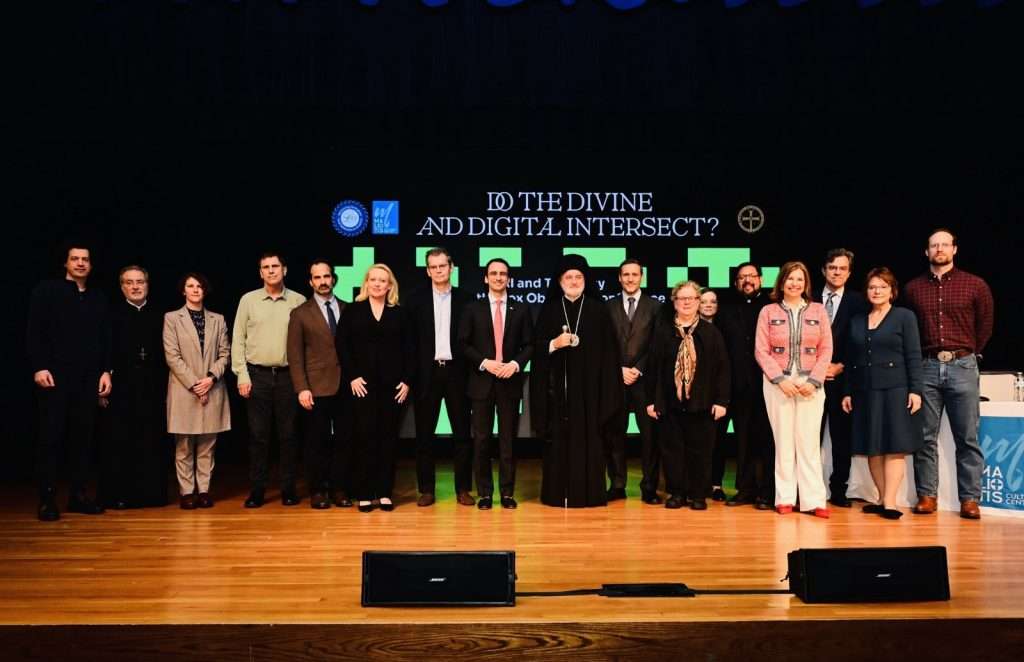
As the conference concluded, speakers and attendees alike left not with definitive conclusions, but a shared conviction: that faithful are called to meet the age of AI not with fear, but with vigilance, humility, and an unwavering commitment to humanity.
The post ‘Only a human can write an icon’: Orthodox thinkers reflect on AI appeared first on Orthodox Observer.