This post was originally published on this site
This article will be updated shortly with the dates and times of the speaker panels.
Keynote Speakers
Michael Kratsios
Assistant to the President and Director of the White House Office of Science and Technology Policy
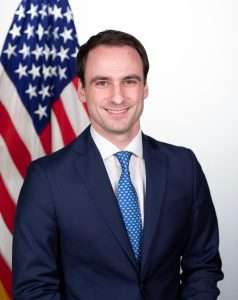
Michael Kratsios is President Donald J. Trump’s chief science and technology policy advisor.
As the thirteenth Director of the White House Office of Science and Technology Policy, Michael oversees the development and execution of the Nation’s science and technology policy agenda. He leads the Trump administration’s efforts to ensure American leadership in scientific discovery and technological innovation, including in critical and emerging technologies such as artificial intelligence, quantum computing, and biotechnology.
In the first Trump administration, he served as the fourth Chief Technology Officer of the United States at the White House and as Under Secretary of War for Research and Engineering at the Pentagon.
Prior to the White House, Michael invested in, advised, and built technology companies in Silicon Valley. A South Carolina native, Michael graduated from Princeton University and served as a Visiting Scholar at Beijing’s Tsinghua University.
Yannis Papaconstantinou
Google Cloud Distinguished Engineer and professor at UCSD
Yannis Papakonstantinou is a Google Cloud Distinguished Engineer. His work is on the intersection of GenAI and databases, technically leading novel features and products in support of GenAI and agentic applications over databases. He also holds an Adjunct Professor position of Computer Science at UCSD after many years of being a regular faculty member. Previously he worked at Databricks and Amazon Web Services. Earlier he was the CEO and Chief Scientist of Enosys Software, which built and commercialized an early Enterprise Information Integration platform for structured and semistructured data. It was sold under the BEA Aqualogic brand name and eventually acquired by BEA.
Prior to the AI area, his R&D work had been mostly on query processing and search with focus on querying semistructured data. He has published over one hundred twenty research articles that have received over 21,000 citations. He holds a Diploma of Electrical Engineering from the National Technical University of Athens, MS and Ph.D. in Computer Science from Stanford University (1997).
Distinguished Panelists
Fr. John Chryssagvis
Theological Advisor to the Ecumenical Throne on Environmental Issues
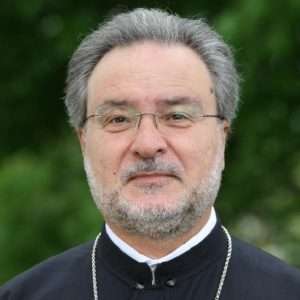
About: In “Christian Personhood and AI” Fr. John will explore fundamental principles in discerning and distinguishing between technology and faith, objectivity and subjectivity, communication and communion, deception and truth, as well as technocracy and culture.
Archdeacon of the Ecumenical Patriarchate, Fr. John Chryssagvis was born in Sydney, Australia, and lives in Harpswell, Maine. Following studies at the Universities of Athens and Oxford University, where he completed doctoral studies under Metropolitan Kallistos in Ware, he cofounded the first accredited Orthodox theological seminary at St. Andrew’s Theological College in Australia, where he also lectured at the Department of Religious Studies and the Divinity School of the University of Sydney. In 1995, he was invited to teach at Holy Cross School of Theology in Boston, Massachusetts, where he also directed the Religious Studies Department of Hellenic College until 2002.
Since then, he has served as senior theological advisor to the Department of Ecumenical Affairs in the Greek Orthodox Archdiocese of America and continues to serve in his capacity as theological advisor to the Ecumenical Patriarch on environmental issues. In 2023, he was elected Professor of Theology at Holy Cross School of Theology, where he is also the Executive Director of the Huffington Ecumenical Institute. He holds an Honorary Doctorate from St. Vladimir’s Seminary in New York and was elected inaugural Honorary Professor of Theology at the Sydney College of Divinity. His latest books include Creation as Sacrament: Reflections on Ecology and Spirituality (Bloomsbury, 2019) and The Letters of Barsanuphius and John: Desert Wisdom for Everyday Life (Bloomsbury, 2022).
Gayle Woloschak
Professor of Radiation Oncology and Associate Dean at The Graduate School at Northwestern University
Gayle Woloschak is Professor of Radiation Oncology and Associate Dean in The Graduate School at Northwestern University. She serves on the University AI Committee and uses AI for several of her scientific projects. She is also Adjunct Professor at Lutheran School of Theology and St. Sophia Ukrainian Orthodox Theological Seminary.
Dr. Aristotle Papanikolaou
Archbishop Demetrios Chair, Co-Director of Orthodox Christian Studies Center at Fordham University
About: Regarding his presentation, Dr. Papanikolaou said, “Contemporary Orthodox theology is known for its relational understanding of personhood, where a ‘person’ is constituted as irreducibly unique and ecstatically free in relations of communion and otherness. How does AI challenge such a notion of personhood? Can such a theology respond to the challenge of AI?”
Aristotle Papanikolaou is professor of theology, the Archbishop Demetrios Chair of Orthodox Theology and Culture, and the Co-Director of the Orthodox Christian Studies Center at Fordham University. He is also a McDonald Distinguished Senior Fellow at the Emory University Center for the Study of Law and Religion. He was recently awarded the 2024 Alumni of Year Award at the Divinity School of the University of Chicago, and in 2012, he received the Award for Excellence in Undergraduate Teaching in the Humanities. Among his numerous publications, he is the author of Being with God:Trinity, Apophaticism, and Divine-Human Communion, and The Mystical as Political: Democracy and Non-Radical Orthodoxy. He is also co-editor of Nicaea and the Future of Christianity, Faith, Reason, and Theosis, Orthodox Tradition and Human Sexuality, Orthodox Readings of Augustine, and Thinking Through Faith: New Perspectives from Orthodox Christian Scholars. He enjoys Russian literature, Byzantine and Greek music. He is the son of the priest, Fr. Byron Papanikolaou, who, together with Presbytera Xanthippi, served the Saints Constantine and Helen parish in Chicago Illinois for 55 years. He also graduated valedictorian of Holy Cross Greek Orthodox School of theology.
Dr. Mark Graves
Research Fellow and Director at AI & Faith, Research Associate Professor of Psychology at Fuller Theological Seminary
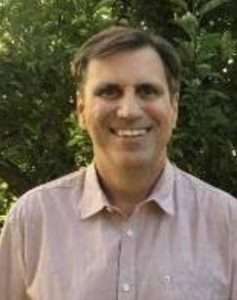
Dr. Mark Graves is a Research Fellow and Director at AI & Faith, and a Research Associate Professor of Psychology at Fuller Theological Seminary. He has developed AI and data solutions in the biotech, pharmaceutical, and healthcare industries. Mark’s current research focuses on using text analysis and other natural language processing techniques for understanding and modeling human morality, ethical approaches to data science and machine learning, and philosophical and psychological foundations for constructing moral AI. Mark holds a PhD in computer science from the University of Michigan and a master‘s degree in theology from the Jesuit School of Theology and the Graduate Theological Union in Berkeley.
Dr. Emily L. Spratt
Art Historian, Data Scientist and Strategic Advisor
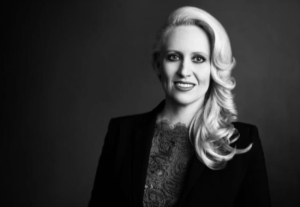
About: Dr. Spratt’s presentation is titled “AI and Remembrance: Theological and Societal Considerations of Techno-Mediumship.” Although Artificial Intelligence increasingly mediates attempts to communicate with the deceased—through text and video applications that simulate the recently living—there has been surprisingly little consideration of the thanatological use of emerging technologies and its societal implications. This presentation examines the ethical and theological problems with utilizing AI as an instrument of remembrance and explores the humanistic challenges posed by this latest rise in techno-mediumship.
Dr. Emily L. Spratt is a professor of cultural diplomacy and the ethics of emerging technologies at the Institute of World Politics and a lecturer in the Department of Art History and Archaeology at Columbia University. Her current research concerns the ethical, theological, and legal implications of artificial intelligence in the analysis, generation, and curation of digital images, and its broader transformation of our global visual culture. She completed her postdoctoral research on AI and cultural heritage at Columbia University in the Data Science Institute and earned her doctorate in Byzantine and Venetian Renaissance art history from Princeton University, where she was also a Seeger Fellow in Hellenic Studies. She holds master of arts degrees from Princeton and the University of California, Los Angeles, and received a bachelor of arts degree from Cornell University. For over a decade, Dr. Spratt has provided strategic advisory to international companies, not-for-profit institutions, and governments on projects showcasing the uses of AI for art, music, and film. She has served as the high technology advisor for The Frick Collection and Art Reference Library, an expert contributor to the G20 Summit on cultural heritage and AI, an expert advisor on a Fellini film project for the Campari Group, and the inaugural art curator for the Global Forum on AI in Paris, sponsored by President Emmanuel Macron. Earlier in her career, she assisted the Hellenic Ministry of Culture in securing UNESCO World Heritage Site recognition for Corfu Town, Corfu, and has been awarded for her work at the Byzantine and Christian Museum of Athens and the Benaki Museum. Dr. Spratt has received numerous fellowships and honors for her scholarship, and her pioneering work on AI, art, and society has been covered by The Washington Post, The Telegraph, The Times, CBS News, and other news outlets.
Dr. Eve Tibbs
Affiliate Professor of Theology at Fuller Theological Seminary
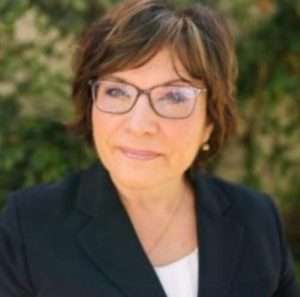
About: Her presentation, “Windows or Mirrors? AI, Orthodox Icons and the Limits of Sight,” explores the crucial difference between technological imitation and spiritual participation. Orthodox icons are not just images—they are written by faithful members of the Church, within the life of the Church, as acts of prayer and contemplation. While artificial intelligence can mimic the visual style of icons, it cannot behold divine glory, nor transmit the faith it does not possess. Scripture warns of human-made idols: “They have eyes, but do not see” (Psalm 115:5). Likewise, AI-generated images—even those patterned after holy forms—are lifeless mirrors. They reflect data but do not reveal God. AI is a tool, not a worshipper. It has no soul, no Church, and no capacity for love or repentance. Only human beings, made in the image of God, can see with the eyes of the heart and participate in the divine.
Eve (Paraskevè) Tibbs is an Affiliate Professor of Theology at Fuller Theological Seminary, where she teaches Historical Theology, Systematic Theology, and Eastern Orthodox Theology. Her research and teaching interests include: the Holy Trinity and Personhood, Ecclesiology, Early Church History and Doctrinal Development.
Dr. Tibbs is a member of the Faith and Order Commission of the World Council of Churches, representing the Orthodox Ecumenical Patriarchate of Constantinople. She served as Chair of the Eastern Orthodox Studies Group of the American Academy of Religion for six years, and has served as a member of the Executive Steering Committee of the Huffington Ecumenical Institute at Loyola Marymount University since 2015.
She is the author of two books, A Basic Guide to Eastern Orthodox Theology: Introducing Beliefs and Practices, published by Baker Academic in 2021 and Seeing the Gospel: An Interpretive Guide to Orthodox Icons, also published by Baker Academic this past summer.
Sarah Riccardi-Swartz
Assistant Professor of Religion and Anthropology at Northeastern University
About: Her presentation, “Techno-theologoumena and Quotidian AI: Considering the intersection of theological opinions and AI,” reflects on the shifting nature of Orthodox Christian culture in the United States due to algorithmically driven consumer-based content. In doing so, it reflects on theological education, Orthodox sociality, and modalities of missionization.
Sarah Riccardi-Swartz is an assistant professor of religion and anthropology at Northeastern University. She received her B.A. and M.A. in Religious Studies from Missouri State University. She earned an M.Phil and a Ph.D. in Anthropology from New York University, where she also obtained an Advanced Graduate Certificate in Culture and Media (ethnographic filmmaking and theory). Her first book is Between Heaven and Russia: Religious Conversion and Political Apostasy in Appalachia (Fordham Press).
Dr. Taylor Nutter
Assistant Professor of Theology at Mount St. Mary’s University
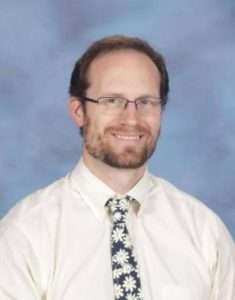
About: To properly address the injustices entailed by the implementation of AI systems, it is not sufficient to approach AI as if it were a morally neutral tool. This presentation will approach AI as an instance of structural injustice from two intersecting vantages – the economic and the theological.
Dr. Taylor Nutter is an assistant professor in the Theology department at Mount St. Mary’s University. He graduated from the University of Notre Dame with a PhD in Systematic Theology in 2021. He is a member of the Vatican Dicastery for Culture and Education’s AI research group. Currently, he is a part of the subsection of that research group that is writing a book, Education, AI, and Integral Human Development. He has a chapter on AI forthcoming with Marquette University Press: “AI and Neocolonialism: a History of the Computational Theory of the Mind” in Globalization and the New World Order, edited by Leocadie Lushombo and Joseph Ogbonnaya.
The post These are the panelists for the Observer’s AI & Theology conference appeared first on Orthodox Observer.