This post was originally published on this site
October is National Disability Employment Awareness Month (NDEAM). As a step toward educating Orthodox Observer readers about the ordination of men with disabilities, Fr. John Chryssavgis answered questions from the Observer‘s Managing Editor Corinna Robinson. Fr. Chryssavgis is Archdeacon of the Ecumenical Throne, and Executive Director of the Huffington Ecumenical Institute at Holy Cross School of Theology, where he is Professor of Theology. He also serves as theological advisor to His All-Holiness Ecumenical Patriarch Bartholomew on environmental issues.
Please visit orthodoxobserver.org to find future stories on disability in the Orthodox Church.
Corinna: Are there canons that explicitly bar men with disabilities from ordination to the priesthood or diaconate?
Fr. John: The earliest and principal canons referring to disability and ordination—actually, they speak specifically of ordination to the episcopate!—are found in the Apostolic Canons that were formally adopted in the seventh century at the Council of Trullo under Emperor Justinian II, who passed them as law. Canon 57 denounces anyone who mocks a disabled person. Canon 77 states that disability is not an impediment to ordination. Canon 78 observes that if a disabled person is not ordained, it is not because of his disability but only because he may be unable to carry out specific priestly duties.
In fact, the canons and their commentaries offer a certain flexibility for the ordination of individuals with disabilities so long as they can respond to and fulfill their ministerial obligations. That is precisely why I am convinced we should begin to ordain select individuals with disabilities to the diaconate, rightly recognizing that deacons are not only—neither primarily nor exclusively—liturgical ministers. In fact, their diakonia or service can and should be more far-ranging and all-embracing than we normally think or practice. We will someday realize how much we have limited and constricted our perception and practice of the priesthood.
Corinna: Are there other, less-explicit canons that are also referenced in such conversations?
Fr. John: I’m quite certain the fallacy that there are canonical impediments to ordaining individuals with disabilities is essentially and especially the result of ignorance and prejudice.
I recall a story narrated in the sixth century by St. Gregory of Tours about miracles attributed to St. Martin of Tours. It describes a woman in Bourges that gave birth to a son: His knees were bent up to his stomach, his heels were fastened to his legs, his hands hugged his chest, and his eyes were closed. He looked, we are told, more like a monster than a human. The child was looked upon with derision, while the mother was criticized for conceiving on a Sunday! When he reached the age of ten, she handed him to homeless itinerants who dragged him around the city, displaying him for the sake of profit. St. Martin finally healed the young man, but ironically no one seemed perturbed by the way he was treated!
Such attitudes persisted even into the early twentieth century; and, although somewhat moderated by modern norms of social, political, and legal correctness, they have by no means entirely evanesced. There are still bishops and priests, as well as lay believers, who don’t know how or else don’t want to address and respond to issues related to disability. So it is simpler and more convenient for them to dismiss or deny them instead of taking time to learn and be informed about them.
Corinna: Contrastingly, are there other canons/theological teachings that have been or can be used in support of these ordinations?
Fr. John: What is clear to me from the historical rise and interpretation of regulations and statutes pertaining to the ordination of disabled individuals is that the church has traditionally looked to and drawn on its pastoral experience to determine how its canonical tradition should be interpreted and applied in specific circumstances.
In any case, the canons should never be applied mechanically or legalistically. It’s improper, albeit inevitable that bishops or canonists automatically resort to the canons in order to determine whether an individual with a disability should be ordained. Failing to consider each individual situation with discretion, compassion, and dispensation—in other words, by exercising the principle of economia—is ultimately a form of escape, cowardice, and prejudice.
If we were to adhere to the letter of the law with regard to canons and ordination, I’m pretty sure that most of us ordained clergy would be excluded from the priesthood! Similarly, if we were to interpret disability in a broader sense to include spiritual brokenness and moral insufficiency, I’m pretty sure that every candidate for the priesthood should be as carefully tested and vetted prior to ordination. In the final analysis, whether someone has or doesn’t have a particular disability, their desire to be ordained should be approached with the same discretion, compassion, and dispensation.
Corinna: Is there any distinction made in terms of barriers to the priesthood vs. the diaconate?
Fr. John: No. While the canons normally refer to the ordination of bishops or priests, the respected twelfth-century canonical commentator and Patriarch of Antioch, Theodore Balsamon, extends these canons to include the order of deacons as well.
What should, I believe, hold ultimate validity in considering ordinands with disabilities are the same universal requirements for every aspirant to the diaconate, priesthood, and episcopate, such as those prescribed in the First Letter of Paul to Timothy (3.2–13), as well as those found in the Apostolic Canons and other canonical regulations pertaining to ordination, so long as—according to the interpretation of the canonical tradition—the specific disability does not pose any impediment for the intended office, service, and ministry.
In any case, bishops and synods should take the time to care enough and become informed about specific nuances or implications of particular disabilities. Instead of imagining or fearing the worst possible circumstances that could arise, they should be more open to a variety of ministries. And in my opinion, this can be especially achieved through a broader understanding of the diaconate. I was very moved to see the Coptic Pope Tawadros just a few days ago, on October 5, 2025, invite a blind deacon to chant the reading.
Corinna: What kind of distinctions, if any, are made between physical, mental, intellectual, and sensory limitations?
Fr. John: The Byzantine mentality did not distinguish between various disabilities, whether physical, intellectual, or emotional. Even a woman’s inability to conceive was considered an impairment; and it was healed only miraculously, after the relevant demon was expelled. Philosophy and theology together provided the fundamental background for addressing the challenges of disability, ultimately informing guidelines for legislation, as well.
Unfortunately, despite the clear social teaching of the Gospel, standard practice in earlier centuries of the Orthodox Church was mostly negative and based on repulsion and rejection. The prevailing mindset associated disability with evil. After all, in Byzantium, very much in line with the culture of Greco-Roman Antiquity, the borderline between medicine and superstition was not always clear. This, of course left an indelible mark on canon law, while imperial policy and civil legislation, too, were not immune to the demonological aspect in their attitudes toward the disabled.
Orthodox theologians are only recently becoming aware of these inaccurate and inappropriate distinctions. Moreover, we must be honest in acknowledging that this shift is mostly a result of learning from science and following developments in other churches. The truth is that we Orthodox still struggle to embrace scientific and medical progress. And we certainly have a problem accepting ecumenical and secular developments.
Corinna: What reasoning do you believe lies behind these canons? For example, in non-Orthodox contexts I’ve read that similar limitations are based on concerns about practical ability to carry out liturgical duties; ritual impurity; and visual “distractions” to the laity.
Fr. John: Such concerns are red herrings that ignore the broad and essential purpose of ordination in general and of the diaconate in particular as providing manifold services according to an individual’s gifts and a community’s needs. Moreover, the argument of visual “distraction” to the congregation simply ignores the fundamental truth that each person is made in the image of God. Or the argument that a priest with sight impairment or other significant disability might drop the chalice. Statements like these only demonstrate the uninformed and unenlightened level of churchmen. It should be taken for granted that every individual case would be considered on its own merits. Mind you, I would hope that this occurs also in cases of candidates with no or less apparent physical limitations!
But I think we should also be open to addressing the role of canons, which we Orthodox tend to accept or reject according to our occasional preferences and prejudices. Moreover, we specifically need to consider why, as Orthodox, we are unwilling or afraid to challenge canons that are clearly obsolete or even inappropriate in our day and age. We need to ask why—whenever we choose to ignore or reject issues that we don’t like or understand; and there is no doubt that issues of disability make many people very uncomfortable—the decisions of Orthodox leaders are almost exclusively directed toward and determined by canons and rules.
Why, for instance, is it that we rely inordinately on distant historical precedent for answers to very contemporary questions? Or why do we rely magisterially on canons as a voice from heaven to ascertain what is potentially or quite plainly the right thing to do? And why do we so blindly rely on our spiritual leaders or elders sometimes at the expense of our own fundamental reason and principled choice?
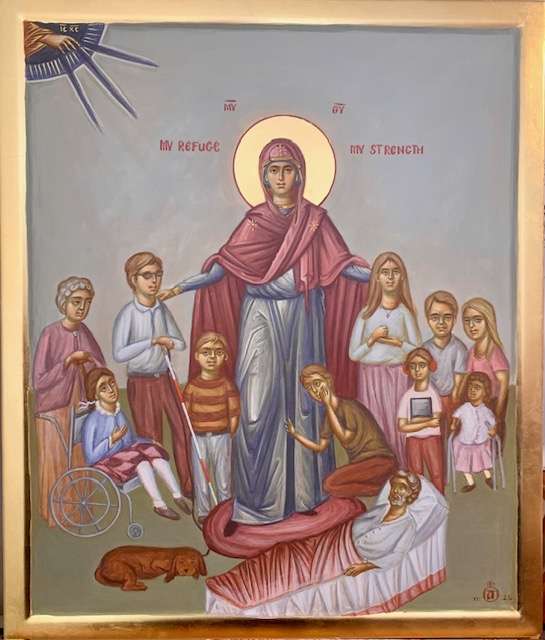
Corinna: From what you’ve seen, how often does this issue come up in practice? How do bishops seem to make decisions on this topic?
Fr. John: The issue invariably emerges in pastoral experience and practice. I should repeat here that this is precisely how canons are meant to function—namely, as pastoral guidelines and supports. The canonical tradition is first and foremost the church’s response to practical questions arising within a living community. They have never been ways of managing or controlling the conduct of its faithful members. So, a parish priest or a bishop will inevitably encounter various forms of disability in day-to-day life. And if a parish or bishop doesn’tencounter them, then they’re probably not looking and not caring enough. A compassionate priest or bishop will evaluate with an open heart and discerning mind, with the perspective of Christ and the principle of economia.
On the one hand, I have found occasions where parishes or bishops have been displeased or disgruntled about having to address issues of disability that may be uncomfortable or disruptive to the community. On the other hand, if a community has found a way of functioning smoothly, conveniently, and painlessly, then it should wonder if it is in fact fully incorporating the crucified body of Christ, or whether it has perhaps yielded to the temptation of some “complacent” Christianity or “prosperity” gospel.
Whereas, when we realize that brokenness is not the characteristic of a minority, but the very quality that unites us as human beings to the broken body of Christ, that “those who are well have no need of a physician, because Christ came not to call the righteous but sinners” (Mark 2.17), then we are able to catch a glimpse of what the Church is called to be. During the special panel of Orthodox Hierarchs at the “Gathered as One Body” conference organized by the Huffington Ecumenical Institute in May 2025, the initial tension in the large audience gradually dissipated as everyone recognized their willingness to learn from one another on this sensitive pastoral matter.
We should admit in all honesty that we often fall far short of the humanitarian norms of the twenty-first century, let alone the Gospel mandates of Christ. And, consequently, we should be more transparent and self-critical. How is it that Holy Cross School of Theology is not accessible, that our own archdiocese in New York is not accessible, and that even our patriarchate is not accessible? It is simply unacceptable from a spiritual and ethical perspective, let alone a social and conscientious perspective.
Corinna: What research is currently being done on this topic by Orthodox theologians? Do these researchers generally support or oppose the continued barring of disabled men from ordination?
Fr. John: When I first began thinking and writing on this subject, in the early 1990s, I don’t believe there were any other theological or spiritual publications available from Orthodox scholars. When I began speaking on these issues here in the United States from the mid-1990s to the 2010s, there was still very little, if any, Orthodox material available. Thankfully, over the last decade, there has been an increasing number of Orthodox scholars throughout the world researching and writing on various aspects of disability and inclusion in parishes and ministries.
Peter Maican, a Romanian theologian, has been working on theology and physical disability. Katherine Karam McCray, a Canadian theologian, has been studying theology and mental disability. Both of these scholars have had the privilege of learning from experienced and knowledgeable scholars at the University of Aberdeen, alongside such pioneers as John Swinton, a Scottish academic and Presbyterian minister.
Moreover, there are a number of authors covering educational and spiritual perspectives of disability, including Summer Kinard and Charlotte Riggle here in the United States. I also know that Fr. Konstantinos Papanikolaou in Thessaloniki has just published a book on disability and chronic illness. I am sure there are many others, some of whom are directly or indirectly involved in transforming Orthodox churches into more welcoming and inclusive places for individuals with disabilities.
From my contact with a substantial number of these theologians, I am quite certain that all of them are supportive of the ordination of individuals with disabilities.
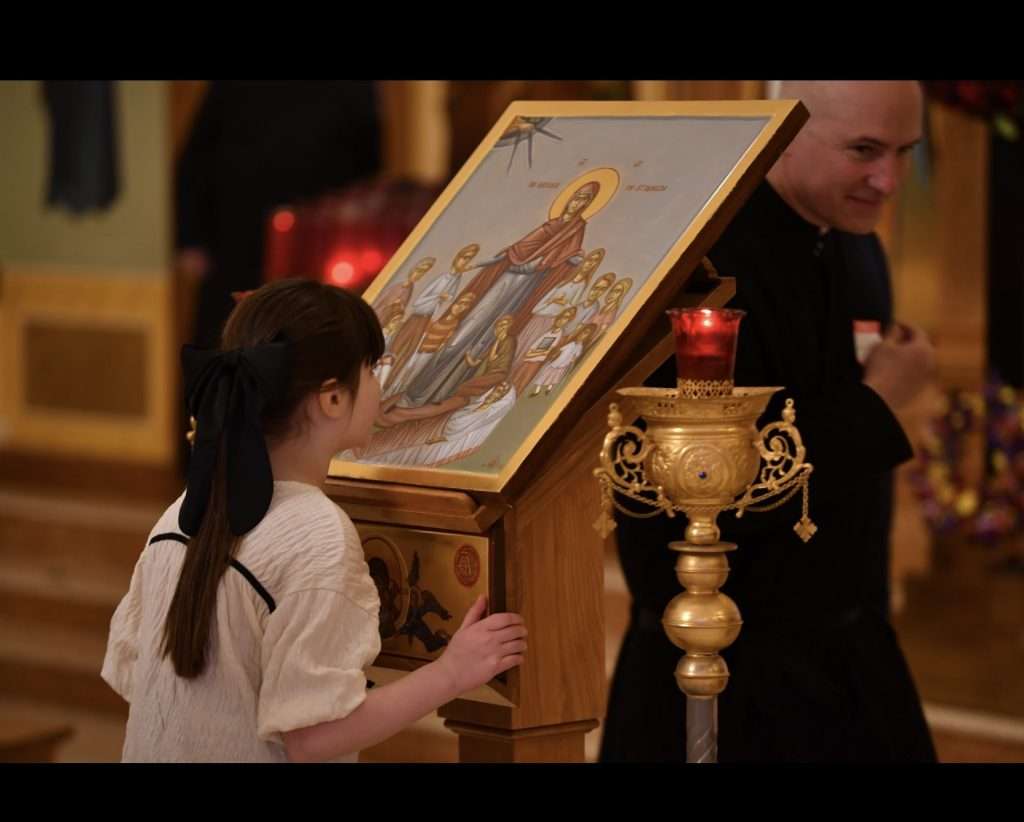
Corinna: Are there any ways in which you believe ordained individuals with disabilities might be able to better serve disabled parishioners?
Fr. John: Most definitely! Frankly, I don’t believe that someone without first-hand experience or direct knowledge of dealing with or caring for people with disabilities can possibly understand what is involved or needed for an inclusive and welcoming pastoral ministry.
Every parish should look for ways of responding to the needs of individuals with disabilities by including them and enabling them to participate in every aspect of church life, including positions of service and leadership. And every diocese or metropolis should have an individual responsible for raising awareness and ensuring fundamental criteria are being met in our churches and communities.
It is important for all of us to remember the unique value of every individual member of the church. In the mind of Christ, “the least of these” are His brothers and sisters (Mt 25.4); and in the words of St. Paul, “the parts of thew body which seem to be weaker are indispensable” (1 Cor. 12.22).
Here is the standard we should seek to uphold regarding individuals with disabilities in the church: If they are not visible, they are not included. If they are not included, they are not meaningfully participating. And if they are not meaningfully participating, then they are not members of the one body of Christ that we profess. This line of thought can—and absolutely should be—extended and applied to how we welcome people with disabilities to the church but also to what decisions we make about ordaining people with disabilities to the priesthood.
Additional stories to follow in the coming months. Please visit us at orthodoxobserver.org.
The post Fr. John Chryssavgis urges flexibility on disability and ordination appeared first on Orthodox Observer.