This post was originally published on this site
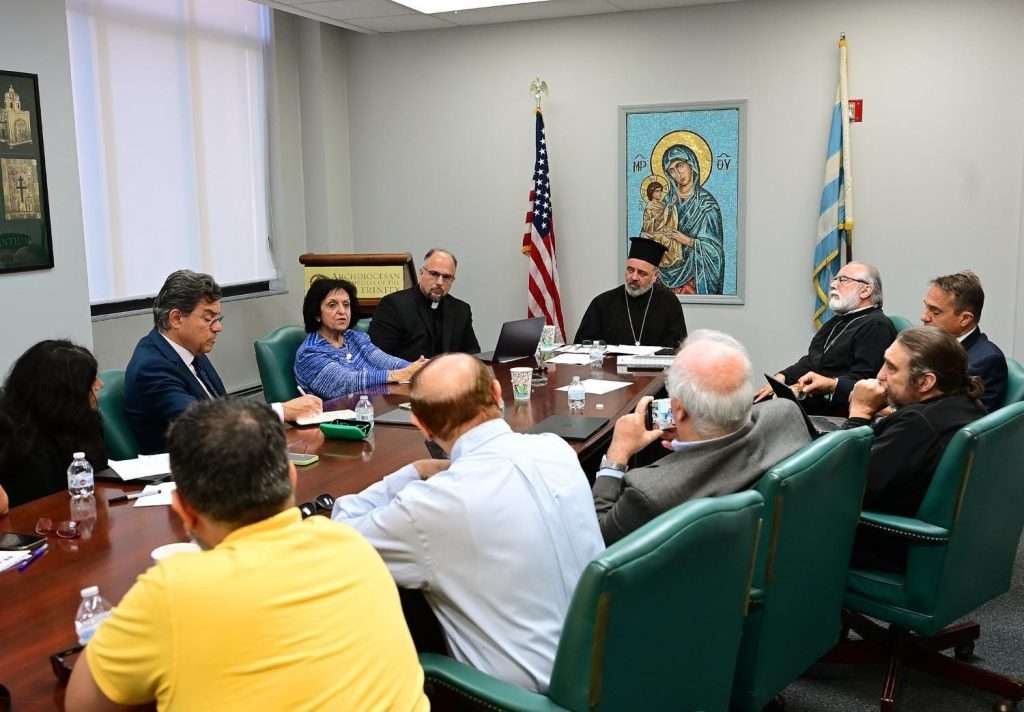
New York, New York—The Greek Orthodox Archdiocese of America held a two-hour press briefing Monday at the Archdiocesan Cathedral of the Holy Trinity, addressing the deepening financial crisis at the historic St. Demetrios Cathedral and School in Astoria.
Presiding over the October 6 conference was His Grace Bishop Athenagoras of Nazianzos, Archiepiscopal Vicar of St. Demetrios, joined by Fr. Elias Villis, Chancellor of the Archdiocesan District; Fr. Anargyros Stavropoulos, Proistamenos of St. Demetrios; Elaine Allen, Archdiocesan Treasurer; George Tsougarakis, General Counsel; and Fr. Gregory Stamkopoulos, Superintendent of St, Demetrios School.
Bishop Athenagoras opened by reading a statement from His Eminence Archbishop Elpidophoros of America, who is attending the National Clergy Retreat in Florida.
“Almost a month ago, I visited St. Demetrios for the annual Agiasmos. Today I wish to repeat what I said then: for the Archdiocese of America —and for me personally—education is a fundamental priority,” His Eminence said. “We are determined to ensure that the school of St. Demetrios, an emblematic institution of a distinguished community, will not only endure but truly excel.”
A Community in Crisis
Bishop Athenagoras described a parish struggling to meet payroll and cover basic expenses. Years of accumulated debt, structural deficits at the school, and an ambitious but underperforming building project have pushed the community to the brink of financial insolvency.
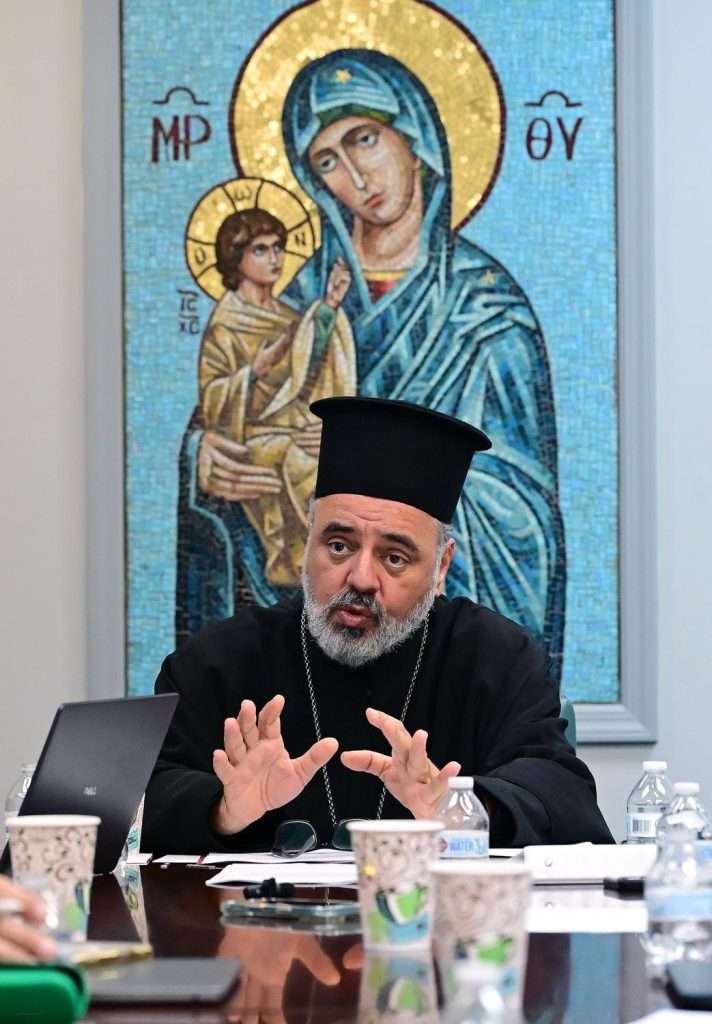
“The Archdiocese cannot simply distribute funds to parishes in difficulty,” he said. “Every dollar comes from other parishes across the country.”
To provide immediate liquidity, the Archdiocese agreed to purchase a minority share of a parish-owned building, allowing St. Demetrios to retain majority ownership while receiving cash relief. While awaiting approval of the sale from the New York Attorney General’s Office, the Archdiocese advanced $700,000 against the $3 million purchase price so that St. Demetrios could cover its financial obligations including payroll and vendor payments. The Archdiocese also guaranteed a line of credit of $1 million that has been fully drawn and could not have been obtained from a bank without the credit enhancement provided by the Archdiocese. In return for the financial support provided to St. Demetrios, the Archdiocese asked for financial oversight — not control, but professional accountability to ensure that the funds were prudently expended and transparency was assured.
Oversight and Parish Council Changes
Bishop Athenagoras confirmed that a minority of Parish Council members were removed to allow for others to join the Parish Council that support the vision for moving forward.
“The decision to remove certain members in no way diminishes the respect and appreciation that His Eminence and the Archdiocesan Council hold for them,” he said. “After years of dedicated service, the time has come for results that meet the gravity of the moment.”
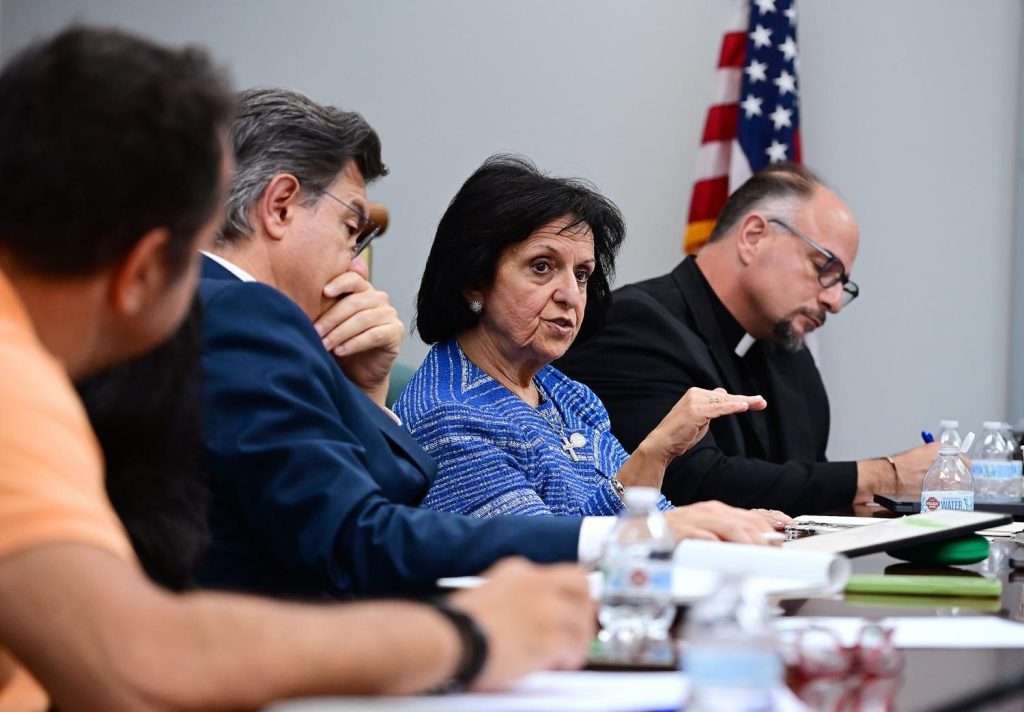
Ms. Allen added that the situation demanded a united effort. “This must be an entire Parish Council working to get out of a severe financial crisis,” she said.
Mr. Tsougarakis emphasized that such actions are neither punitive nor unusual. “It is the obligation of the hierarchy to ensure that the Parish Council acts in the best interest of the parish,” he said.
Dispelling Rumors and Explaining the Law
Officials dismissed as “unfounded” reports that St. Catherine’s building might be sold or converted into apartments. Any change in property use, they said, must be approved by the Parish Council, the community through a supermajority of the members in a General Assembly, the Archbishop, and, under state law, by a court.
Mr. Tsougarakis explained that a recent New York State law, co-sponsored by State Senator Michael Gianaris, now allows the Greek Orthodox Church to follow the same property-approval process long granted to the Roman Catholic Church—submitting petitions directly to a judge rather than the Attorney General.
“It’s not less oversight—it’s faster oversight,” he said. “This ensures proper review while allowing parishes to act in time.”
“Selling One Building Is Not a Plan”
Ms. Allen rejected the idea that selling parish property could solve the crisis. The project in question, she said, cost $7.2 million, financed through loans and reserves after fundraising fell short. Even a sale at $7.5–8 million would yield less than $2 million after repayment of debts and taxes.
“That might keep the parish afloat for a year or two,” she said, “but it doesn’t make payroll next month acknowledging the time it would take to effectuate a sale. Selling one building is a stopgap, not a plan.”
Delays and Administrative Friction
Mr. Tsougarakis cited repeated delays in negotiations over an Administrative Oversight Agreement that would formalize oversight. The parish’s attorneys, he said, took nearly 30 days to return comments on a revised draft.
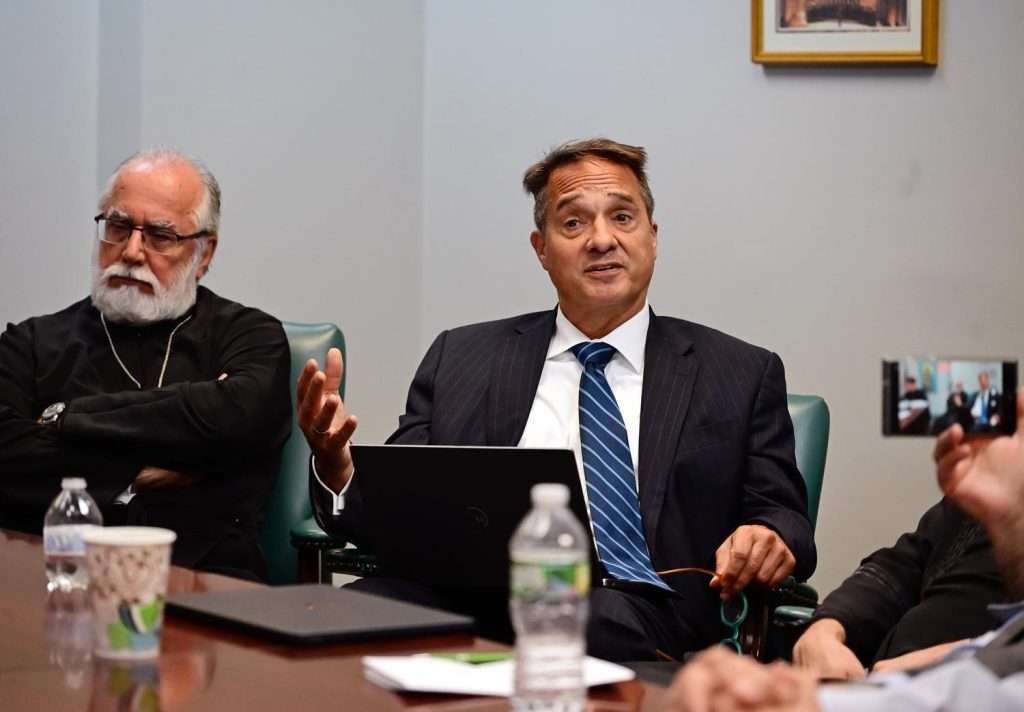
“We are in crisis mode,” he said. “We can’t keep kicking the can down the road.”
Concerns about indemnification clauses were resolved after revisions at the parish’s request. “Once the objection was raised, we removed it immediately,” Tsougarakis noted.
Strengthening Leadership and Community
Fr. Elias Villis applauded Archbishop Elpidophoros’s decision to restructure the Archdiocesan District with its own District Council and Chancellor so that each parish within the Archdiocesan District receives direct support. “Now the parishes are getting the attention they deserve,” he said.
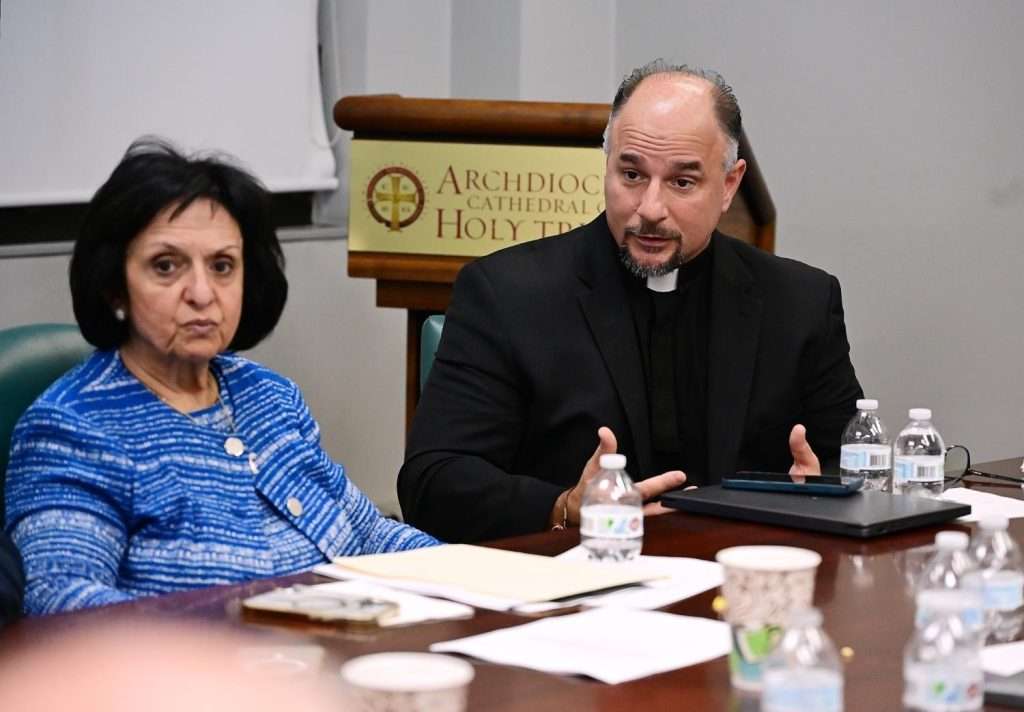
He also emphasized the need to rebuild the school’s alumni network. “There’s no active alumni database,” he said. “Graduates won’t give until they see a serious system. That’s what we’re creating — a foundation of credibility for future donors.”
The Path Forward
Archdiocesan leaders outlined a plan to stabilize finances and restore trust before launching a major fundraising campaign that could draw both internal and national philanthropic support for faith-based education.
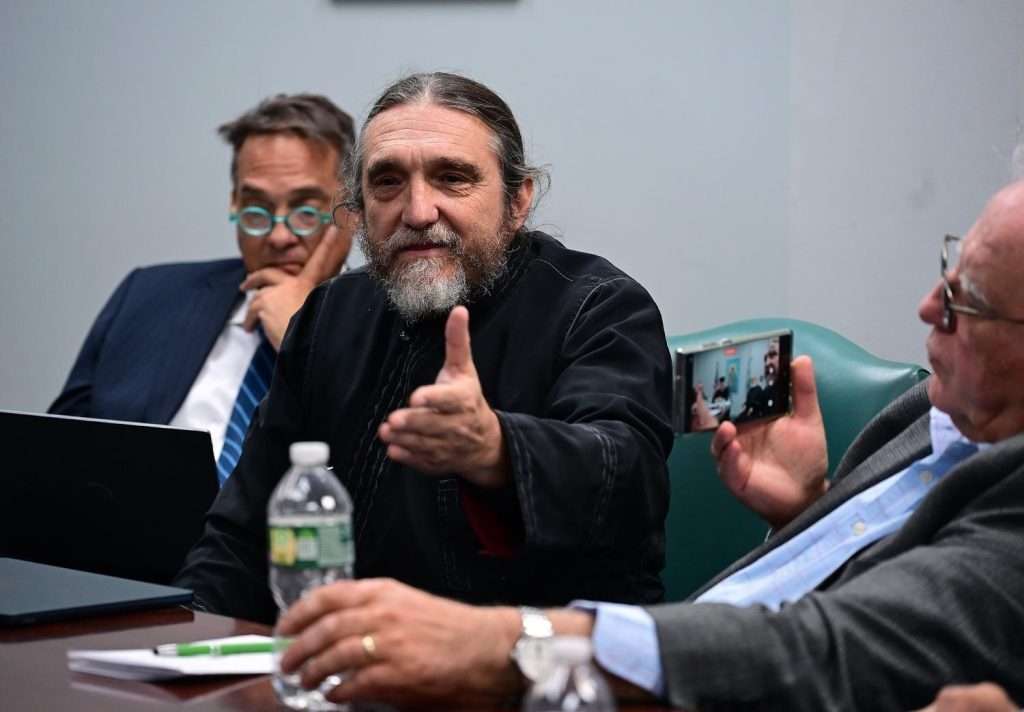
The immediate priority is completing the Administrative Oversight Agreement by October 17, when the parish’s line of credit expires. The Archdiocese also plans to hire an independent consultant, at its own expense, to review St. Demetrios and other parochial schools.
The consultant will focus on:
- Financial stabilization of St. Demetrios;
- Educational sustainability while preserving Hellenic and Orthodox values;
- Optimal use of parish real estate.
The findings will determine the scale of investment needed to anchor a credible capital campaign.
“You can’t raise serious money without a serious plan,” Ms. Allen concluded. “If we want serious results, we need serious people.”
Until then, the Archdiocese continues to advance funds to the parish against the pending sale of its minority property share—a transaction still awaiting court approval.
The post Archdiocese steps in to stabilize St. Demetrios Cathedral and School amid financial crisis appeared first on Orthodox Observer.