This post was originally published on this site
His All-Holiness Ecumenical Patriarch Bartholomew outlined his priorities and reflected on nearly 35 years of ministry in an interview with Manolis Kostidis for the Oct. 18 Sunday edition of the Greek daily Kathimerini. He was elected Oct. 22, 1991. Reopening the Theological School of Halki remains a commitment from his enthronement address, one he hopes to fulfill soon. Founded in 1844, Halki educated generations of Orthodox clergy. Its theological program has been closed since 1971. He also wants to contribute personally to peaceful coexistence between Greeks and Turks and stable relations between their governments, ending recurring fluctuations between calm and tension.
Kostidis credited Patriarch Bartholomew’s knowledge, perseverance and personal contacts with strengthening the Patriarchate’s standing in Türkiye. He described mutual respect with President Recep Tayyip Erdogan as allowing greater freedom of action, and cited Boğaziçi University’s 2013 honorary doctorate as evidence of recognition.
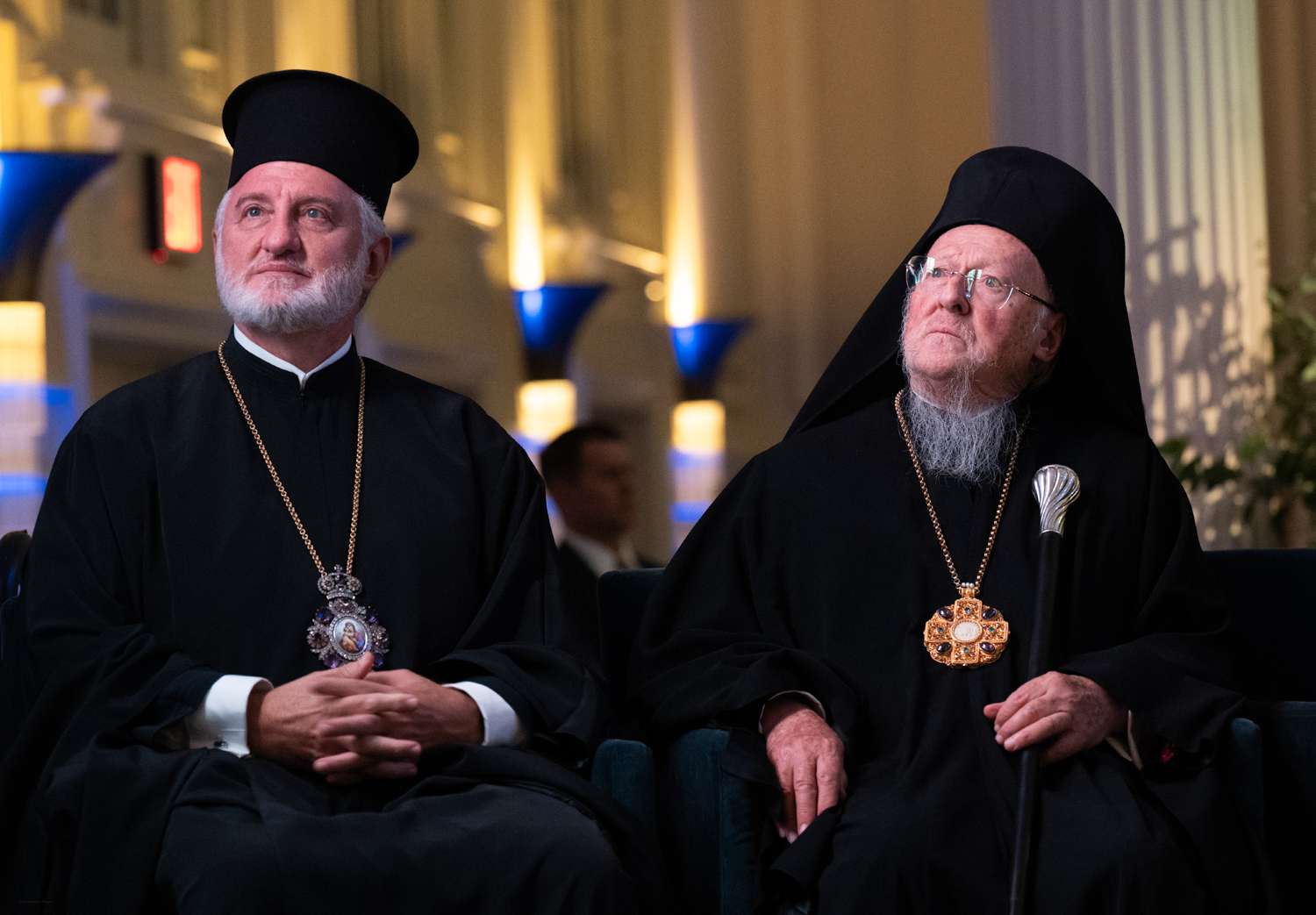
The Patriarch identified the Holy and Great Council in Crete in 2016 as a milestone achieved after decades of preparation, despite four Churches’ last-minute absence. He welcomed the participation of representatives of the Georgian and Bulgarian Churches, both absent from Crete, in the theological conference in Chantilly, France. Organized by the Ecumenical Patriarchate on Oct. 5–8, the gathering marked the council’s 10th anniversary.
Granting autocephaly to the Orthodox Church of Ukraine in January 2019 was among his most difficult decisions. Referring to Moscow’s fierce opposition, he emphasized the courage and determination required to proceed. Autocephaly gives a Church the right to govern its ecclesiastical affairs under its own hierarchy.
He stressed dialogue with the Roman Catholic Church. The report recalled encounters with Popes John Paul II, Benedict XVI, Francis and Leo XIV. Kathimerini described his attendance at Francis’ 2013 inauguration as the first by an Ecumenical Patriarch since the schism of 1054.
In November 2025, he and His Holiness Pope Leo XIV joined other Christian leaders in Nicaea, now İznik, marking the First Ecumenical Council’s 1,700th anniversary. The account also recognized his dialogue with representatives of Islam and Judaism and the environmental advocacy that earned him the designation “Green Patriarch.”
Kostidis described the Patriarch’s affection for Imbros, his birthplace, where returning islanders and reopened schools have renewed the Greek Orthodox community’s prospects. His All-Holiness identified those developments as changes that had altered the course of the island’s history.
The post Bartholomew’s Unfinished Work: Halki and lasting peace appeared first on Orthodox Observer.