This post was originally published on this site
The great and auspicious occasion of America’s 250th anniversary gives us plenty of reasons to celebrate our country’s many proud accomplishments and milestones. It also invites us to honor the many global traditions, peoples, and stories that have crossed oceans and continents to become part of our shared American experience. For us Greek Orthodox Christians living in America, this reflection must include an important question: How do we remain deeply rooted in our timeless faith and ancient heritage while raising future generations in this new land? For more than half a century, Ionian Village has served as an answer to this critical challenge.
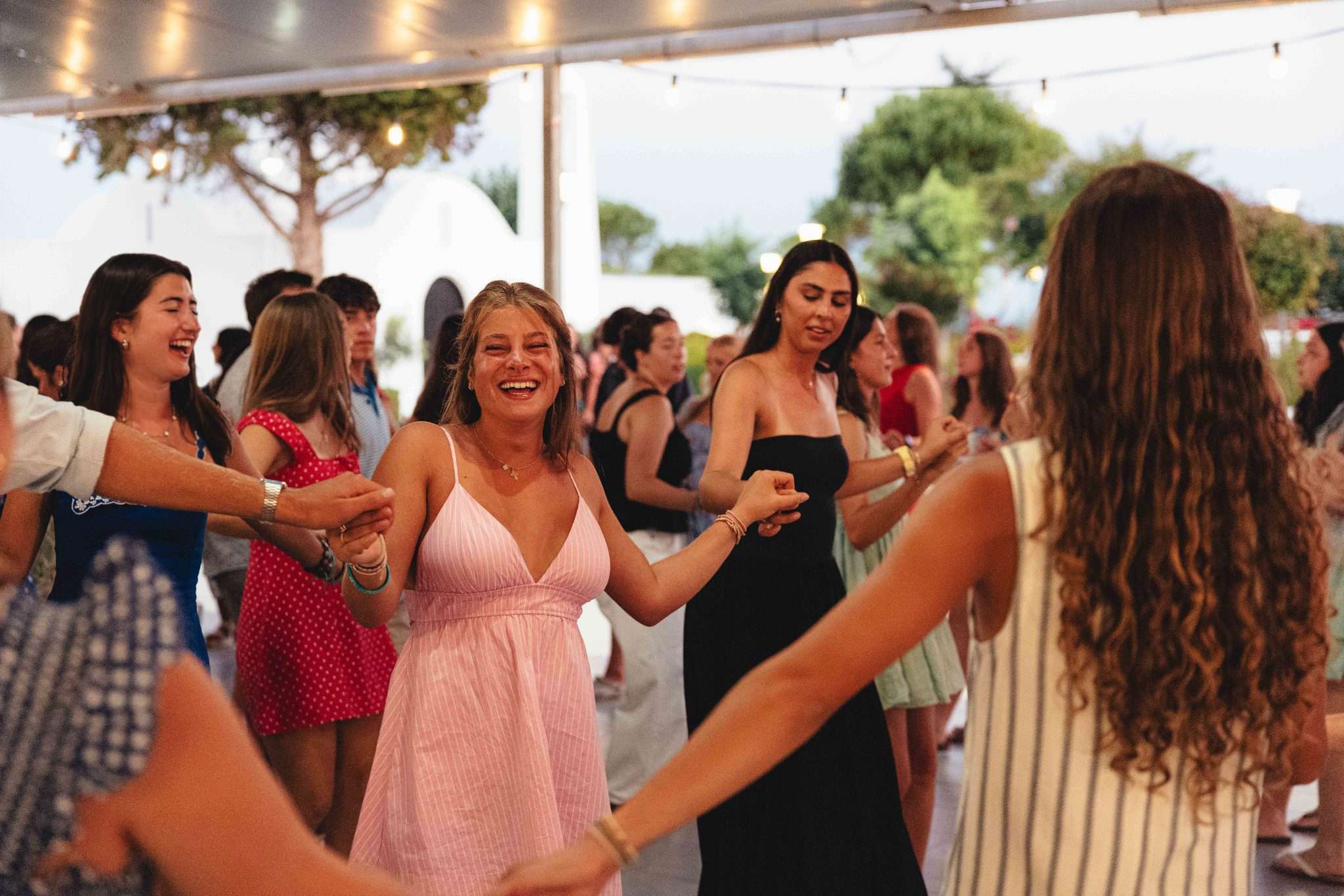
When His Eminence Archbishop Iakovos established Ionian Village in 1970, he envisioned something far greater than a summer camp. He called it “the Golden Bridge” (Η Χρυσή Γέφυρα)—a bridge connecting the children of the Greek Diaspora in America with the spiritual and cultural inheritance of Greece. As Archbishop Iakovos described it, Ionian Village “is able to bridge both the physical distance between the old and the New World, as much as the spiritual and emotional distance experienced by the Greeks (and their children) living abroad.”
His Eminence’s vision was prophetic. In the 56 years since those remarks, more than twenty thousand young Orthodox Christians have made a spiritual pilgrimage across that bridge. Ionian Village has allowed our young people to experience their faith and culture in ways that classrooms, textbooks, sermons, and stories cannot. Simply put, Ionian Village makes faith and history tangible.
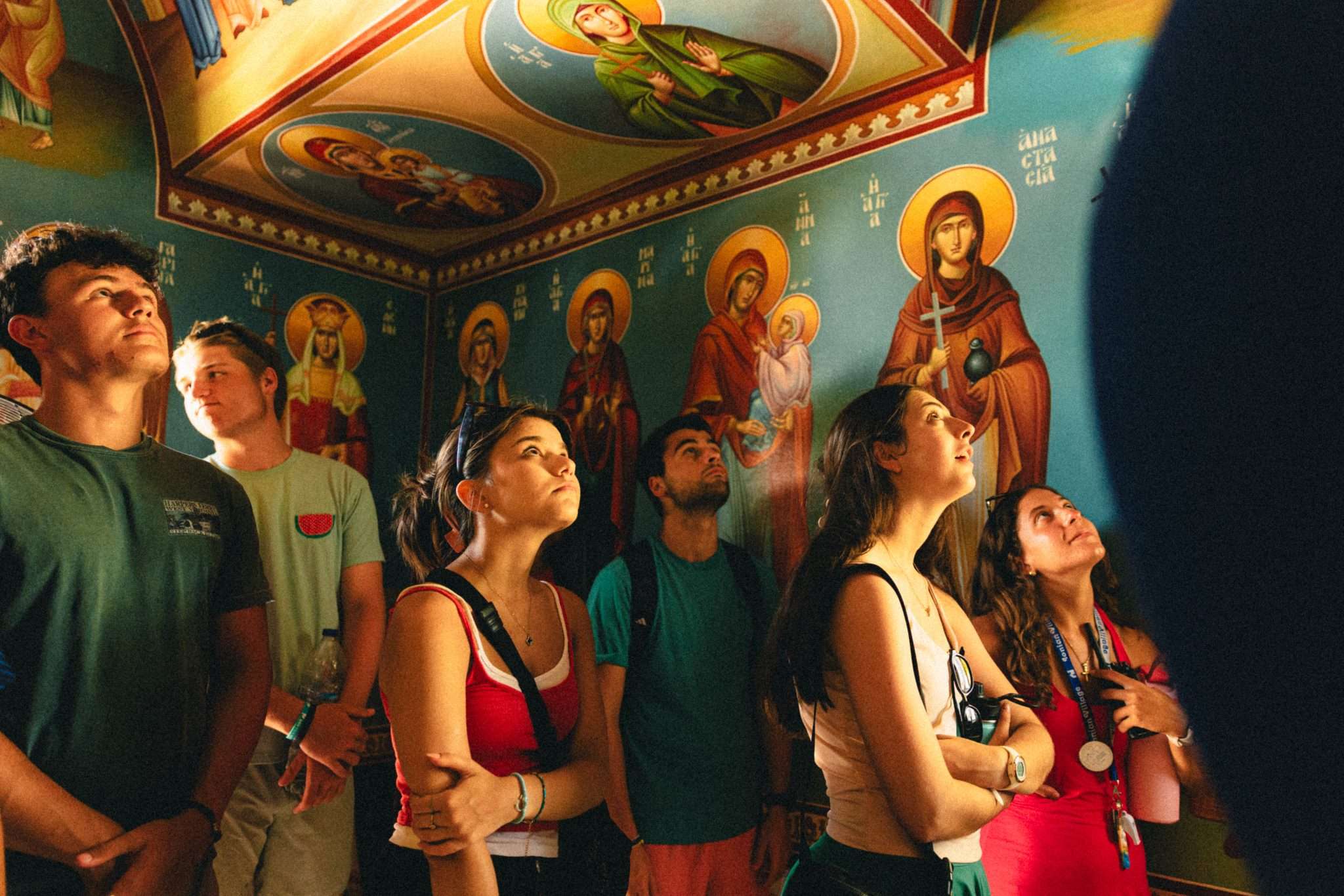
Rather than simply reading about the saints, our children are able to encounter and venerate their holy relics face-to-face. Instead of listening to lectures about Byzantine history, they can travel back in time as they visit ancient monasteries, castles, and ruins. And rather than being satisfied with bedtime stories about the distant homeland of their ancestors, our children can participate in this pilgrimage and how they are inheritors of the Hellenic identity preserved by our forebearers of old. Most importantly, the pilgrimage that is Ionian Village teaches our young people that Orthodoxy is not simply something ancient they have inherited, but a rich, living faith in which they are invited to embrace and live out in their daily lives.
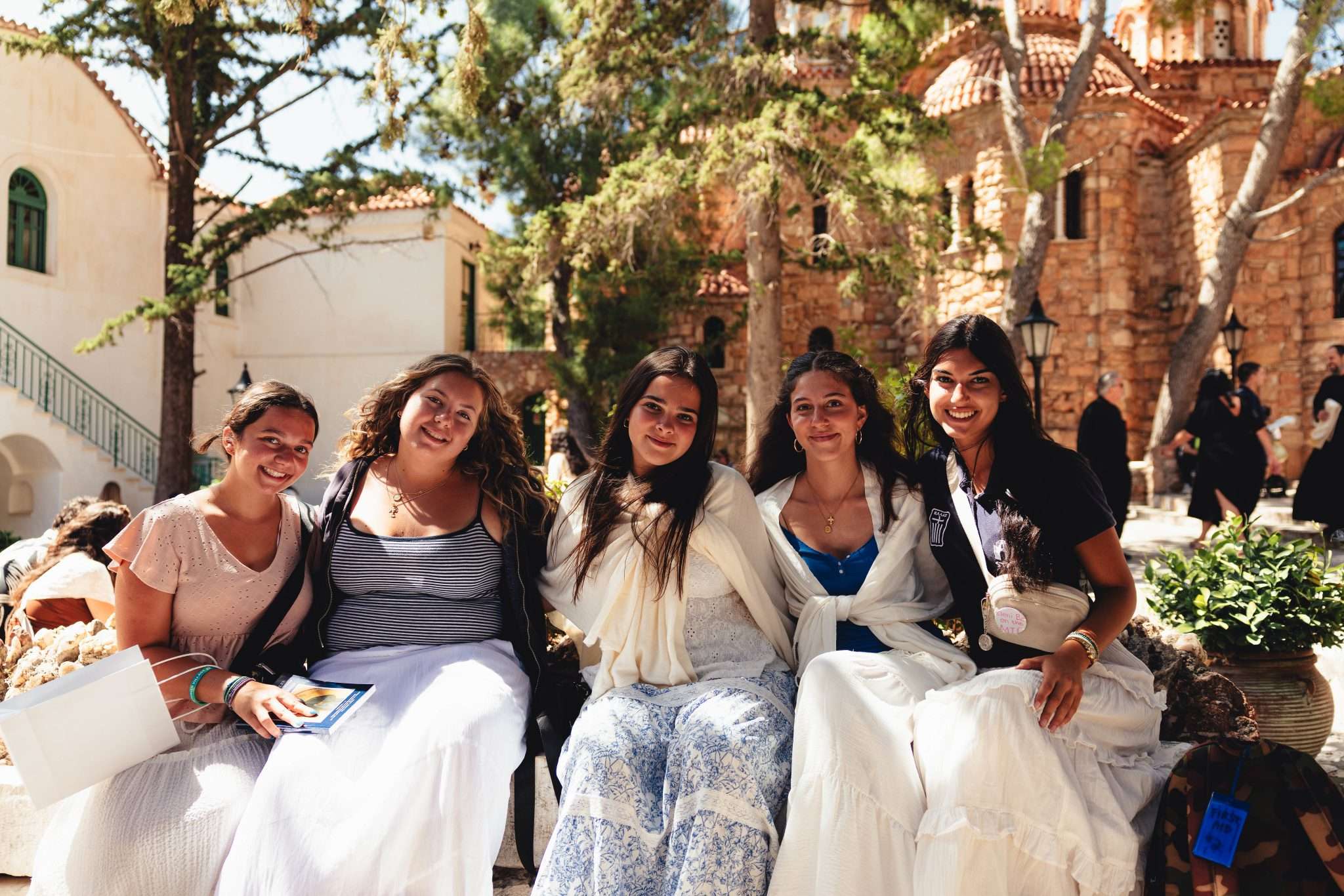
This summer at Ionian Village, we witnessed a beautiful example of how our faith and heritage connect to the old and New World through the life of Saint Xenia of Kalamata. Saint Xenia was a third-century Christian martyr from the Peloponnesian region in which Ionian Village calls home. Unfortunately, since her repose, she had almost entirely faded from the consciousness of the Church until the twentieth century, when she began appearing miraculously to an American priest, Fr. George Nasis, during his ministry in New York City. The renewed veneration of St. Xenia is truly extraordinary because she, the golden-haired Great Martyr of Kalamata, bridges the very same distance that Ionian Village, “the Golden Bridge,” was created to span.
Saint Xenia belonged to the ancient Church of Greece, but it was the Church in America that rediscovered her memory. Prior to this year, only two churches in the entire world had a permanently installed icon of this Great Martyr: Fr. Nasis’s parish of the Annunciation in New York City and a small church in Kalamata that was rededicated in her honor in 1993.
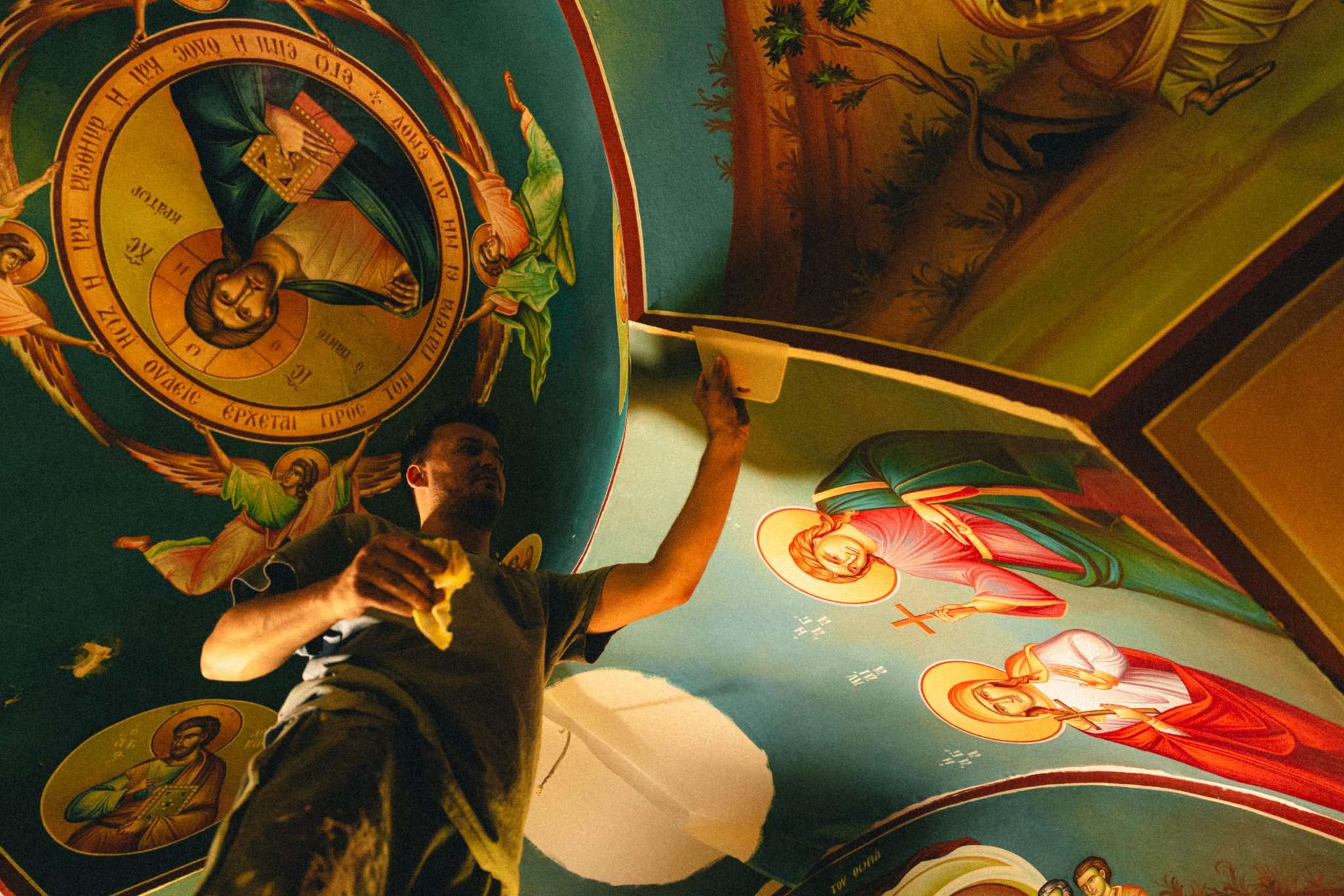
Now, in 2026, we can add the Ionian Village Chapel to that list! This summer, our campers witnessed her icon find a permanent home in the chapel, thanks to the generosity of our resident iconographer, Mr. Dimitri Mourlas, and the unique witness of her life in our Archdiocese. Saint Xenia’s icon is more than a beautiful addition to our chapel; it is a reminder of our unique experience as Greek Orthodox Christians in America. It reminds us that the relationship between Greece and America is not one-directional. We do not come to Greece only to receive something from our “motherland.” We also bring something with us from our American homeland.
When hundreds of our campers and staff go to a restaurant and publicly chant our pre-meal blessing of the food, the other local patrons reverently take notice. Often while visiting monasteries across Greece as part of the program, monks and nuns have made a point of expressing how refreshing it is to see such a large group of people comport themselves with modesty and respect. On several occasions, while celebrating services in churches around the area, older local parishioners have approached us with tears in their eyes, saying, “We have never seen so many kids in church before” and that it is a blessing to see “children who care about their faith.”
The fact is that the Church in America has become a vital part of the living, global Orthodox body. Through God’s providence, the faithful here in the “New World” can help inspire, promote, and even awaken dormant traditions that might otherwise have been forgotten in the Old.
How fitting that we are discussing the shared values of Greece and America at a time when we are celebrating their intimately connected historical milestones as well. This 250-year-old American experiment in self-government drew significant inspiration from the political ideals and democratic heritage of ancient Greece. Thomas Jefferson reflected on this connection in his frequent correspondence with Greek author and leading intellectual Adamantios Korais in the years leading up to Greece’s own struggle for independence in 1821. It is no secret that the successful establishment of the American republic became an inspiration to many European nations seeking their own independence, especially Greece, which celebrated its bicentennial five years ago.
History has shown that we can share the great fruits of culture and social ideals across entire oceans. In like manner, Ionian Village shows us our faith only grows when we share and experience it in every journey of life.
That is why pilgrimage matters. It ensures that faith is built upon not only the abstract connections made through one’s knowledge or intellect, but is built upon the dynamic connections constructed from experience and lived memory. A teenager who has prayed in remote monasteries, kissed the relics of saints, walked among ancient ruins, or spent nights at camp with friends beneath the stars of another hemisphere carries those experiences home.
The Golden Bridge of Ionian Village works in both directions.
It connects our ancestral motherland with our present homeland. It reminds our children that they do not have to choose between being Greek Orthodox and being American. They can be both—Orthodox Christians in the U.S. whose faith is grounded in the ancient, living Tradition entrusted to them. As America celebrates 250 years, may we remember that preserving our heritage does not mean living in the past. It means carrying the treasures of the past across the bridge into the future.
This article is published as part of the America at 250: Orthodoxy in a New Homeland media initiative co-organized by the Orthodox Observer and the Department of Inter-Orthodox, Ecumenical, and Interfaith Relations of the Greek Orthodox Archdiocese of America to honor the contributions and experience of Orthodox Christianity in America and celebrate 250th anniversary of America’s founding.
The post Ionian Village: A ‘Golden Bridge’ connecting motherland and homeland appeared first on Orthodox Observer.