This post was originally published on this site
As the United States commemorates the 250th anniversary of its founding, the exhibit “The Greek Revolution Through American Eyes” offers an opportunity to reflect on the remarkable relationship between America, Hellenism, and Orthodox Christianity that spans more than two centuries. Originally developed by Dr. Tom Papademetriou of Stockton University and inspired by Dr. Constantine G. Hatzidimitriou’s project “Founded on Freedom and Virtue,” this exhibit explores the ideological, political, and humanitarian connections between the United States and Greece during the Greek War of Independence.
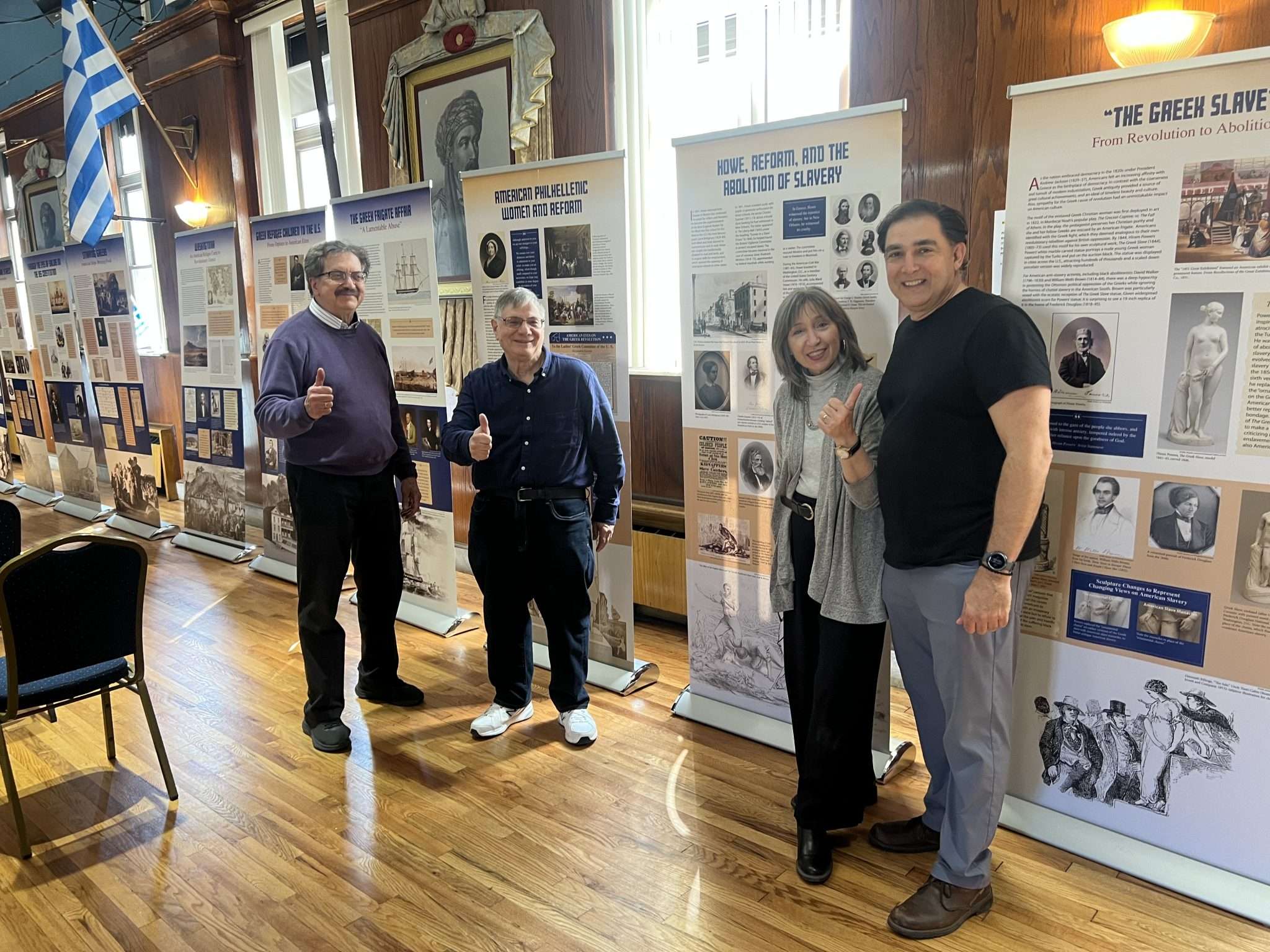
Through contemporary newspapers, books, artwork, correspondence, and other expressions of Philhellenic support, the exhibit illustrates how Americans viewed the Hellenic struggle for independence during the 1820s. To many Americans, Greece was not merely a distant land, but a people fighting for freedom from the Ottoman Empire. It was the homeland of a civilization whose ideas had helped shape the intellectual foundations of the American Republic and a people seeking the same liberty and self- determination Americans had fought to secure only forty five years earlier.
The American response to the Greek War of Independence was extraordinary. Newspapers followed developments in Greece closely. Public meetings were organized. Funds and humanitarian aid were collected. Philhellenic committees emerged throughout the United States. Volunteers, including the renowned physician Samuel Gridley Howe, traveled to Greece in order to support the cause. The enthusiasm became so widespread that historians have often referred to the 1820s as America’s period of “Greek Fever.”. For many Americans, support for Greece represented more than sympathy for a distant nation. It reflected a belief that liberty, self-determination, and human dignity should be upheld as universal principles for all.
Yet the exhibit invites us to consider a larger story.
The Hellenes whom Americans supported were not merely the heirs of ancient Athens and Sparta. They were a people with a living language, faith, traditions, and identity that had survived centuries of foreign domination. The admiration felt by Americans for classical Greece increasingly shifted to an abiding respect for the resilience of the Hellenic people themselves. The preservation of that identity owed much to the Greek Orthodox Church, which served not only as a religious institution, but also as a guardian of culture, education, community, and historical memory.
In many respects, the story of the Hellenic Revolution is inseparable from the story of Orthodoxy in the modern world. Throughout centuries of hardship, Hellenic identity was stewarded by churches, monasteries, clergy, and the faithful preserving a spiritual and cultural legacy that made national renewal possible. The struggle for independence was not simply political; it was simultaneously a cultural, spiritual, and civilizational struggle.
The connection between America and Greece, however, ran even deeper. Long before 1821, the ideas, history, and political traditions of ancient Greece permeated deeply within the intellectual life of the American colonies and early Republic. Classical education shaped generations of Americans, including many of America’s founder. In following the Greek War of Independence, Americans saw not only a contemporary struggle for freedom, but also encountered a resilient and proud people who were inheritors of an ancient heritage they deeply admired.
What began as admiration and solidarity eventually evolved into something far more enduring. Beginning in the 19th century and accelerating further in the early 20th century, Greek immigrants arrived in the United States seeking opportunity and a better future. They brought with them not only their language and customs, but also their Orthodox Christian faith.
Like many immigrant communities, they faced challenges of adaptation and integration. Yet, they built institutions that preserved their heritage while contributing to the life of their new homeland. Churches became centers of worship, education, philanthropy, and community life. Through these institutions, Orthodox Christianity established deep roots on American soil while remaining faithful to its ancient traditions.
The history of the Greek Orthodox Archdiocese of America reflects this journey. Across generations, clergy and laity strengthened parish life, educated future generations, cared for those in need, and built bridges within American society at large. In doing so, they demonstrated that one could remain deeply committed to one’s faith and heritage while fully embracing the opportunities and responsibilities of American citizenship.
This story, however, extends beyond any single ethnic community. As Orthodoxy grew in America, it became home to faithful from many backgrounds and traditions. Together, they helped shape Orthodoxy in what has become a new homeland for Orthodox Christians.
Today, Orthodox Christians from various backgrounds and experiences contribute to every aspect of American life from public service, education, and medicine to business, philanthropy, the arts, and community leadership. Their story is one of faith, perseverance, service, and civic engagement, values that have enriched both the Orthodox community and our nation as a whole.
As America celebrates its 250th anniversary, “The Greek Revolution Through American Eyes” reminds us that the relationship between America, Hellenism, and Orthodox Christianity did not begin with immigration alone. It began with an encounter—a young republic recognizing timeless ideals embedded in the Hellenic struggle for independence that resonated deeply with its own national aspirations.
Two centuries after the era of “Greek Fever,” this encounter continues. It lives in parishes, communities, institutions, and families across the nation. The exhibit reminds us that the bonds between Hellenism, Orthodox Christianity, and the United States were forged not only through history, but through the shared ideals of faith, freedom, human dignity, and hope—ideals that continue to inspire new generations in both the old homeland and the new.
The post ‘The Greek Revolution Through American Eyes’: From Philhellenism to Orthodoxy in America appeared first on Orthodox Observer.