This post was originally published on this site
The Ecumenical Patriarchate of Constantinople has condemned the Russian missile and drone attacks that set fire to the Dormition Cathedral of the Kyiv-Pechersk Lavra, calling it an “unacceptable and sacrilegious” assault on a shrine sacred to all of Christianity.
In its statement, the Patriarchate said it had learned “with the deepest sorrow and disappointment” of the strike on the 11th-century monastery. “No reasonable person and no argument can justify this barbaric, destructive attack against a sacred place of pilgrimage,” describing the Lavra as a monument of the shared religious and cultural heritage of Christianity and a UNESCO World Heritage site.
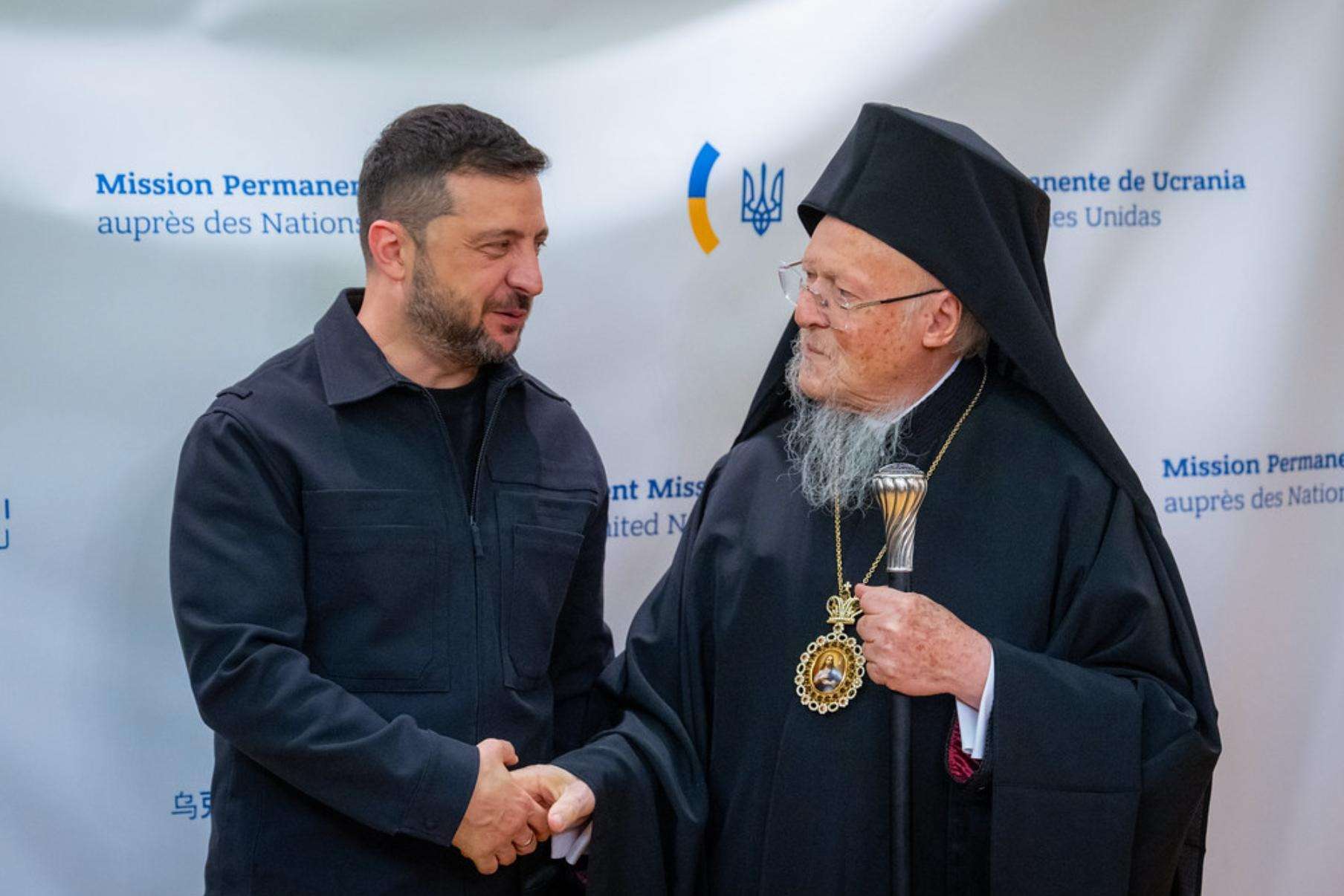
Ecumenical Patriarch Bartholomew telephoned Metropolitan Epifaniy of Kyiv and All Ukraine to convey “his abhorrence at the Russian attack and the wholehearted solidarity of the Mother Church and of himself personally” with the long-suffering Ukrainian people. He also expressed his sympathy to the families of those killed and to the wounded.
The attack reportedly killed at least 11 and injured 53, according to President Volodymyr Zelenskyy and emergency officials.
The Cathedral caught fire in the early hours of Monday, June 15, after Russia launched one of the largest aerial barrages of the war against Kyiv, Kharkiv and other Ukrainian cities.
Kostas Onishenko, a journalist and war correspondent working for iefimerida in Ukraine, told the Orthodox Observer that a Russian Shahed drone hit the Dormition Cathedral, the central church of the Lavra complex, causing significant damage to its exterior and interior, and that the work of rescuers and firefighters kept the fire from spreading and destroying the church entirely.
Ukrainian officials said the roof caught fire around 2 a.m. and that firefighters had the blaze under control six hours later, according to Agence France-Presse. Ukraine’s Security Service said it had recovered drone fragments at the scene, and Guardian journalists reporting from the grounds saw the remains of two Shahed drones.
Five of the dead were rescue workers in Kharkiv, killed by a second Russian strike as they fought a fire from an earlier attack. Others were killed in Kyiv, where the wounded included a pregnant woman and two children, ages 5 and 6, according to Reuters and The Associated Press.
President Zelenskyy and Prime Minister Yulia Svyrydenko climbed onto the Cathedral’s roof later that morning to inspect the damage. Maksym Ostapenko, director general of the Kyiv-Pechersk Lavra National Reserve, said the building’s vault had been preserved and that there had been no critical overheating, which spared the Cathedral from collapsing inward, though the roof was partly destroyed and water used to fight the fire reached the interior.
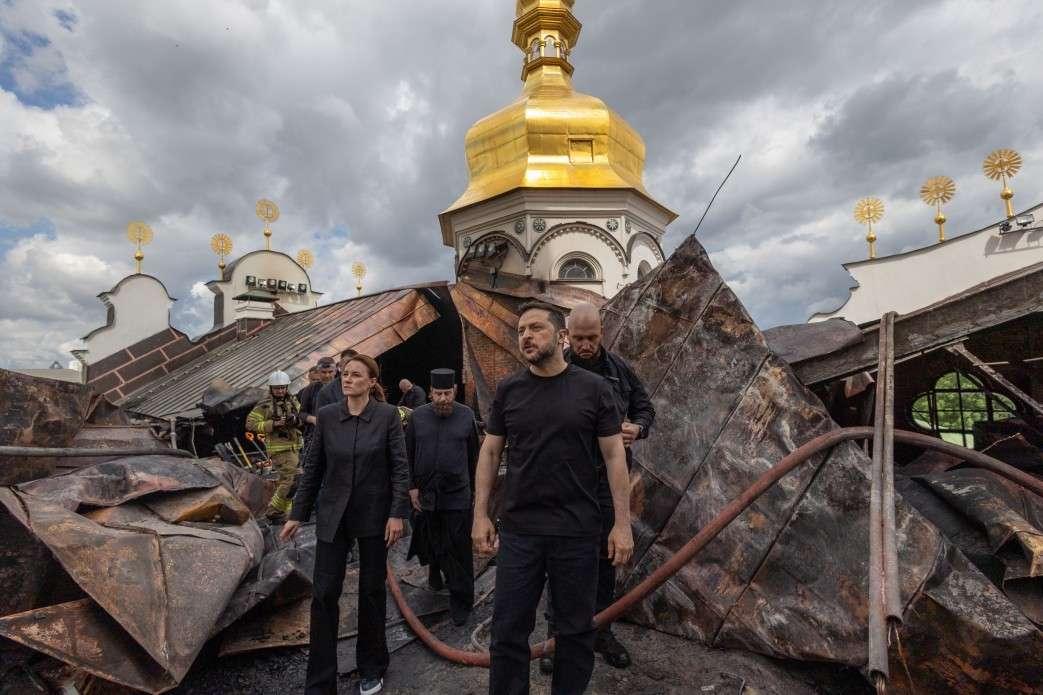
Mr. Zelenskyy called the strike “one of Russia’s most serious crimes against Christian culture to date” and pressed the leaders of the Group of Seven, meeting this week in France, for stronger pressure on Moscow and more air defenses. France’s foreign minister, Jean-Noël Barrot, compared the attack to a bombing of Notre-Dame in Paris. UNESCO condemned the strike, saying it had caused significant damage to the Cathedral’s exterior and interior; the Lavra was placed on the List of World Heritage in Danger in 2023.
Onishenko, who has visited many of the churches damaged in the war, wrote that since the start of the Russian invasion 336 churches, mosques and synagogues had been destroyed, a large share of them Orthodox. He had seen the desecration for himself: buildings the Russians shot at and burned, some turned into weapons depots or even latrines during the occupation, he told The Orthodox Observer. He said this strike was of a different order. The Lavra is regarded as the foremost Orthodox shrine in Eastern Europe, he wrote, and the images of it in flames shocked Ukrainians, which appeared to have been Putin’s aim.
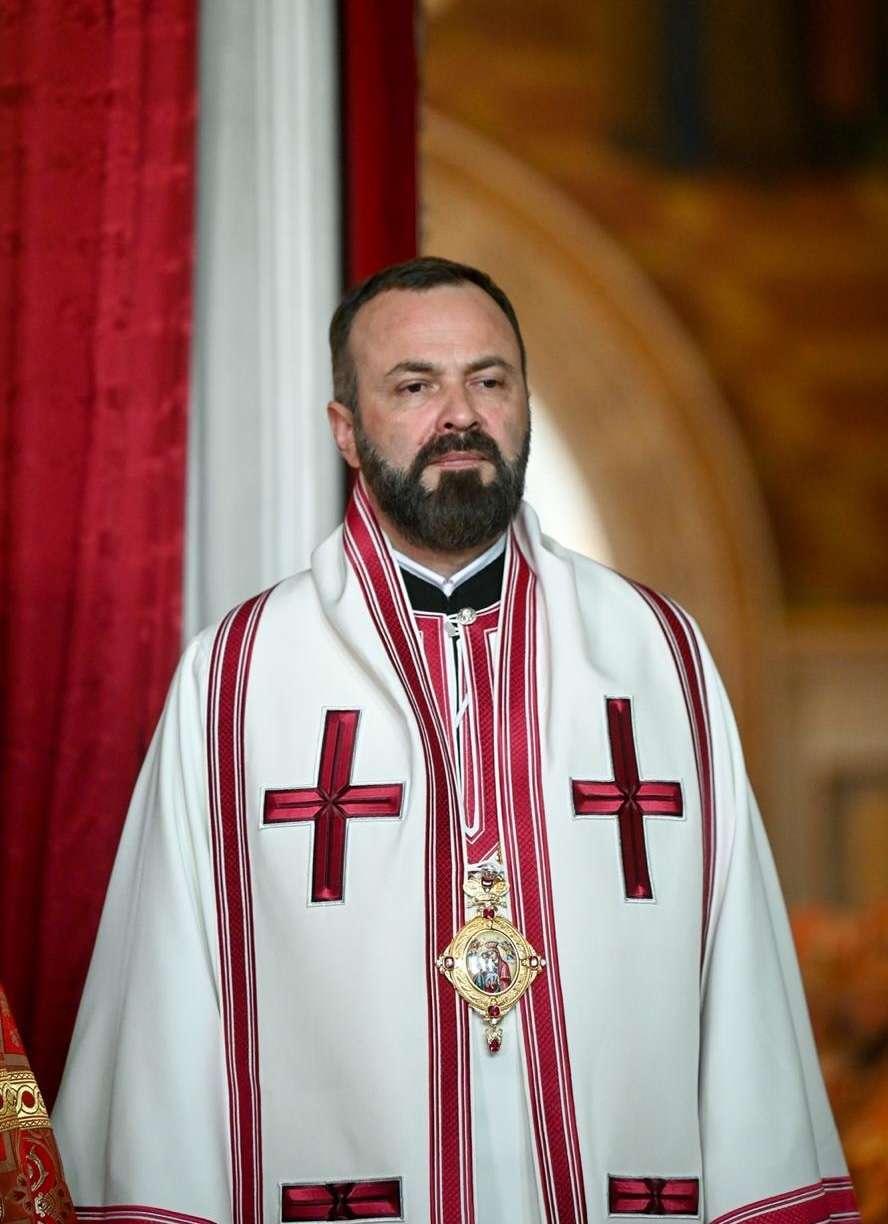
Writing for the Orthodox Observer, Bishop Michail of Comana, Abbot of the Stauropegial institution of the Ecumenical Patriarchate in Ukraine and Exarch of the Ecumenical Patriarch, described the Lavra as the cradle of the Orthodox faith of Kyivan Rus’, “where the relics of many saints repose.” The attackers, he wrote, were trying to destroy the symbols of a faith they had failed to subdue. “Faith in God does not reside in stone, but in the hearts of people,” he wrote, recalling that the monastery had been damaged and rebuilt many times across its history. “With God, we will prevail.”
The response of Kyiv’s residents stayed with Ilona Sokolovska, a Ukrainian journalist who wrote an essay for The Orthodox Observer, more than the destruction itself. She described the monks, museum workers, rescuers and police officers who carried “icons, ancient relics, objects that belong not only to the Church or to Ukraine but to the whole of Christian civilization” out of the Cathedral as the city remained under threat.
A heavy rain began over Kyiv as the fire burned, she wrote, and “stopped when it became clear the fire had been brought under control.” Many believers took it as a sign. “Holy places are not held up by gilded domes or thick walls,” she wrote. “They are held up by the prayers of the people. And no fire can burn a prayer.”
> Read: When Lavra burns
Bishop Michail returned to that confidence at the close of his essay. The Ukrainian people had lived through many invasions across their history, he wrote, and none had ever broken them, because they had always lived in prayer and faith. “With God’s help we will come together, repair and rebuild everything,” he wrote, “not only the church at the Lavra, but all of Ukraine and our peaceful life.”
Metropolitan Epifaniy, the head of the Orthodox Church of Ukraine, called the attack “a crime against humanity, against history, against Christianity.” The Ukrainian Orthodox Church tied to the Moscow Patriarchate answered through its spokesman, Metropolitan Klyment, who said, “God does not bless war.” But ordinary priests and faithful of that church have been asking on social media where the voice of its own head, Metropolitan Onufriy, has been, Sokolovska told The Orthodox Observer.
Metropolitan Onufriy served the liturgy in the same Cathedral two years ago and offered assurances to the people gathered. A full day after the strike, Onishenko reported, Onufriy himself had still said nothing. His silence has not gone unnoticed in Ukraine. “The question, it seems, answers itself,” Sokolovska added.
The attack has reopened the long dispute over Ukraine’s church division, Onishenko continued. The State Service of Ukraine for Ethnic Policy and Freedom of Conscience said it was “futile to appeal to the conscience of the invaders” and that expecting condemnation, or even sympathy, from Patriarch Kirill of Moscow was, “to say the least, naïve.” It renewed its call for the hierarchy, clergy, monks, nuns and faithful of the Ukrainian Orthodox Church to break with the Moscow Patriarchate, “which has long justified evil, the killing of children, and blasphemy.”
Moscow still pulls strings inside the church, Onishenko wrote. Some of its hierarchs condemned the invaders outright, while others passed over Russian responsibility in silence, among them the Lavra’s former abbot, Metropolitan Pavlo, while others said nothing at all.
Archbishop Elpidophoros of America was quick to condemn the attack in a statement.
“The bombing by Russia of the Dormition Cathedral of the Kyiv-Pechersk Lavra is an outrageous assault on Christian memory and on the spiritual heritage of the entire Orthodox world,” the statement read. “One of Orthodoxy’s holiest shrines has been set ablaze, and this is nothing less than sacrilege — a spiritual wound to Christians everywhere, particularly painful for every Ukrainian for whom the Lavra is the heart of Christianity.”
The post Ecumenical Patriarchate condemns Russian strike that set the Kyiv-Pechersk Lavra ablaze appeared first on Orthodox Observer.