This post was originally published on this site
NEW YORK, NEW YORK—Wednesday, March 18, 2026, the Greek Orthodox Archdiocese of America UN Girl Delegates attended “Strengthening Access to Justice for Women and Girls: The Role of States, Courts, Communities, and Intergenerational Leadership” an official side event of the 70th Commission on the Status of Women (CSW).
The event was sponsored by the Permanent Mission of Greece to the United Nations, the Greek Orthodox Archdiocese of America, and the Permanent Mission of Latvia to the United Nations. The discussion underscored the value of youth engagement, mentorship, and innovative, community-based approaches to advancing legal access and equity.
“The Greek Orthodox Archdiocese of America’s United Nations Girl Delegate Program continues its vital mission of uplifting young Greek Orthodox women and equipping them to address global issues through the light of Orthodox Christian values. I am grateful as well for the dedicated support of our National Philoptochos, whose generosity sustains and strengthens this program, helping young women answer their calling as faithful leaders,” His Eminence Archbishop Elpidophoros of America shared these remarks in reflection on the event.
The event was moderated by Anita Kartalopoulos, First Vice President of the National Philoptochos Society. The speakers on the panel included Ioannis Stamatekos, Deputy Permanent Representative of Greece to the United Nations; Oļegs Iļģis, Deputy Permanent Representative of Latvia to the United States; Chloe Marnay-Baszanger, from the Office of the Special Representative of the Secretary-General on Sexual Violence in Conflict; Hon. Suzanne Adams, Administrative Judge, New York County Supreme Court, Civil Term; Professor Azza Karam, PhD, a member of the UN Secretary General’s High Level Advisory Board on Multilateralism and President and CEO of Lead Integrity—an international consultancy group led by women of faith; and Irene Maria Zografos, GOARCH Girl Delegate.
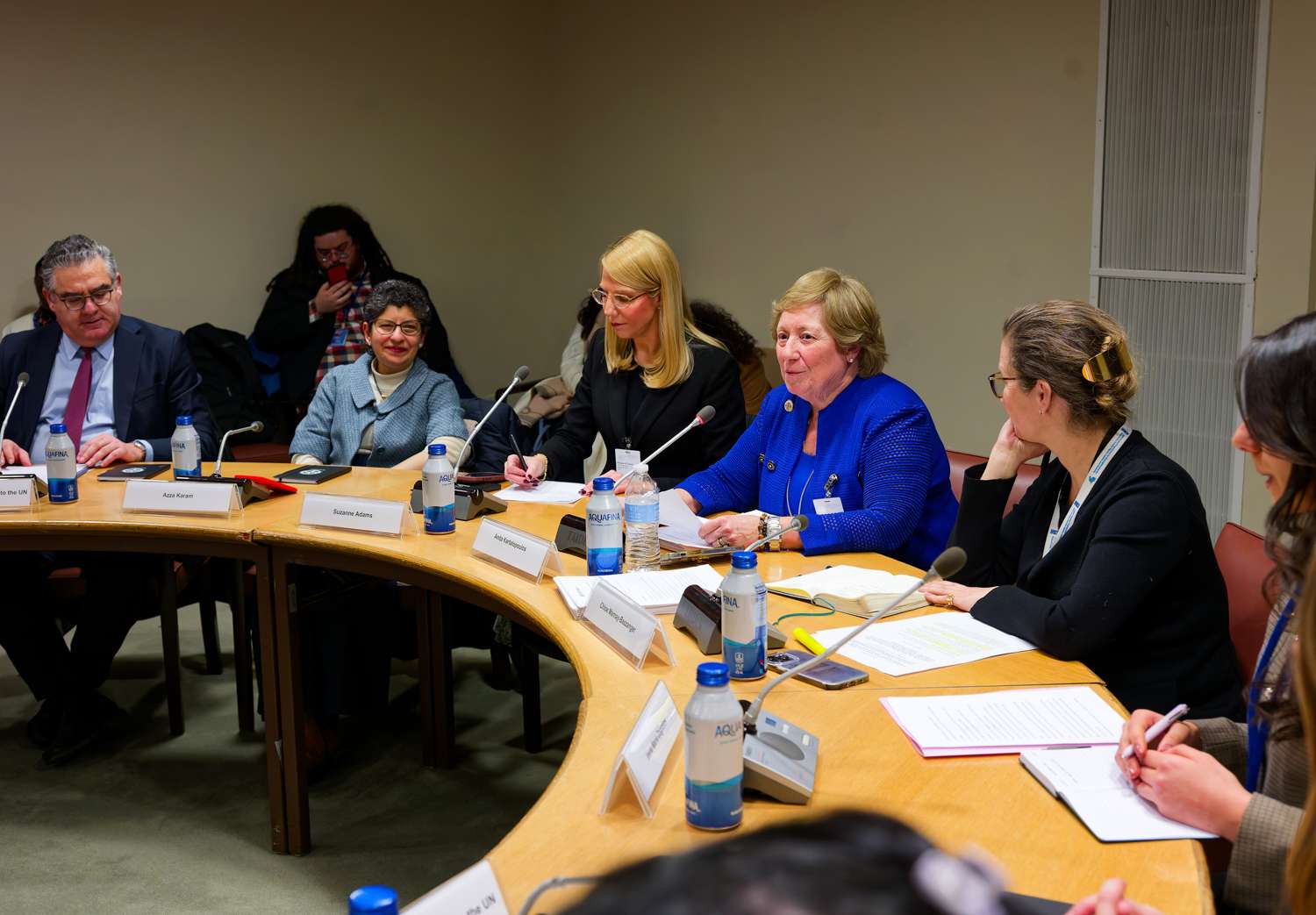
Ms. Kartalopoulos began the conversation remarking, “We gather at a critical moment. While many legal frameworks around the world recognize gender equality, the lived reality for millions of women and girls tells a different story. Justice remains out of reach, not only because of laws, but because of the invisible barriers of stigma, economic hardship, lack of legal awareness, and deeply rooted social norms.”
During the conversation, Ms. Kartolopoulos discussed the importance of the strength of organizations outside the justice system. Non-profits and other organizations place checks on the justice system and put pressure to ensure justice is operating as intended. Ms. Kartolopoulos discussed Deirdre’s House–a non-profit in Morris County, New Jersey–which Philoptochos offers support. Deirdre’s House is the Child Advocacy Center for Morris County’s child victims of abuse and/or neglect and children who have witnessed violence. Under one roof, a child victim can be interviewed and digitally recorded by law enforcement, medically examined and treated by pediatric child abuse specialist, prepared for trial, and provided with counseling services. Prosecution, accountability, and healing begins in the same place.
Representative Chloe Marnay-Baszanger, from the Office of the Special Representative of the Secretary-General on Sexual Violence in Conflict, offered a global perspective regarding the progress at the United Nations on sexual violence. She discussed how sexual violence, disproportionately affecting women, is the least prosecuted crime globally. Last Monday, with the support of the Permanent Mission of Greece, the Office on Sexual Violence, the United Nations Office on Sexual Violence launched the “Conflict-Related-Sexual-Violence Prosecution Network and Community of Practice” (CRSV Prosecution Network). Built over two years in direct response to calls from judicial practitioners worldwide, this unprecedented global network will unite prosecutors from across the globe to advance accountability for conflict-related sexual violence. Members will have access to a secure online platform designed to facilitate the exchange of expertise, share emerging jurisprudence, and access a comprehensive new case-law database.
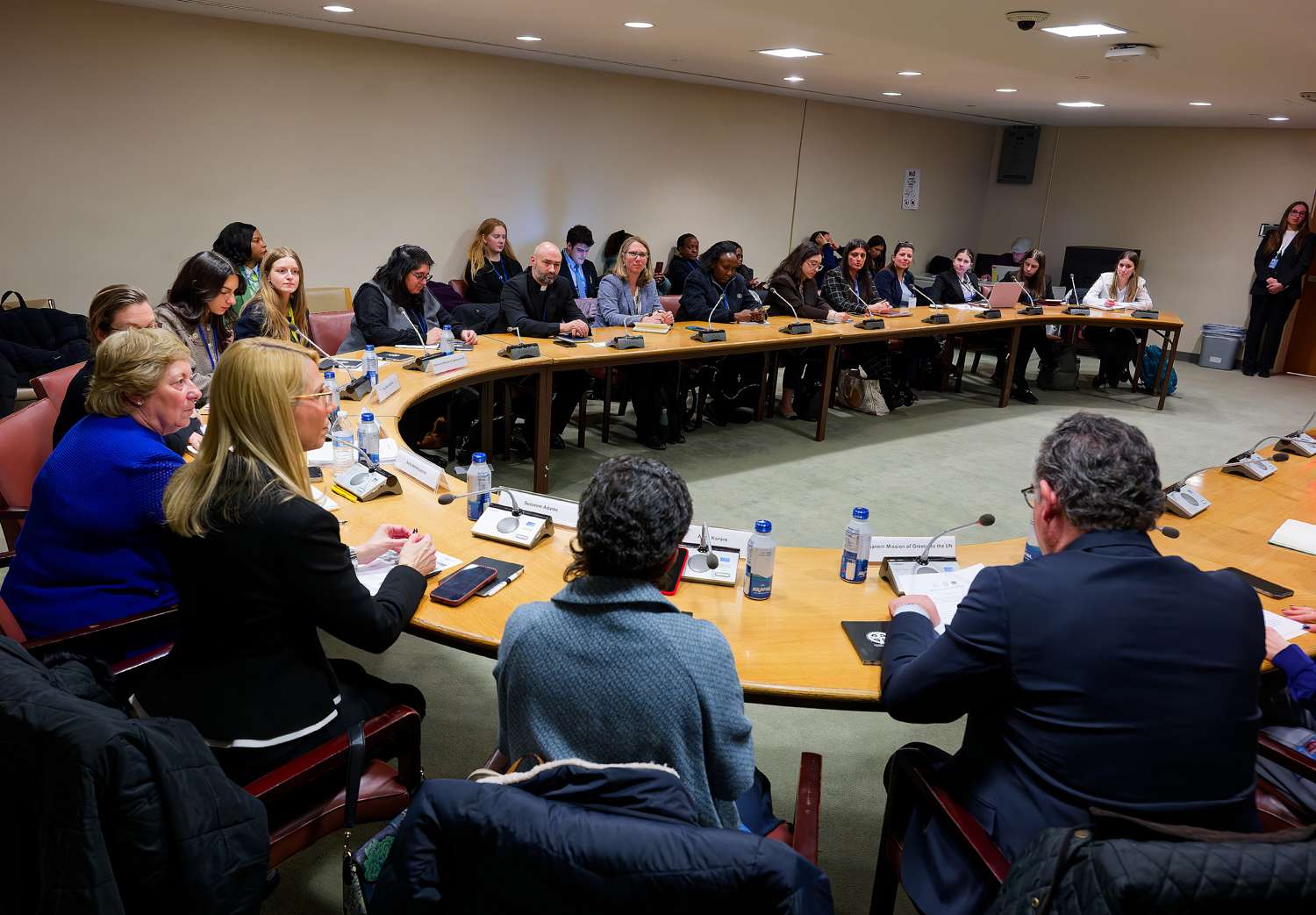
Judge Adams examined court accessibility in New York City and the broader goal of fostering intergenerational leadership for women and girls within the justice system. At the historic 60 Centre Street courthouse, she has worked to expand accommodations for those with visual and hearing impairments. When overseeing courtroom renovations, she emphasized the importance of including diverse perspectives. Diverse perspectives surface needs that might otherwise have gone unnoticed. For example, while discussing the renovations, one woman asked if there would be room to pump breast milk–highlighting the unique challenge of working mothers.
Judge Adams also spoke of the annual internship program she conducts within New York County, offering undergraduate and law students the opportunity to gain experience within the court system and engage with the justice system. “It’s very important for our young people to understand what opportunities are available to them. When you’re a young person you really only know what is in your neighborhood or your family,” she said. Judge also presented the Special Masters Program, which the Office of the Court Administration and the New York County’s Lawyer Association, to create a pathway to the judiciary for attorneys of diverse backgrounds.
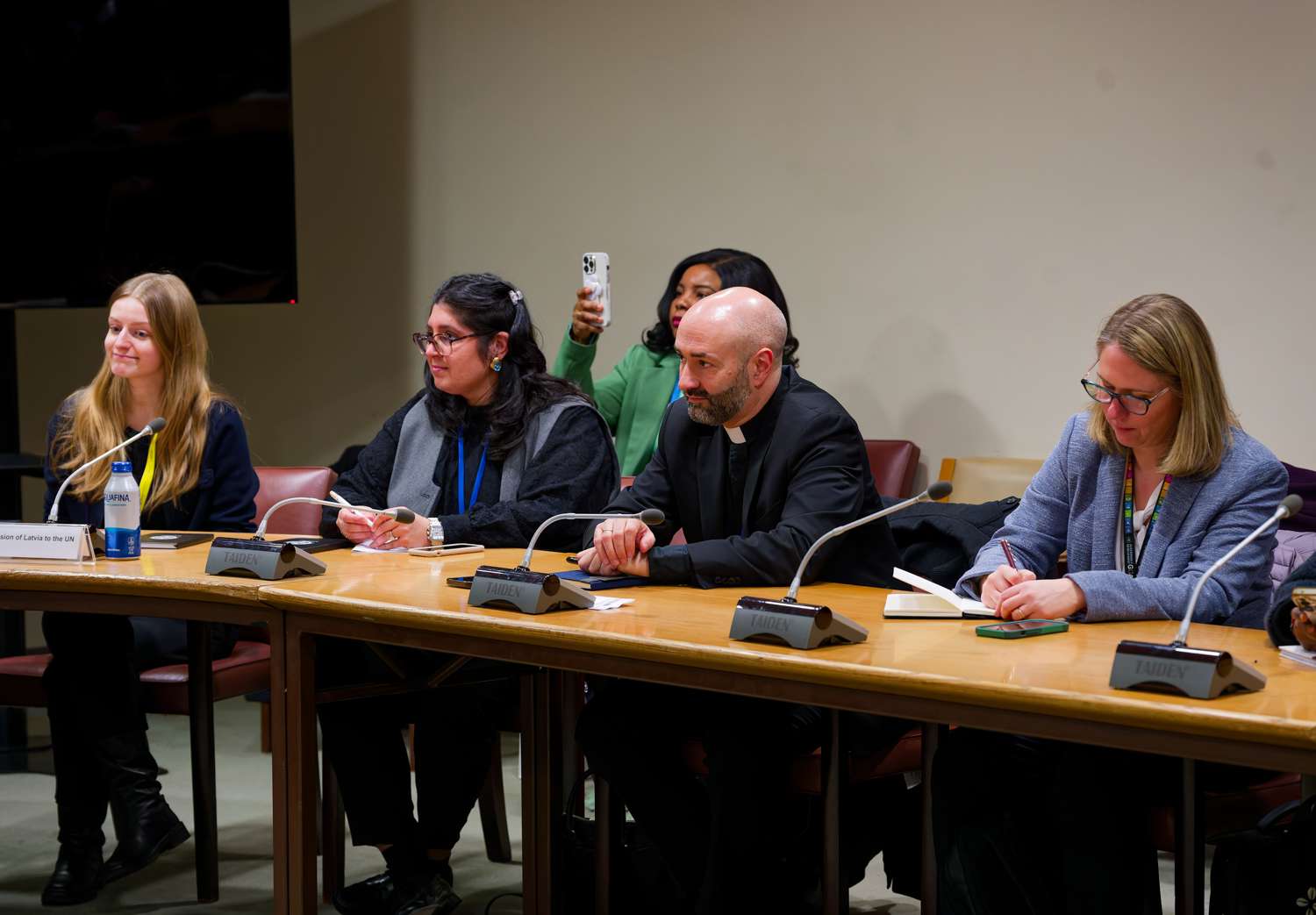
On the intersection of human rights, ethics, and peace and security, Professor Karam spoke of the absolute necessity to recognize that justice for women means justice in any situations of violence globally. She emphasized that our faith tradition calls us to speak truth boldly and refuse to let injustice be rationalized or excused. “Silence is violence…Injustice committed against one of us, is injustice committed against all of us,” she remarked.
Offering the youth perspective, GOARCH Girl Delegate Irene Maria Zografos spoke about the practical accessibility to justice that young girls may not know is available to them and the importance of including young women in decision-making processes and advocacy which affects them. Irene is a junior in high school and has served as a Girl Delegate for approximately 3 years. She has attended several meetings with ambassadors and high-level officials where she has advocated for the inclusion of girls in the decision-making process. “Girls and young women must be recognized as partners in shaping justice…Our voices are not just future perspectives. They are essential for building justice that works today.”
Closing remarks were offered by Oļegs Iļģis, of the Permanent Mission of Latvia to the United Nations, once again emphasizing that a woman’s access to justice is most often determined before she ever encounters the legal system, and it is necessary for our communities to continue to have conversations such as the one held at this event and make concrete efforts toward uplifting and protecting women and girls.
Ms. Kartalopoulos concluded the program by recognizing the efforts of Niki Devaris-Morgulis, founder of the GOARCH UN Girl Delegate program, and Fr. Nicolas Kazarian, Director of the Greek Orthodox Archdiocese Department of Inter-Orthodox, Ecumenical, and Interfaith Relations, in organizing this event.
The event brought together diplomats, legal experts, faith leaders, and young advocates to confront a sobering reality: for millions of women and girls, justice remains out of reach long before they ever enter a courtroom. Rooted in faith and driven by intergenerational commitment, the Greek Orthodox Archdiocese of America’s UN Girl Delegate Program stands as a testament to the power of equipping young women to carry this mission forward. As the panelists affirmed, silence is not an option. Speaking truth, building community, and refusing to rationalize injustice are not merely civic responsibilities, but a moral and spiritual calling.
The post GOARCH Girl Delegates champion women’s access to justice at the United Nations appeared first on Orthodox Observer.