This post was originally published on this site
The Orthodox Observer’s conference on artificial intelligence and theology opened on Thursday evening at the Maliotis Cultural Center in Brookline, Mass., its title asking a provocative question: “Do the Divine and Digital Intersect?”
With presentations from theologians, clergy, and engineers, the event’s first night explored how Orthodox Christianity can guide faithful–and society at large–through the challenges artificial intelligence (AI) presents.
In his opening remarks, GOARCH Director of Communications Dr. Stratos Safioleas warned that what was once a novelty “has become now an emergency.”
“The questions around artificial intelligence extend far beyond technology,” Safioleas said. “They touch on social, economic, and ethical issues, and perhaps more importantly, they present existential issues.”
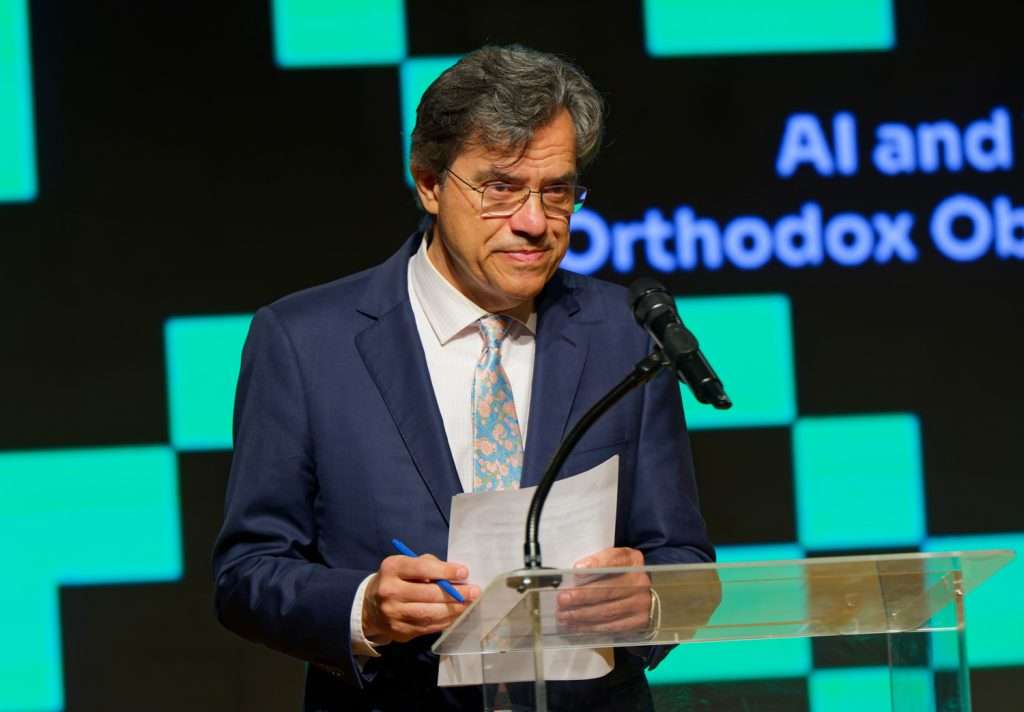
Theologians are “uniquely equipped to speak with depth and wisdom about these matters,” Safioleas said.
His Eminence Archbishop Elpidophoros of America echoed the assertion that the Church is called to ethical leadership. “The question of where and how the divine and digital intersect is an urgent one,” he said. “One that must not be avoided by the Church.”
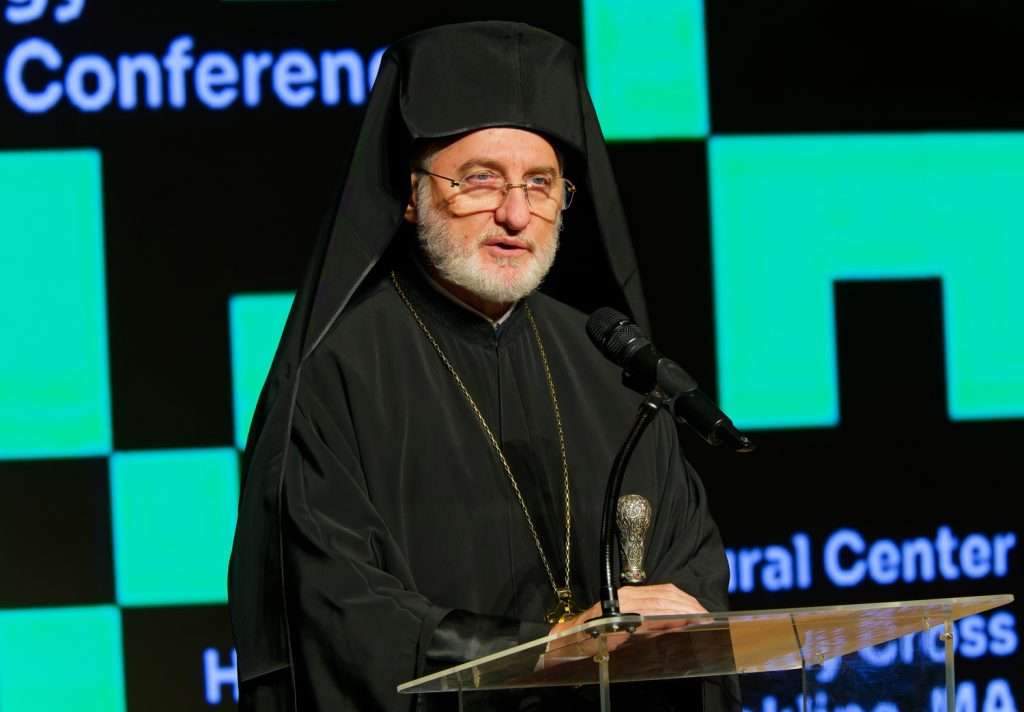
“The possibility of a ‘technological tsunami’ should be motivation enough … we owe this to our faithful,” the Archbishop said.
Yannis Papakonstantinou, a Distinguished Engineer at Google Cloud, offered the first of two keynote addresses. He framed faith as a guide to AI’s challenges, presenting the Church’s leadership as both “an opportunity and a duty.”
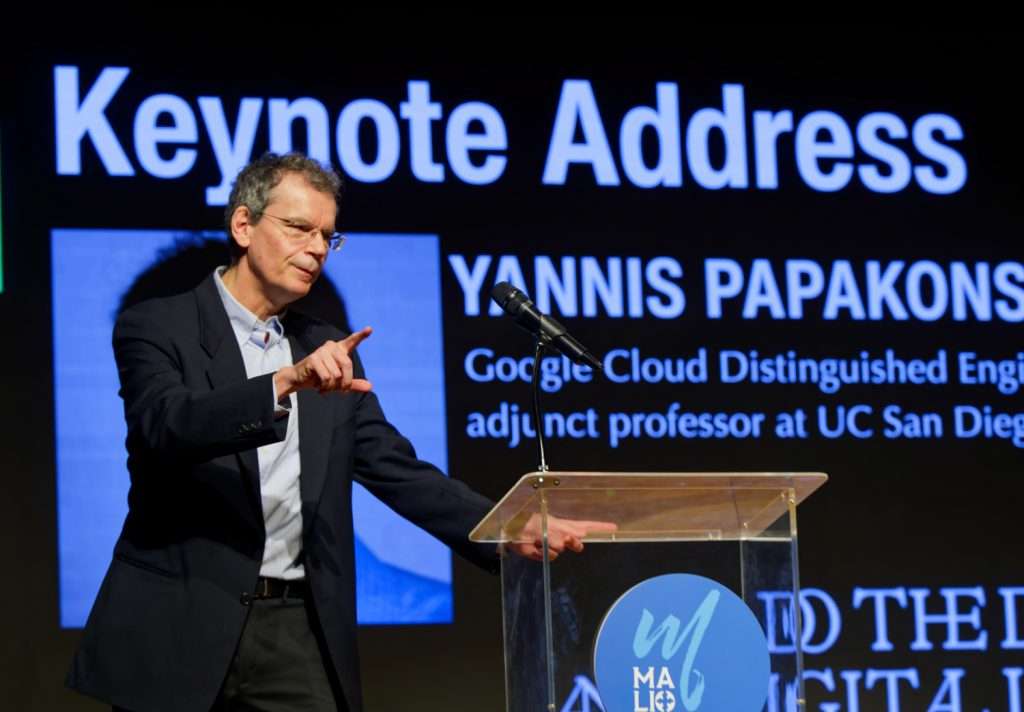
He addressed prevalent concerns regarding AI’s impact on economics, machine consciousness, and humanity’s belief in God. Though Papakonstantinou offered a relatively optimistic perspective on humanity’s future in the face of AI, he simultaneously urged audience members to “worry and prepare.”
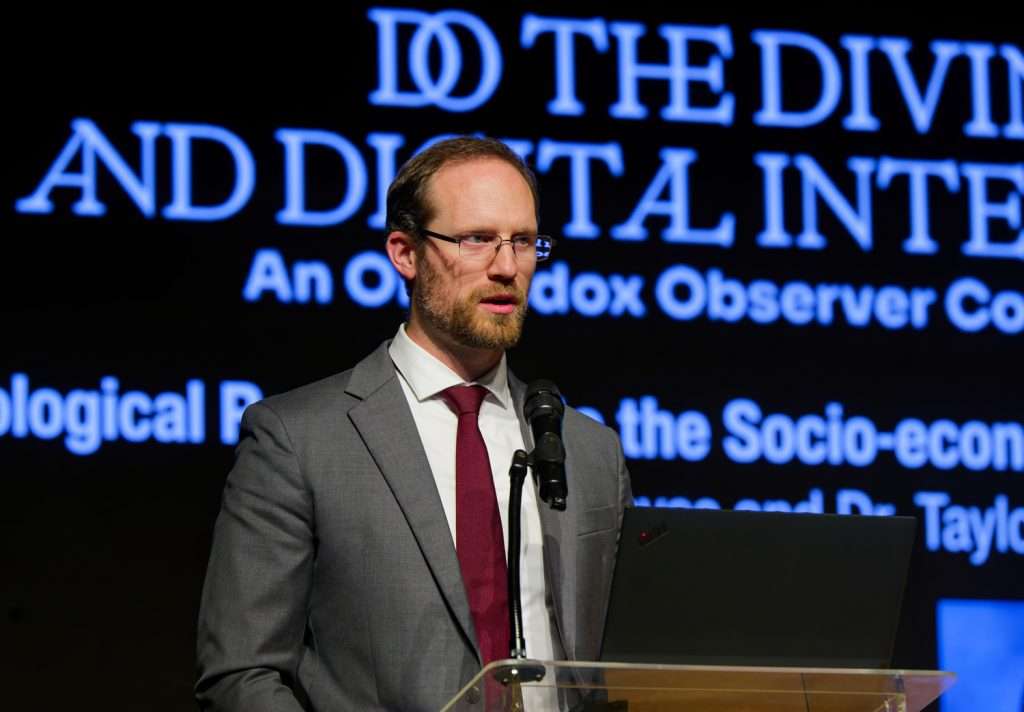
Drs. Taylor Nutter and Mark Graves presented the event’s first panel, entitled “Theological Responses to the Socioeconomic Implications of AI.” The Orthodox Observer‘s Dr. Claire Koen moderated the panel.
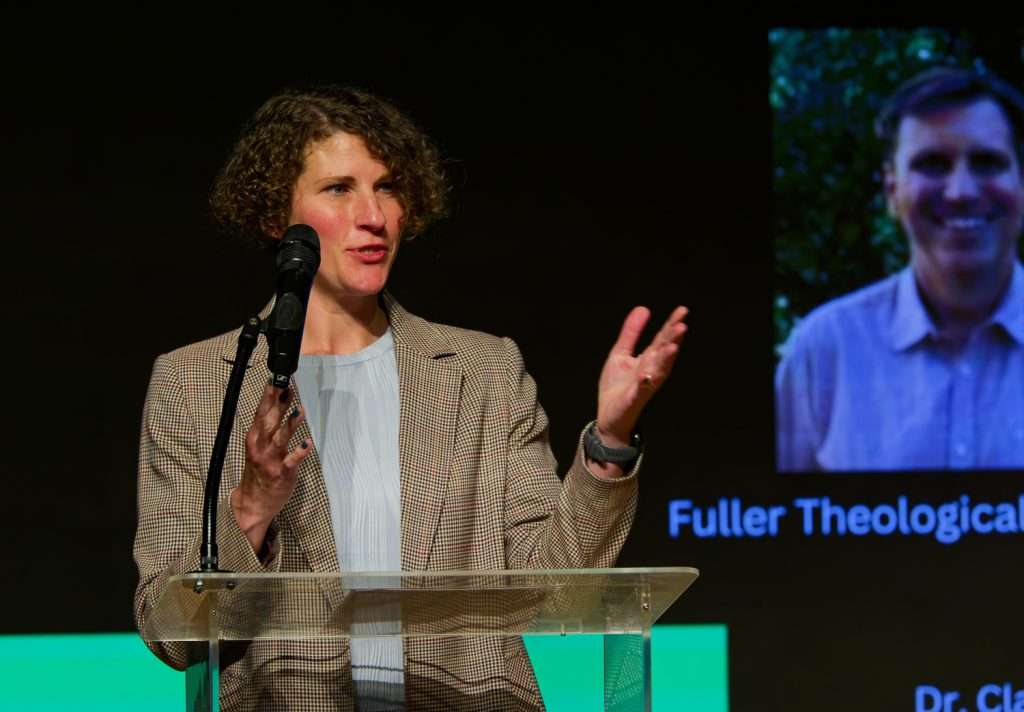
Nutter challenged the perceived moral neutrality of AI tools, describing them as “an instantiation of the structural injustice defining liberal capitalism as a racialized regime of accumulation.”
Citing the Theotokos’s prayer in the Gospel according to Luke, he said: “As disciples of a God who ‘has filled the hungry with good things and sent the rich away empty,’ to do the will of the Lord is to resist the structural implications defining contemporary AI.”
In his presentation “Compassionate AI for Positive Human Futures,” Graves suggested AI may be particularly useful in healthcare if a “theoretical knowledge of compassion and nuanced scenarios can be used to train a model of compassion.”
He argued that while the Church can help direct AI toward human flourishing, it must also guard against technology that increases suffering.
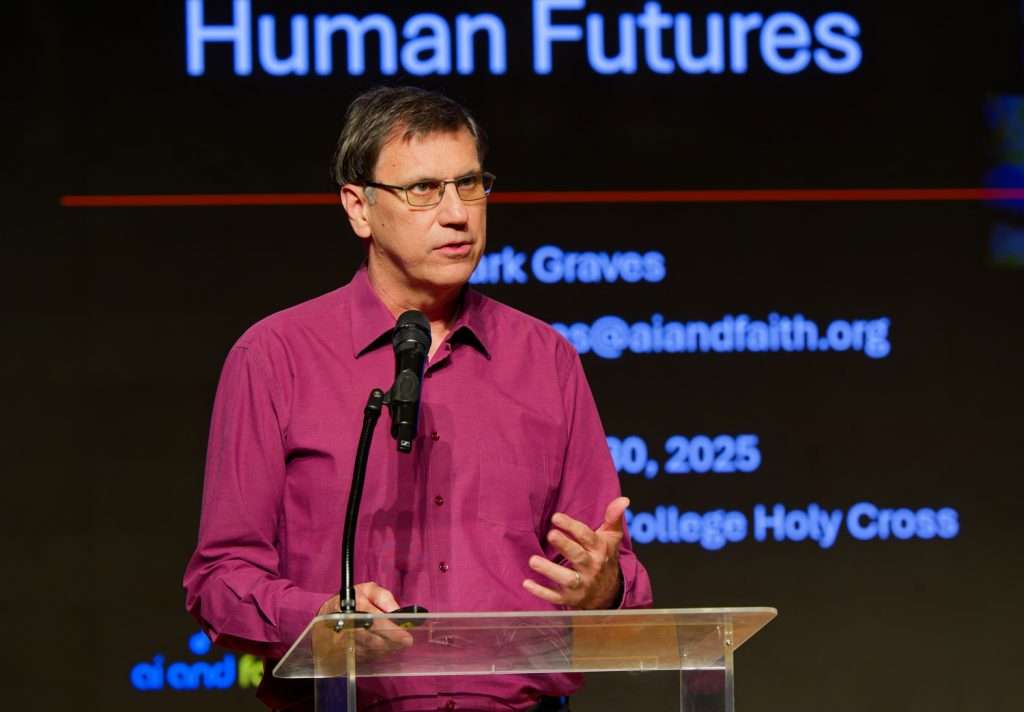
“Good intentions are not enough,” Graves warned.
Audience members raised particular concern about military applications of AI–an issue that has drawn international scrutiny. The conversation underscored the urgency, complexity, and moral imperative of the Church’s engagement with technology.
> Previously: These are the panelists for the Observer’s AI & Theology conference
The conference will continue tomorrow with a keynote address from Michael Kratsios, Director of the White House Office of Science & Technology Policy, as well as two panel discussions:
- “Christian Personhood and AI,” featuring Fr. John Chryssavgis, Dr. Gayle Woloschak, and Dr. Aristotle Papanikolaou
- “Cultural Implications of AI,” with Dr. Eve Tibbs, Dr. Sarah Riccardi-Swartz, and Dr. Emily Spratt
The post ‘Better worry and prepare’: Scholars confront AI’s future appeared first on Orthodox Observer.