This post was originally published on this site
Interestingly, it is a graffiti artist—not an iconographer—who provides us our earliest insight into the cultural perception of early Christians. The first known image of Christ, “Alexamenos Graffito,” was graffiti scratched into a Roman plaster wall, mocking early Christians for their worship of Christ in the year 200 A.D. Graffiti has long served as a medium for commentary on public life, including religion. In medieval Georgia, graffiti by Christian worshippers captures the society’s medieval worship practices. Today, in major cities like New York and Los Angeles, graffiti is as much celebrated as an art form for the people as it is reviled as an eyesore, yet Christianity continues to find expression through this ancient art form.
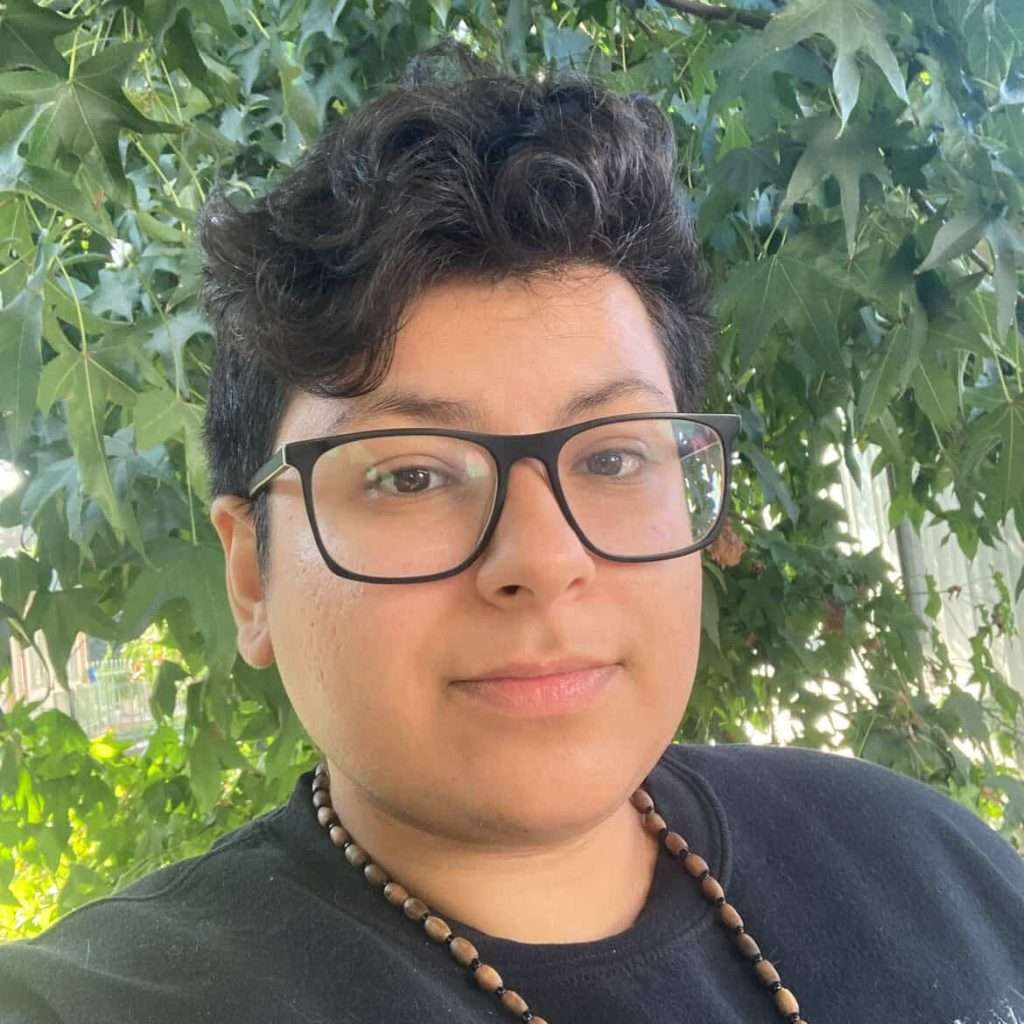
Also known by her Instagram handle @artofmarza, Mary Sarchizian is an Armenian Orthodox artist who draws inspiration from graffiti and iconography, translating these influences into accessible artwork through stickers. Sarchizian has her Bachelor of Arts in history from the University of California Riverside, where she found her passion for archival and documenting work. She sought to meld her passion for art with her history background, and her stickers are an expression of this. Sarchizian utilizes her unique art style to bring Christ’s message to the public and offer comfort to those who have felt ignored or neglected by the church.
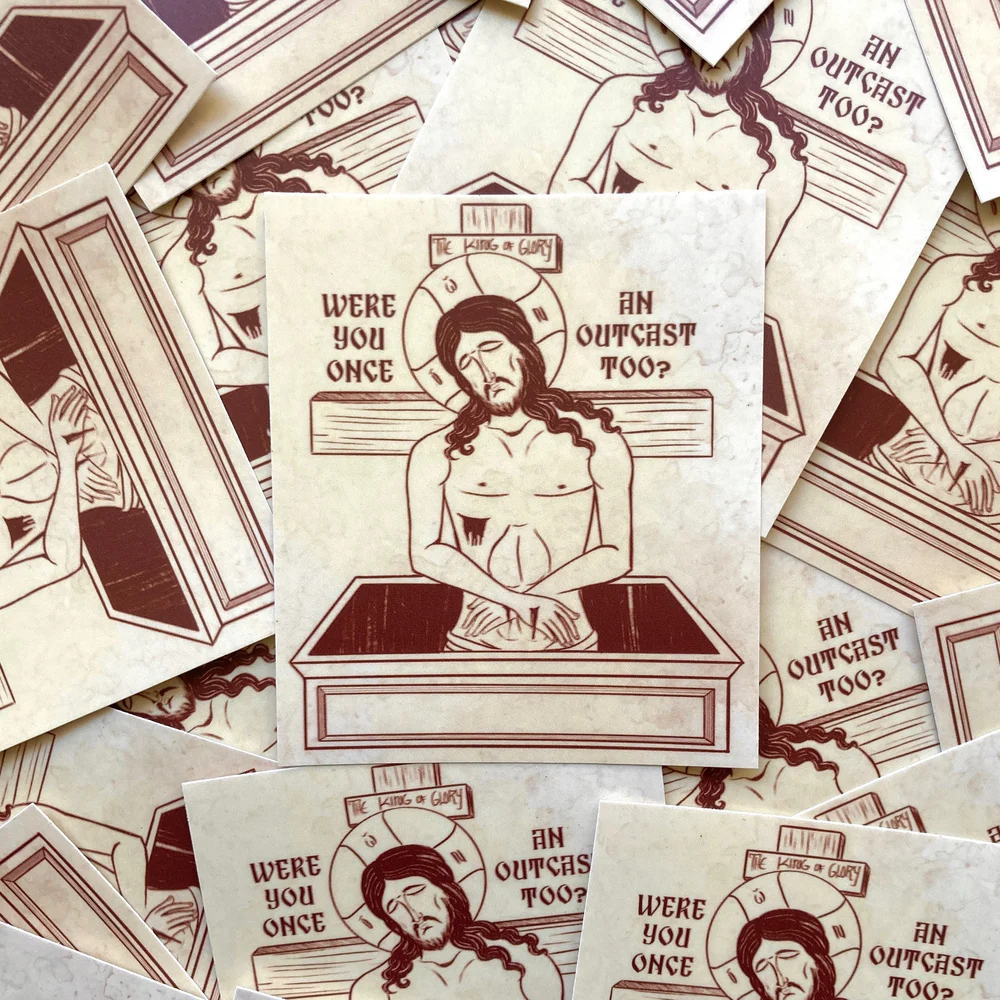
She aims to show the unique beauty of Orthodoxy in a way that accustoms witnesses to it, integrating Orthodox imagery into their daily life as part of their day’s tapestry. Sarchizian sees her art as a way to convey Christ’s message as a modern-day call to action, connect with Orthodox Christians, and remind anyone who needs it of Christ’s unconditional love.
Sarchizian is from Los Angeles, a city with a significant Latino and Roman Catholic population, where there are many public shrines of St. Jude, St. Francis, and the Lady of Guadalupe. Graffiti of saints like these are lovingly plastered across the city and woven into public life in a seemingly-mundane way. Similarly, Sarchizian seeks to add Orthodox imagery into public life via her stickers.
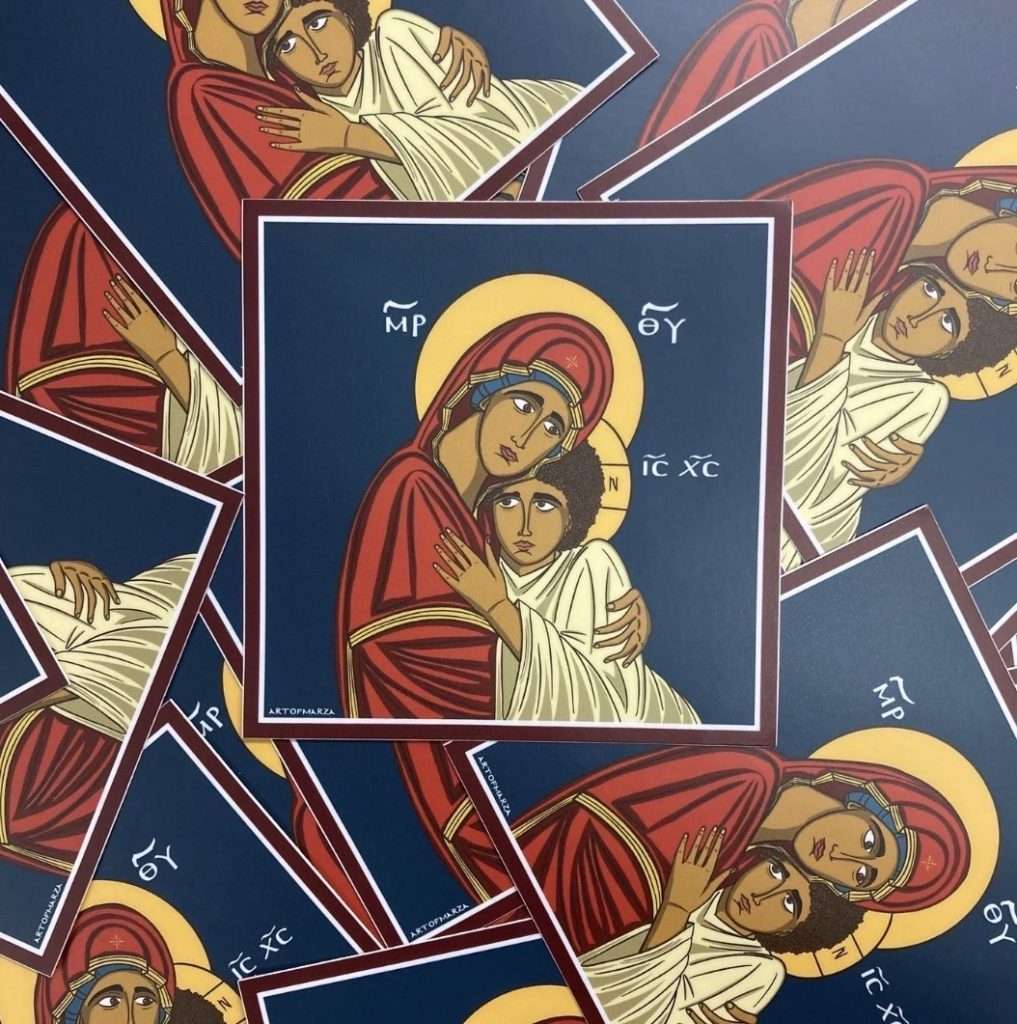
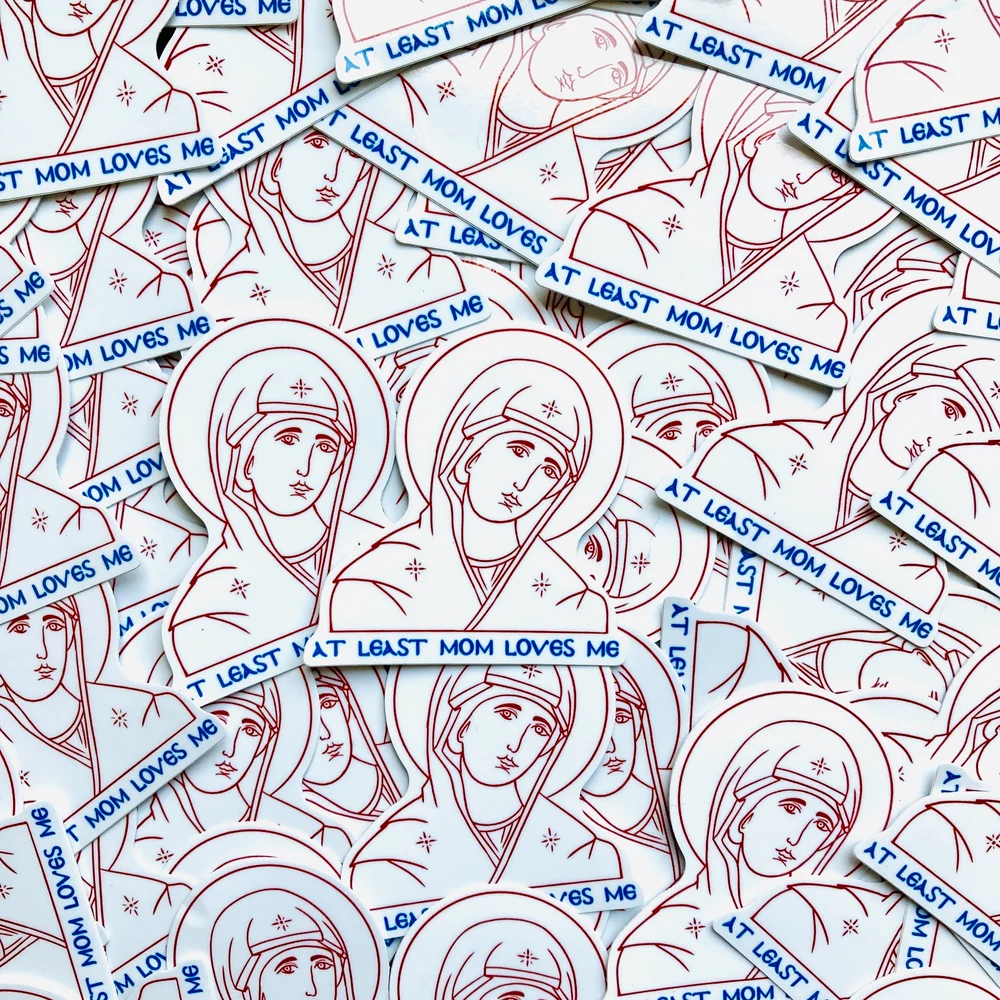
“A lot of people who are lapsed still have respect for the Virgin Mary, so there is power in reaching them with that imagery,” Sarchizian says. Among Sarchizian’s stickers are “Mother’s Comfort,” in which the Theotokos embraces an adolescent Christ; “Protect the Outcast,” embodying the structure of Theotokos tou Ouranion with hands outstretched over Keith Haring-inspired figures; and “At Least Mom Loves Me,” which reminds us of the Theotokos’s holy, unconditional maternal love. Sarchizian emphasizes she is not an iconographer, but her work speaks to the public and connects with Orthodox Christians and non-Christians alike in a way that icons do. Sarchizian herself finds immense comfort in the Theotokos when she feels like an outcast in the Church, which is why much of her work is centered on the Theotokos.
Sarchizian recounted a story about one of the first times she tangibly saw her art impacting a stranger. She frequently passed a bridge in downtown Los Angeles in order to reach her bus stop to get to work. The bridge was often covered in graffiti and stickers, so one day she decided to draw an image of Christ on a blank sticker and then returned to the bridge and stuck it on a pole. Graffiti cleanup crews periodically passed through, and when they did she noticed they removed all of the stickers except for her depiction of Christ. She was touched that someone felt so compelled to leave it up–she did not know whether they were a Christian, but she did know that Christ’s image and love spoke to them.
Sarchizian is inspired by the parables and Christ’s ability to use real-world examples of his time period to convey theological teachings. “Sometimes people in the church get stagnant. They’re reading the gospels but not thinking about how they apply today–how things today are accelerated by drugs, technology, and AI. I like to use my art to give those real-world examples,” Sarchizian stated.
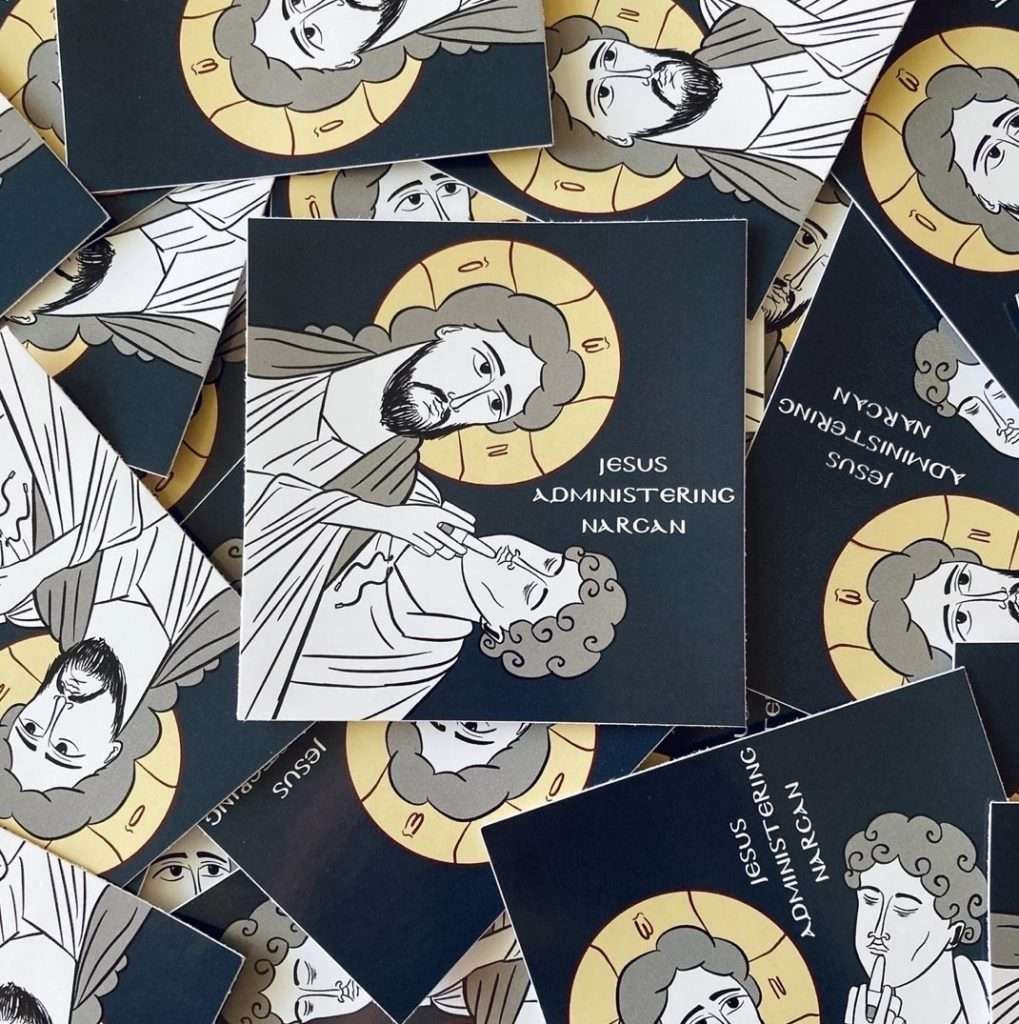
Among Sarchizian’s works are stickers depicting Christ administering Narcan, a medication that reverse the effects of an opioid overdose. Though the medication is a modern invention, the depictions are a way of showing that Christ’s love knows no time or bounds. “Narcan in a way is like a miracle drug. It brings people back from the edge of death,” Sarchizian says. Sarchizian was inspired by the Good Samaritan and Jesus Healing the Blind Man icons, and the works offer a call to love our neighbor as Christ commanded. She suggests the possibility of training programs to equip parishioners or clergy with Narcan; though it may seem daunting, it could do immense good.
Sarchizian wants her work to display what God commands of us in both ordinary and dire situations. “God has never deemed anyone undeserving or dirty. He went into the trenches and was not afraid to be defiled. And neither should we,” Sarchizian stresses.
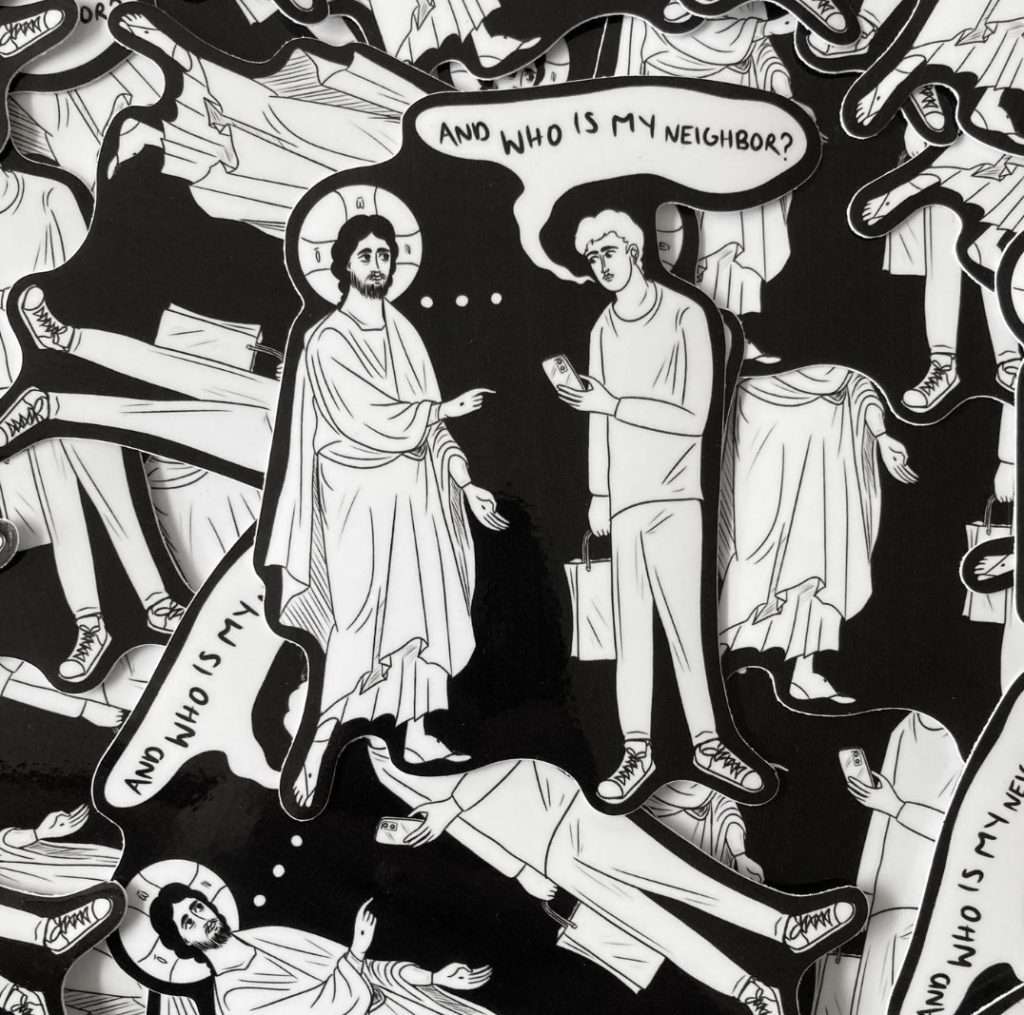
A sticker that resonates strongly with Sarchizian is the “And Who is My Neighbor.” This sticker melded two instances from the parables: the parable of the lawyer (Luke 10:25-37) and the parable of the young ruler (Matthew 19:16-26). Sarchizian gave it a modern twist where the lawyer/rich young ruler has a shopping bag and is not even paying attention to Christ. In Sarchizian’s view, the individual represents us all snarkily asking Christ who our neighbor is, where they are, and why we are so lonely–though Christ is always with us. Christ is depicted as much more tired than the man in the sticker, with His scars visible, a reminder of His ultimate sacrifice for us–he repeatedly has to answer this question of who is there to comfort us, yet he is constantly with us.
“We have to readjust the question of who is our neighbor, especially in a world where we are so connected and where our actions and policies can affect people thousands of miles away,” says Sarchizian, sharing, “I have a lot of friends online I really care about.” The ultimate issue, Sarchizian states, is that “People keep trying to narrow down who their neighbor is to make excuses for who they can care about.”
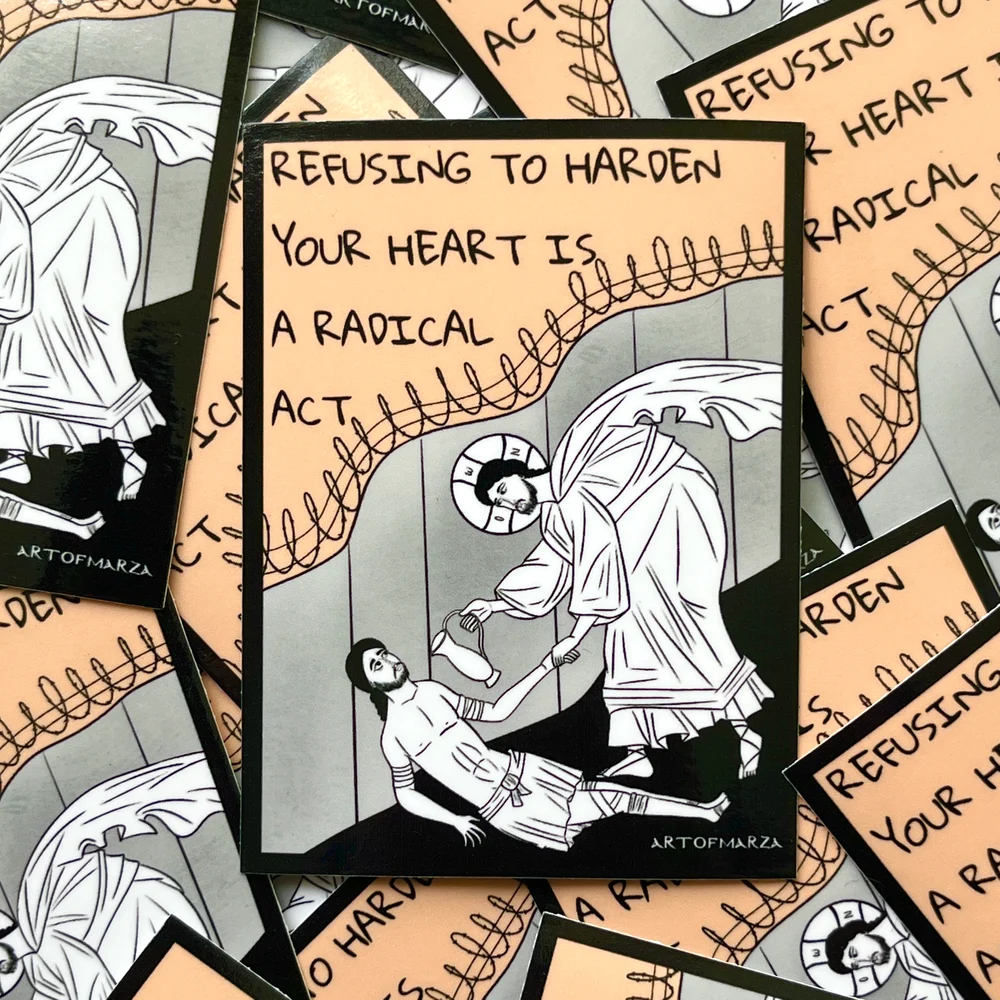
Her sticker “Refusing to Harden Your Heart Is a Radical Act” underscores this issue, addressing the indifference many exhibit toward the marginalized. As a teenager in an Orthodox youth group, Sarchizian observed peers refusing to participate in outreach efforts, such as volunteering at soup kitchens or distributing supplies on Skid Row in Los Angeles.
Recalling these experiences, she seeks to challenge class divisions within parishes and dispel myths that harm reduction can be dangerous when Christ calls us to serve, not judge or fear. Through her work, Sarchizian hopes to create a space where those who feel like outcasts can find solace in Christ’s unconditional love.
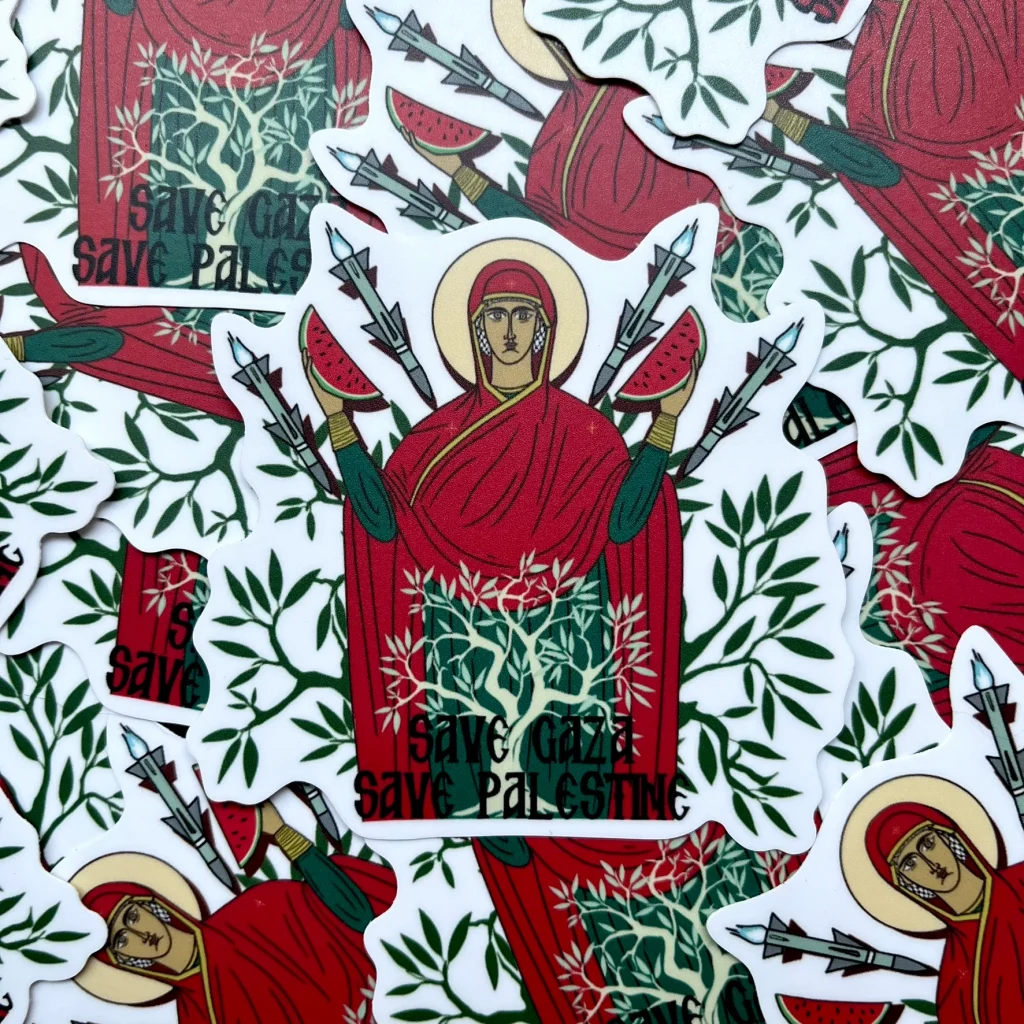
See Sarchizian’s work via Instagram or her website.
The Orthodox Observer’s profiles series highlights inspiring Greek Orthodox individuals who are making meaningful contributions to our community. Through their work, service, and personal journeys, they exemplify the richness of our faith and culture while fostering connection, compassion, and purpose.
The post Orthodox artist draws inspiration from graffiti appeared first on Orthodox Observer.